Banner
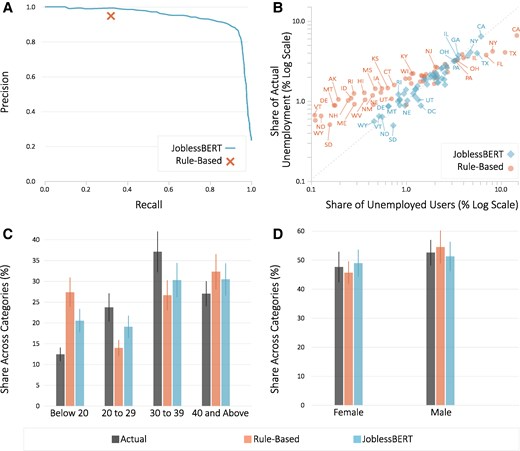
Social Media Is A Faster Source For Unemployment Data Than Government

Government unemployment data today are what Nielsen TV ratings were decades ago - a flawed metric...

Gestational Diabetes Up 36% In The Last Decade - But Black Women Are Healthiest

Gestational diabetes, a form of glucose intolerance during pregnancy, occurs primarily in women...
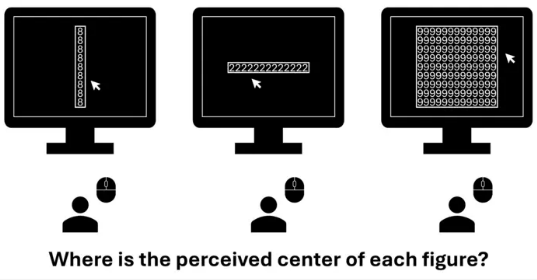
Object-Based Processing: Numbers Confuse How We Perceive Spaces

Researchers recently studied the relationship between numerical information in our vision, and...
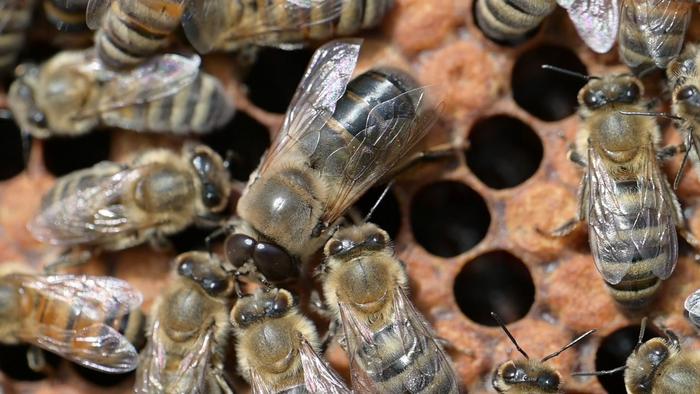
Males Are Genetically Wired To Beg Females For Food

Bees have the reputation of being incredibly organized and spending their days making sure our...

User picture.
News StaffRSS Feed of this column.

News Releases From All Over The World, Right To You... Read More »

Blogroll

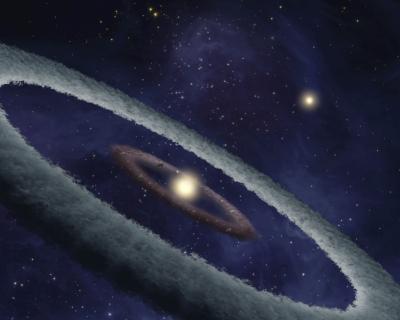
An Earth-like planet is likely forming 424 light-years away in a star system called HD 113766, say astronomers using NASA's Spitzer Space Telescope.

Scientists have discovered a huge belt of warm dust – enough to build a Mars-size planet or larger – swirling around a distant star that is just slightly more massive than our sun. The dust belt, which they suspect is clumping together into planets, is located in the middle of the system's terrestrial habitable zone. This is the region around a star where liquid water could exist on any rocky planets that might form. Earth is located in the middle of our sun's terrestrial habitable zone.

At approximately 10 million years old, the star is also at just the right age for forming rocky planets.

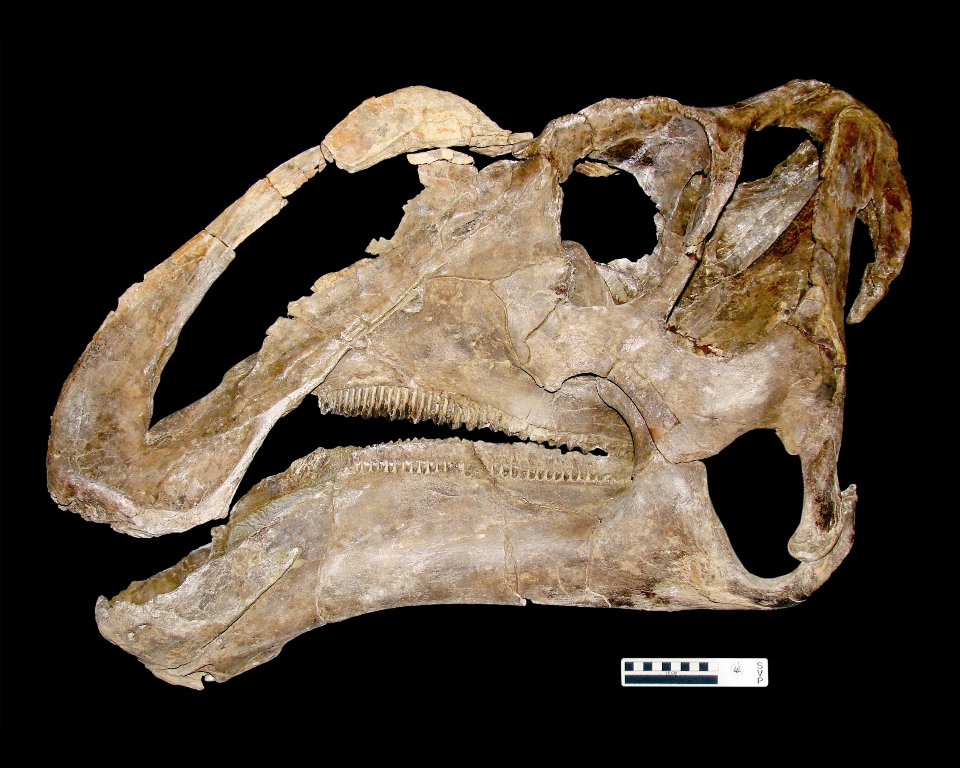
The newest dinosaur species to emerge from Grand Staircase-Escalante National Monument had some serious bite, according to researchers from the Utah Museum of Natural History (UNMH) at the University of Utah. “It was one of the most robust duck-billed dinosaurs ever,” said lead author Terry Gates. “It was a monster.”

Researchers from the Utah museum, the national monument and California’s Raymond M. Alf Museum of Palaeontology unearthed fossils of this ancient plant-eater from the rocks of the Kaiparowits Formation. Researchers announced the name of the creature – Gryposaurus monumentensis.

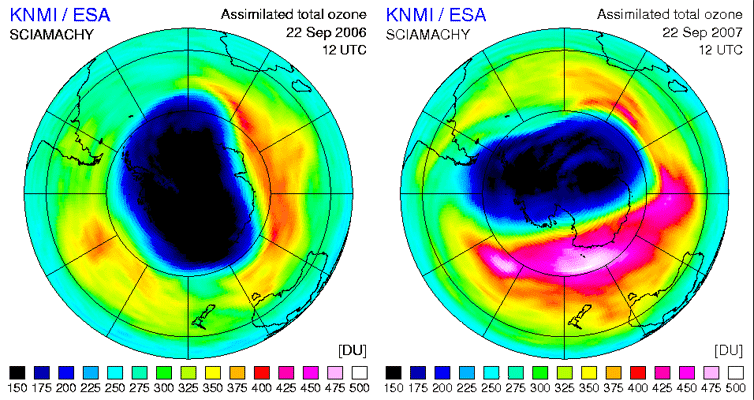
The ozone hole over Antarctica has shrunk 30 percent as compared to last year's record size. According to measurements, this year’s ozone loss peaked at 27.7 million tons, compared to the 2006 record ozone loss of 40 million tons.

Ozone is a protective layer found about 15 miles above us, mostly in the stratospheric stratum of the atmosphere that acts as a sunlight filter shielding life on Earth from harmful ultraviolet rays. Over the last decade the ozone layer has thinned by about 0.3% per year on a global scale, increasing the risk of skin cancer, cataracts and harm to marine life.

Researchers at UCLA have developed a model that could help engineers and scientists speed up the development of hydrogen-fueled vehicles by identifying promising hydrogen-storage materials and predicting favored thermodynamic chemical reactions through which hydrogen can be reversibly stored and extracted.

The new method, published in Advanced Materials, was developed by Alireza Akbarzadeh, a UCLA postdoctoral researcher in the department of materials science and engineering; Vidvuds Ozolins, UCLA associate professor of materials science and engineering; and Christopher Wolverton, professor of materials science and engineering at Northwestern University in Illinois.

Einstein's Theory Of General Relativity has been under assault for the better part of a century. No one can really prove it wrong but it's commonly assumed to be wrong.

Neural prosthetic devices represent an engineer's approach to treating paralysis and amputation. Electronics are used to monitor the neural signals that reflect an individual's intentions for the prosthesis or computer they are trying to use.