Banner
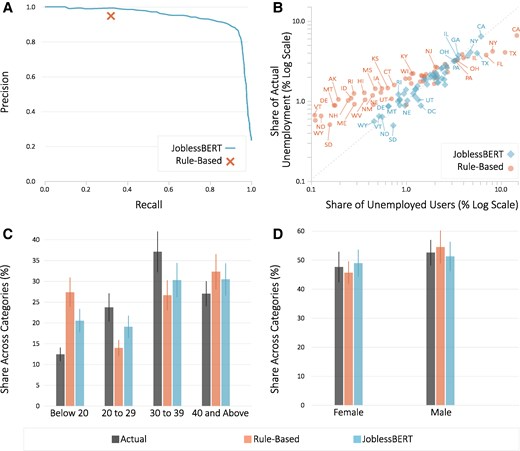
Social Media Is A Faster Source For Unemployment Data Than Government

Government unemployment data today are what Nielsen TV ratings were decades ago - a flawed metric...
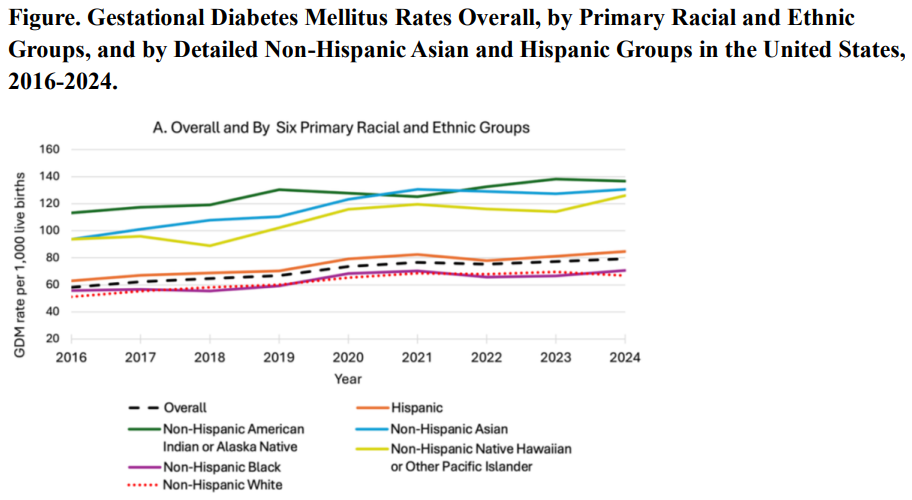
Gestational Diabetes Up 36% In The Last Decade - But Black Women Are Healthiest

Gestational diabetes, a form of glucose intolerance during pregnancy, occurs primarily in women...

Object-Based Processing: Numbers Confuse How We Perceive Spaces

Researchers recently studied the relationship between numerical information in our vision, and...

Males Are Genetically Wired To Beg Females For Food

Bees have the reputation of being incredibly organized and spending their days making sure our...

User picture.
News StaffRSS Feed of this column.

News Releases From All Over The World, Right To You... Read More »

Blogroll

Contrary to arguments by critics, a University of Utah-led study found that legalizing physician-assisted suicide in Oregon and the Netherlands did not result in a disproportionate number of deaths among the elderly, poor, women, minorities, uninsured, minors, chronically ill, less educated or psychiatric patients.

Of 10 “vulnerable groups” examined in the study, only AIDS patients used doctor-assisted suicide at elevated rates.

“Fears about the impact on vulnerable people have dominated debate about physician-assisted suicide.

The Model Institutions for Excellence Program (MIE) funded by the National Science Foundation (NSF) and the National Aeronautics and Space Administration (NASA) has developed a body of work over the past 11 years demonstrating successful strategies for recruiting underrepresented minority students to science and engineering fields and supporting their successful completion of science degrees.

Five minority-serving institutions--Bowie State University in Maryland, Spelman College in Atlanta, Universidad Metropolitana in Puerto Rico, the University of Texas at El Paso, and Xavier University of Louisiana in New Orleans--plus the Oyate Consortium, representing three tribal colleges in the Midwest, are MIE's participating institutions.

Two major steps toward putting quantum computers into real practice — sending a photon signal on demand from a qubit onto wires and transmitting the signal to a second, distant qubit — have been brought about by a team of scientists at Yale.

Over the past several years, the research team of Professors Robert Schoelkopf in applied physics and Steven Girvin in physics has explored the use of solid-state devices resembling microchips as the basic building blocks in the design of a quantum computer. Now, for the first time, they report that superconducting qubits, or artificial atoms, have been able to communicate information not only to their nearest neighbor, but also to a distant qubit on the chip.

Growing inside the caves of the tropical Pacific island of Borneo are some of the keys to understanding how the Earth's climate suddenly changed - several times - over the last 25,000 years. By analyzing stalagmites, the pilar-like rock formations that stem from the ground in caves, they were able to produce a high-resolution and continuous record of the climate over this equatorial rainforest.

"These stalagmites are, in essence, tropical ice cores forming over thousands of years," said Partin.

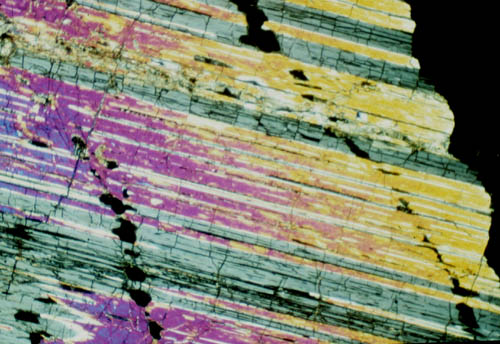
If our planet did not have the ability to store oxygen in the deep reaches of its mantle there would probably be no life on its surface, according to scientists at the University of Bonn who have subjected the mineral majorite to close laboratory examination.

Majorite normally occurs only at a depth of several hundred kilometres under very high pressures and temperatures. The Bonn researchers have now succeeded in demonstrating that, under these conditions, the mineral stores oxygen and performs an important function as an oxygen reservoir. Near the earth's surface the structure breaks down, releasing oxygen, which then binds with hydrogen from the earth's interior to form water. Without this mechanism our "Blue Planet" might well be as dry and inhospitable as Mars.

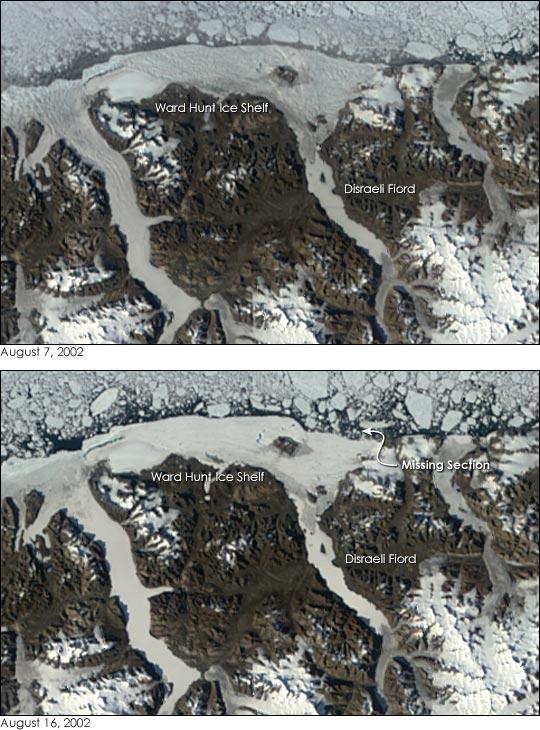
Analyses conducted by researchers from Université Laval’s Center for Northern Studies reveal that aquatic life in Ward Hunt Lake, the continent’s northernmost lake, is affected by climate change.

Ward Hunt Lake is a body of water located on a small island north of Ellesmere Island in the Canadian Arctic, has undergone major transformations within the last two centuries. The speed and range of these transformations—unprecedented in the lake’s last 8,000 years—suggest that climate change related to human activity could be at the source of this phenomenon.

The researchers’ conclusions are based on the analysis of a sediment core extracted in the center of Ward Hunt Lake in August 2003.