Banner
Object-Based Processing: Numbers Confuse How We Perceive Spaces

Researchers recently studied the relationship between numerical information in our vision, and...

Males Are Genetically Wired To Beg Females For Food

Bees have the reputation of being incredibly organized and spending their days making sure our...

The Scorched Cherry Twig And Other Christmas Miracles Get A Science Look

Bleeding hosts and stigmatizations are the best-known medieval miracles but less known ones, like ...

$0.50 Pantoprazole For Stomach Bleeding In ICU Patients Could Save Families Thousands Of Dollars

The inexpensive medication pantoprazole prevents potentially serious stomach bleeding in critically...

User picture.
News StaffRSS Feed of this column.

News Releases From All Over The World, Right To You... Read More »

Blogroll

A molecular “recycling plant” permits nerve cells in the brain to carry out two seemingly contradictory functions – changeable enough to record new experiences, yet permanent enough to maintain these memories over time.

The discovery of this molecular recycling plant provides new insights into how the basic units of learning and memory function. Individual memories are “burned onto” hundreds of receptors that are constantly in motion around nerve synapses – gaps between individual nerve cells crucial for signals to travel throughout the brain.

While the visual regions of the brain have been intensively mapped, many important regions for auditory processing remain terra incognita. Now, researchers have identified the region responsible for a key auditory process—perceiving “sound space,” the location of sounds. The findings settle a controversy in earlier studies that failed to establish the auditory region, called the planum temporale, as responsible for perceiving auditory space.

Leon Y. Deouell and colleagues published their findings in the September 20, 2007 issue of the journal Neuron, published by Cell Press.

Studies by other researchers had shown that the planum temporale was activated when people were asked to perform tasks in which they located sounds in space.

Retrieving material for composting from open dumps across the developing world could reduce the environmental impact of growing mountains of waste, according to researchers in India.

People in the developing world are encouraged to compost garden waste or dispose of it in "green" garbage bins for collection and processing. In the developing world, the problems are very different. Open dumps are prevalent and have a poor environmental record, according to environmental engineer Kurian Joseph and colleagues at Anna University in Chennai, India.

Joseph's team is proposing landfill mining as a viable means of rehabilitating these open dumps.

Your mother called it 'settling.' Crosby, Stills, Nash and Young said “If you can’t be with the one you love, love the one you’re with.” Let's face it, not everyone can have their perfect mate so you have to make do.

Yet in the animal kingdom, females and males apparently have ways to compensate that increase the chance their offspring will survive even if the parents are not genetic ideals.

Patricia Adair Gowaty calls it the "Compensation Hypothesis."

Imagine turning a bad micro-organism, like E. coli, into a micro-factory that produces pharmaceutical compounds to fight aging or obesity.

University at Buffalo researchers say they can do it and have filed for a patent.

First Wave Technologies, Inc. recently received a Phase I Small Business Innovation Research (SBIR) grant from the National Science Foundation to focus on the biosynthesis of a popular group of flavonoids called isoflavonoids.

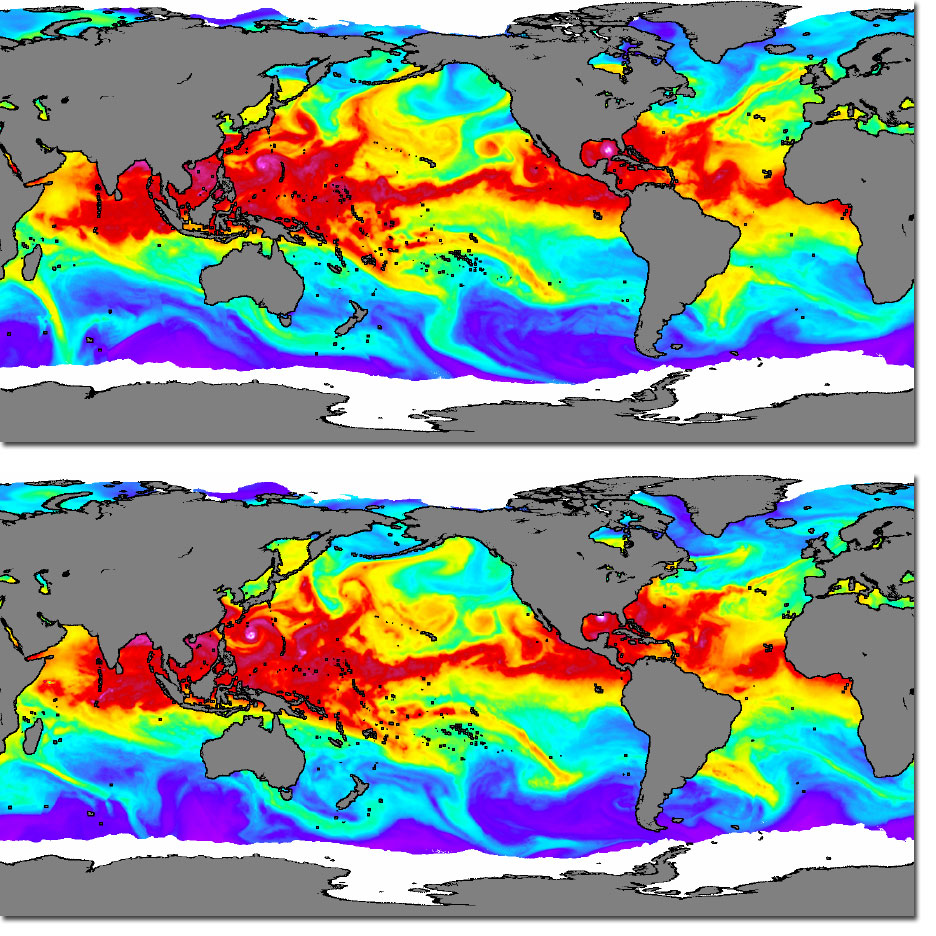
Observations and climate model results confirm that human-induced warming of the planet is having a pronounced effect on the atmosphere’s total moisture content.

“When you heat the planet, you increase the ability of the atmosphere to hold moisture,” said Benjamin Santer, lead author from Lawrence Livermore National Laboratory’s Program for Climate Modeling and Intercomparison. “The atmosphere’s water vapor content has increased by about 0.41 kilograms per cubic meter (kg/m²) per decade since 1988, and natural variability in climate just can’t explain this moisture change.