Banner
Social Media Is A Faster Source For Unemployment Data Than Government

Government unemployment data today are what Nielsen TV ratings were decades ago - a flawed metric...

Gestational Diabetes Up 36% In The Last Decade - But Black Women Are Healthiest

Gestational diabetes, a form of glucose intolerance during pregnancy, occurs primarily in women...

Object-Based Processing: Numbers Confuse How We Perceive Spaces

Researchers recently studied the relationship between numerical information in our vision, and...

Males Are Genetically Wired To Beg Females For Food

Bees have the reputation of being incredibly organized and spending their days making sure our...

User picture.
News StaffRSS Feed of this column.

News Releases From All Over The World, Right To You... Read More »

Blogroll

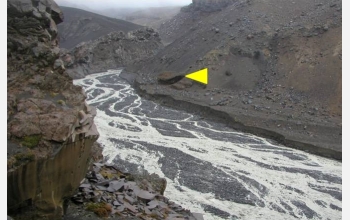
Volcanologist Sarah Fagents from the University of Hawaii at Manoa had an amazing opportunity to study volcanic hazards first hand, when a volcanic mudflow broke through the banks of a volcanic lake at Mount Ruapehu in New Zealand.

Fagents and colleagues were there on a National Science Foundation (NSF)-funded project to study the long-forecast Crater Lake break-out lahar at Mount Ruapehu.

A research team headed by Yadong Yin at the University of California, Riverside has created a liquid that changes its color “on demand” and can take on any color of the rainbow.

Nanoscopic particles made of tiny magnetic crystals coated with a plastic shell self-assemble in solution to form photonic crystals—semiconductors for light. When a magnetic field is applied, the optical properties of the crystals change, allowing their color to be very precisely adjusted through variation of the strength of the field.

The crystals involved are not “conventional” lattices of ions or molecules like the ones for salt. They are colloidal crystals, periodic structures that form from uniform solid particles that are finely dispersed in a liquid.

Dr. Éric A. Cohen, Director of the Human Retrovirology Research Unit at Institut de recherches cliniques de Montréal, and his team have published a discovery that could lead to the development of a new class of drugs to combat HIV.

Human immunodeficiency virus type 1 (HIV-1) causes AIDS by depleting essential immune cells called CD4+T lymphocytes in infected individuals, resulting in a compromised immune system. At the center of this process is the HIV protein, viral protein R (Vpr), which stops infected CD4+T cells from dividing and as a consequence compromises their immune function.

In addition, by arresting cell division, Vpr helps HIV to harness the infected cell’s resources to enhance viral replication.

When a strand of DNA breaks in the body's cells, it normally does not take long until it has been repaired. Now researchers at the Swedish medical university Karolinska Institutet have discovered a new mechanism that helps to explain how the cell performs these repairs.

The new results examine a phenomenon called 'cohesion', whereby two copies of a chromosome in the cell nucleus are held tightly together by a protein complex called cohesin. Cohesion fulfils an important function during cell division as the newly copied chromosomes, the sister chromatids, have to stay together until the right moment of separation. If the chromatids come apart too early, there is a risk of the daughter cells getting the wrong number of chromosomes, something that is often observed in tumor cells.

In an experiment modeled on the classic “Young’s double slit experiment” and published in the journal Nature Nanotechnology, researchers have powerfully reinforced the understanding that surface plasmon polaritons (SPPs) move as waves and follow analogous rules.

The demonstration reminds researchers and electronics designers that although SPPs move along a metal surface, rather than inside a wire or an optical fiber, they cannot magically overcome the size limitations of conventional optics.

Touted as the next wave of electronics miniaturization, plasmonics describes the movement of SPPs -- a type of electromagnetic wave that is bound to a metal surface by its interaction with surface electrons.

Chitin and Chitosan have been extracted from lobster waste and used in medicine and biomedicine by a team from the University of Havana. These researchers’ work has led to the development of a procedure to obtain surgical materials with great healing and antiseptic properties.

Chitin is a polymer very common in nature as part of animals’ and plants’ physical structures. Only cellulose is more abundant than chitin, which makes this compound a highly important renewable resource that can easily be found in arthropods, insects, arachnids, molluscs, fungus and algae.