Banner
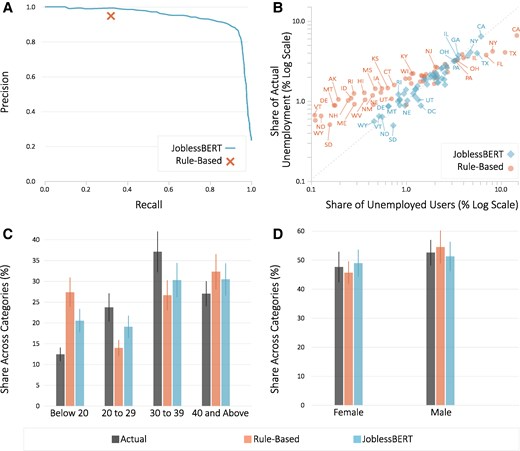
Social Media Is A Faster Source For Unemployment Data Than Government

Government unemployment data today are what Nielsen TV ratings were decades ago - a flawed metric...

Gestational Diabetes Up 36% In The Last Decade - But Black Women Are Healthiest

Gestational diabetes, a form of glucose intolerance during pregnancy, occurs primarily in women...
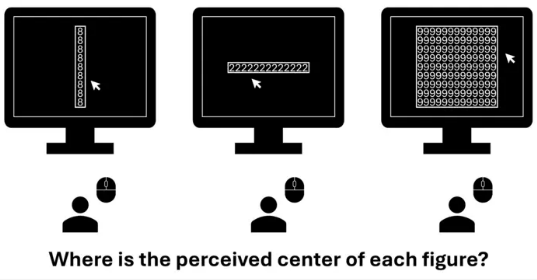
Object-Based Processing: Numbers Confuse How We Perceive Spaces

Researchers recently studied the relationship between numerical information in our vision, and...
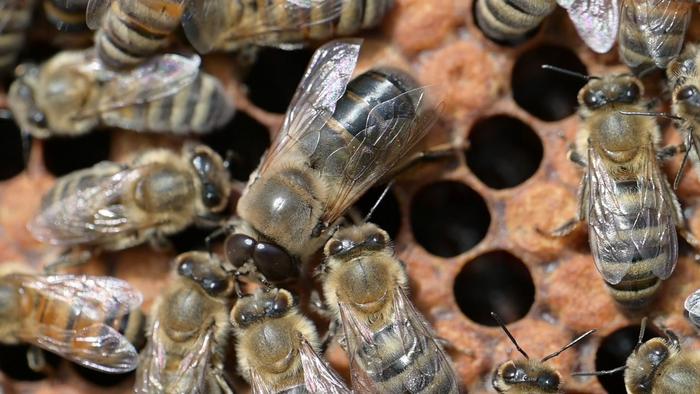
Males Are Genetically Wired To Beg Females For Food

Bees have the reputation of being incredibly organized and spending their days making sure our...

User picture.
News StaffRSS Feed of this column.

News Releases From All Over The World, Right To You... Read More »

Blogroll

Just in time for the weekend, this study from Dutch researcher Ingmar Franken says that while alcohol does not make good things any better it can make bad things a lot less worse. Previously researchers thought that alcohol primarily affected the 'reward' system in the brain. Franken found that was not so.

In the case of pleasant experiences alcohol was found to have hardly any influence. The ‘rosy glasses’ that alcohol is said to cause is therefore just a temporary filter for the more 'sober' issues in life.

It turns out they do.* And it can tell us a lot about learning.

In fact, "competitive fandom" is such a growing field that University of Wisconsin-Madison assistant professors Erica and Rich Halverson are spending their summer studying something they love - fantasy baseball, and why people play such games.

It's an area ripe for analysis. Sixteen million adults played fantasy sports in 2006, spending an average of just under $500 a year and generating an economic impact of more than $1 billion a year, according to the Fantasy Sports Industry Trade Association. The majority of those first began playing the game offline and spend about three hours per week managing their teams, according to the trade group.

For the first time, it can now be shown what enzyme copies the genetic make-up of cells. The discovery is being published in the journal Science by researchers at Umeå University in Sweden in collaboration with a team in the U.S. led by Thomas A. Kunkel.

The human genome has already been mapped, as have the genomes of several other organisms. On the other hand, little has been known how genes are copied and repaired so efficiently and precisely.

These processes always involve a so-called DNA polymerase, an enzyme that performs the actual new growth of genes. The genes consist of two DNA strands, but scientists have not known what polymerase copies the two DNA strands.

New technology could allow a CD to hold up to one hundred times more information by using terahertz radiation rather than visible light, even though the length of a terahertz wave is about 1000 times longer, say University of Michigan researchers.

Manipulating light waves, or electromagnetic radiation, has led to many technologies, from cameras to lasers to medical imaging machines that can see inside the human body and now scientists have developed a way to make a lens-like device that focuses electromagnetic waves down to the tiniest of points.

The breakthrough opens the door to the next generation of technology, said Roberto Merlin, professor of physics at U-M.

Many earthquakes in the deep ocean are much smaller in magnitude than expected. Geophysicists from the Woods Hole Oceanographic Institution have found new evidence that the fragmented structure of seafloor faults, along with previously unrecognized volcanic activity, may be dampening the effects of these quakes.

Researchers at Duke University's Pratt School of Engineering have uncovered a missing link in scientists' understanding of the physical forces that give DNA its famous double helix shape.

"The stability of DNA is so fundamental to life that it's important to understand all factors," said Piotr Marszalek, a professor of mechanical engineering and materials sciences at Duke. "If you want to create accurate models of DNA to study its interaction with proteins or drugs, for example, you need to understand the basic physics of the molecule. For that, you need solid measurements of the forces that stabilize DNA."