Banner
Object-Based Processing: Numbers Confuse How We Perceive Spaces

Researchers recently studied the relationship between numerical information in our vision, and...

Males Are Genetically Wired To Beg Females For Food

Bees have the reputation of being incredibly organized and spending their days making sure our...

The Scorched Cherry Twig And Other Christmas Miracles Get A Science Look

Bleeding hosts and stigmatizations are the best-known medieval miracles but less known ones, like ...

$0.50 Pantoprazole For Stomach Bleeding In ICU Patients Could Save Families Thousands Of Dollars

The inexpensive medication pantoprazole prevents potentially serious stomach bleeding in critically...

User picture.
News StaffRSS Feed of this column.

News Releases From All Over The World, Right To You... Read More »

Blogroll
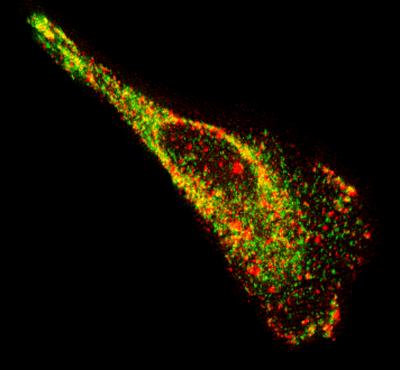
Biomedical engineers have developed a new type of probe that allows them to visualize single ribonucleic acid (RNA) molecules within live cells more easily than existing methods. The tool will help scientists learn more about how RNA operates within living cells.

Techniques scientists currently use to image these transporters of genetic information within cells have several drawbacks, including the need for synthetic RNA or a large number of fluorescent molecules. The fluorescent probes developed at the Georgia Institute of Technology circumvent these issues.

 Deteriorating screws in bridges, fish that listen in the dark, medical devices that use sound to treat disease, the detected comeback of a long-gone whale, the sound of hyenas, cheese, and bagpipes, and what evolution can teach us about cowardice.

These are just a few of the topics that will be covered at the 157th meeting of the Acoustical Society of America (ASA), which convenes from May 18-22 at the Hilton Portland&Executive Tower in Portland, Oregon. There, acoustical scientists and engineers will present more than 1,000 talks and posters related to acoustics, a cross-section of diverse disciplines devoted to architecture, underwater research, psychology, physics, animal bioacoustics, medicine, music, noise control, and speech.


A new study challenges long-standing expectations that men are promiscuous and women tend to be more particular when it comes to choosing a mate. The research in Trends in Ecology and Evolution suggests that human mating strategies are not likely to conform to a single universal pattern and provides important insights that may impact future investigations of human mating behaviors.
Parasite infestations might have a good side. Wild mice from a Nottinghamshire forest have given experts at The University of Nottingham clues as to the importance of some parasites, such as lice, for the conditioning of a "natural" immune system.

Jan Bradley, Professor of Parasitology, said: "Our understanding of mammalian immunology is largely based on rodents reared under highly unnatural pathogen and stress-free conditions. Analysing the immune response in wild populations can give crucial insights into how the immune system functions in its natural context."
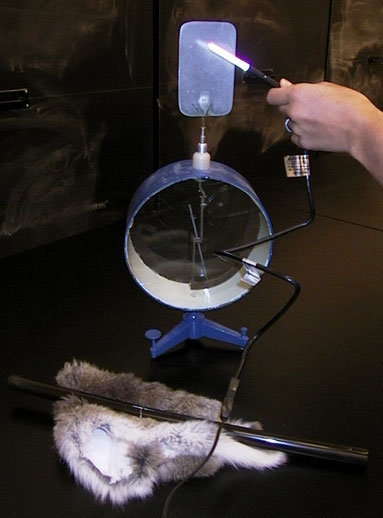
By way of the classical photoeffect, Einstein proved in 1905 that light also has particle character. However, with extremely high light intensities, remarkable things happen in the process, say scientists of the Physikalisch-Technische Bundesanstalt (PTB) and colleagues at FLASH in Hamburg, the first free-electron laser (FEL) for soft X-rays worldwide.
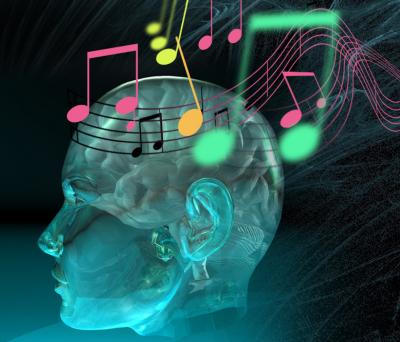
Every brain has a soundtrack. Its tempo and tone will vary, depending on mood, frame of mind, and other features of the brain itself. When that soundtrack is recorded and played back -- to an emergency responder, or a firefighter -- it may sharpen their reflexes during a crisis, and calm their nerves afterward.