Banner
Social Media Is A Faster Source For Unemployment Data Than Government

Government unemployment data today are what Nielsen TV ratings were decades ago - a flawed metric...

Gestational Diabetes Up 36% In The Last Decade - But Black Women Are Healthiest

Gestational diabetes, a form of glucose intolerance during pregnancy, occurs primarily in women...

Object-Based Processing: Numbers Confuse How We Perceive Spaces

Researchers recently studied the relationship between numerical information in our vision, and...

Males Are Genetically Wired To Beg Females For Food

Bees have the reputation of being incredibly organized and spending their days making sure our...

User picture.
News StaffRSS Feed of this column.

News Releases From All Over The World, Right To You... Read More »

Blogroll

While previous biomedical research studies have found that genetics and race increase risk for some diseases, a new look into how researchers study genetic triggers of type 2 diabetes suggests that defining race remains an inexact science, with social and historic facts mixing with biology throughout the research process.

The new study by a UC Irvine anthropologist calls into question not only how race-specific information is being gathered and interpreted by the medical community, but how it is presented to the public through media and pharmaceutical marketing.

Anthropologist Michael Montoya followed the trail of DNA samples from the moment they were donated by people living along the U.S.-Mexican border, to the eventual publication of findings in scientific journals.

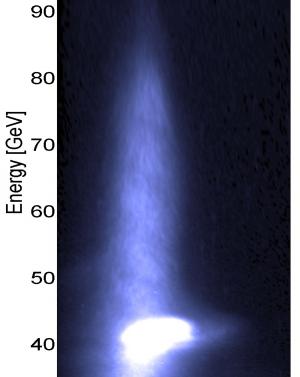
Imagine a car that accelerates from zero to 60 in 250 feet, and then rockets to 120 miles per hour in just one more inch.

That's essentially what a collaboration of more than a dozen accelerator physicists has accomplished, using electrons for their racecars and plasma for the afterburners. Because electrons already travel at near light's speed in an accelerator, the physicists actually doubled the energy of the electrons, not their speed.


The blue streak in this photograph shows the dramatic gain in energy made by some of the electrons in a bunch after passing through plasma (ionized gas).

When the next big earthquake hits a region like San Francisco, Natural Sciences and Engineering Research Council (NSERC) grantee Kristy Tiampo wants to ensure that communities will not only be able to evacuate, but also rebuild.

This is why Tiampo, the NSERC and Benfield/ICLR Industrial Research Chair in Earthquake Hazard Assessment, is involved in an international effort to improve earthquake forecasting. She studied earthquake engineering in California as an undergraduate, and is now using her research to build better forecasting maps in Canada and other countries.

New research published in the March issue of Psychological Science suggests that efforts to advocate improved statistical practices in psychological research may be paying off.

Geoff Cumming, Fiona Fidler and colleagues at La Trobe University in Melbourne, Australia sought to examine whether guidelines set forth in 1999 by the American Psychological Association’s Task Force on Statistical Inference (TSFI) had been implemented in psychological research.

The authors analyzed articles from 10 leading international psychology journals from 1998 to 2006, focusing on three practices central to the statistical reform debate: Null hypothesis significance testing, confidence intervals and figures with error bars.

Ghostly galaxies composed almost entirely of dark matter speckle the universe. Unlike normal galaxies, these extreme systems contain very few stars and are almost devoid of gas. Most of the luminous matter, so common in most galaxies, has been stripped away, leaving behind a dark matter shadow. These intriguing galaxies-known as dwarf spheroidals-are so faint that, although researchers believe they exist throughout the universe, only those relatively close to Earth have ever been observed.

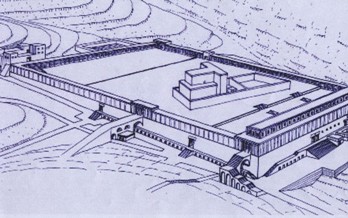
While scholars have put forth various assessments for the location of the Second Temple in Jerusalem, a Hebrew University of Jerusalem professor says that archaeological remains that have so far been ignored by scholars point to the exact location, which is in a spot that differs from prevailing opinion.

The location identified by Prof. Joseph Patrich of the Hebrew University Institute of Archaeology places the Temple and its corresponding courtyards, chambers and gates in a more southeasterly and diagonal frame of reference than have earlier scholars.


Drawing (Temple1) shows Prof. Patrich’s description of the location of the Temple compound (the rectangle defined by a solid line in the center of the drawing).