
Banner
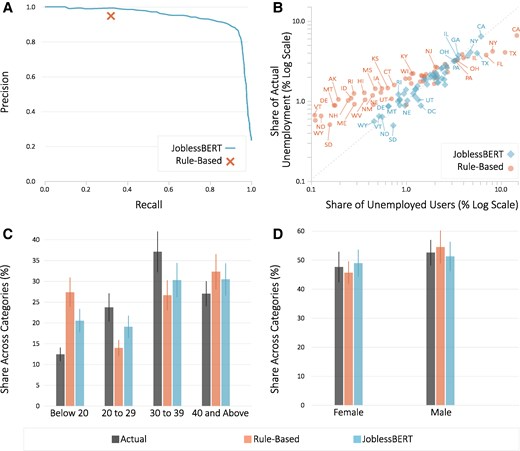
Social Media Is A Faster Source For Unemployment Data Than Government

Government unemployment data today are what Nielsen TV ratings were decades ago - a flawed metric...

Gestational Diabetes Up 36% In The Last Decade - But Black Women Are Healthiest

Gestational diabetes, a form of glucose intolerance during pregnancy, occurs primarily in women...

Object-Based Processing: Numbers Confuse How We Perceive Spaces

Researchers recently studied the relationship between numerical information in our vision, and...
Males Are Genetically Wired To Beg Females For Food

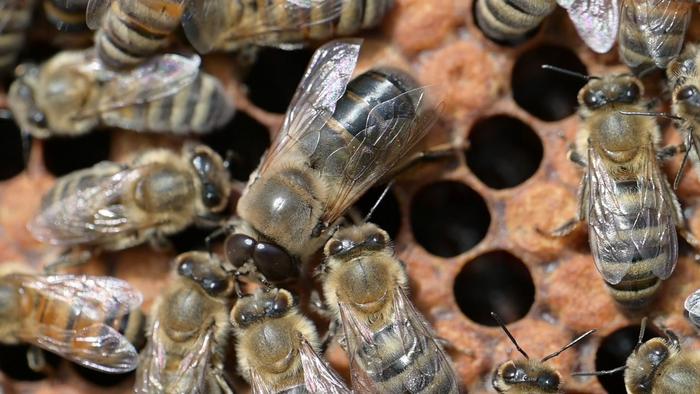
Bees have the reputation of being incredibly organized and spending their days making sure our...

User picture.
News StaffRSS Feed of this column.

News Releases From All Over The World, Right To You... Read More »

Blogroll
Researchers analyzing mitochondrial DNA extracted from a polar bear fossil discovered in Norway in 2004 say the species is relatively young, splitting off from brown bears approximately 150,000 years ago and rapidly evolving during the late Pleistocene. The findings are published in the Proceedings of The National Academy of Sciences

"Very few polar bear fossils have been found, leading to widely varying estimates of exactly when and how polar bears evolved," explains Øystein Wiig, polar bear expert and co-author at the University of Oslo's Natural History Museum. "Because polar bears live on the ice, their dead remains fall to the bottom of the ocean or get scavenged. They don't get deposited in the sediments like other mammals."

A possible new solution to a 163-year-old biology puzzle - why animals grow bigger in cold climates - may have been found, according to researchers who say ecological factors can now be added to physiological ones.

The results were published in The American Naturalist and they say it offers new insight into 'Bergmann’s rule', an ecogeographic notion that correlates latitude with body mass in animals - animals grow larger at high, cold latitudes than their counterparts closer to

While much attention has been given to the potential global impact of climate change, less has been paid to how a warmer planet would affect regional climates. The Intergovernmental Panel on Climate Change (IPCC) projects that the global average temperature will rise about 1°C by the middle of the century, but the global average does not tell us anything about what will happen to regional climates, for example rainfall in the western United States or Hawaiian Islands.

Analyzing warming projections in models used by the IPCC, a team of scientists claim that ocean temperature patterns in the tropics and subtropics will change in ways that will lead to significant changes in rainfall patterns. The study will be published in the Journal of Climate this month.
Researchers at UT Southwestern Medical Center say that increasing the normally occurring process of making nerve cells might prevent addiction. The conclusion is based on a rodent study demonstrating that blocking new growth of specific brain nerve cells increases vulnerability for cocaine addiction and relapse.

Published in Journal of Neuroscience, the study's findings are the first to directly link addiction with the process, called neurogenesis, in the region of the brain called the hippocampus.

While the research specifically focused on what happens when neurogenesis is blocked, the scientists said the results suggest that increasing adult neurogenesis might be a potential way to combat drug addiction and relapse.
The flowering plant purple loosestrife - Lythrum salicaria - has been heading north since it was first introduced to the eastern seaboard from Europe 150 years ago. This exotic invader chokes out native species and has dramatically altered wetland habitats in North America.

But as this invasive plant has spread north it has run into challenges posed by a shorter growing season, according to a study conducted by researchers from the University of Toronto's Department of Ecology and Evolutionary Ecology. Scientists have found that adapting to the Great White North carries a severe reproductive penalty that may limit its spread. The results are highlighted this week in Nature.  
Cigarette smoking may increase the risk of experiencing an aneurysm for people who carry common gene variants, according to research presented at the American Stroke Association's International Stroke Conference 2010.

In one study, researchers found that the chance of an intracranial aneurysm increased between 37 percent and 48 percent for people who carried one copy of an identified risky gene variation. However, when the gene variant was combined with smoking the equivalent of one pack a day for 20 years, the risk increased more than five-fold. People with two copies of the gene variant were at even higher risk.






