Banner
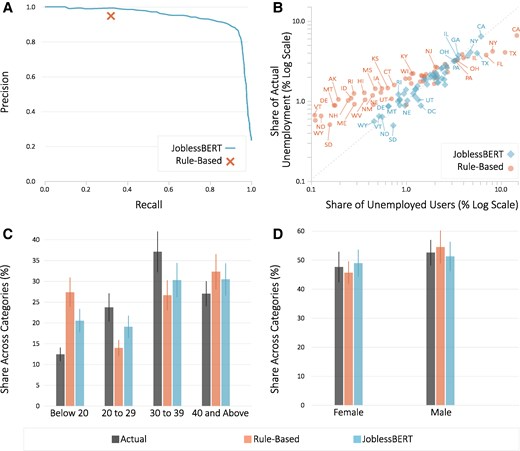
Social Media Is A Faster Source For Unemployment Data Than Government

Government unemployment data today are what Nielsen TV ratings were decades ago - a flawed metric...

Gestational Diabetes Up 36% In The Last Decade - But Black Women Are Healthiest

Gestational diabetes, a form of glucose intolerance during pregnancy, occurs primarily in women...
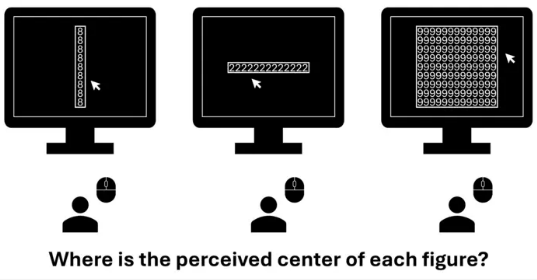
Object-Based Processing: Numbers Confuse How We Perceive Spaces

Researchers recently studied the relationship between numerical information in our vision, and...
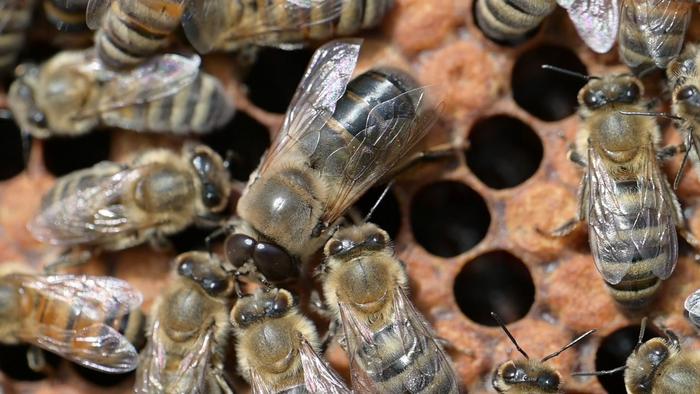
Males Are Genetically Wired To Beg Females For Food

Bees have the reputation of being incredibly organized and spending their days making sure our...

User picture.
News StaffRSS Feed of this column.

News Releases From All Over The World, Right To You... Read More »

Blogroll
When Earth was cooling from its fiery creation, the sun was faint and young, far too weak to keep the oceans of earth from freezing without some help from greenhouse gases; they kept water, essential for the creation of life, liquid on our young planet. 

But what were they?    A team of researchers from Tokyo Institute of Technology and University of Copenhagen's department of chemistry say ancient rocks have provided a possible answer, and they report the results in PNAS.

"The young sun was approximately 30 percent weaker than it is now, and the only way to prevent earth from turning into a massive snowball was a healthy helping of greenhouse gas," says associate Professor Matthew S. Johnson of the Department of Chemistry at University of Copenhagen.
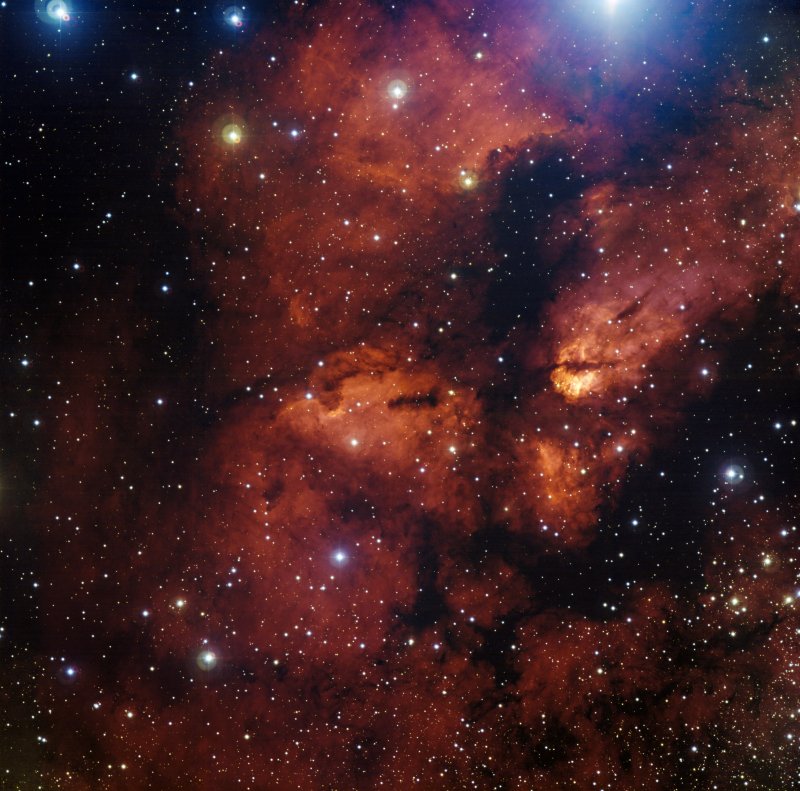
RCW 38 is a dense star cluster about 5500 light years away in the direction of the constellation Vela (the Sails). Like the Orion Nebula Cluster, RCW 38 is an embedded cluster, in that  clouds of dust and gas still envelop its stars.

Inside RCW 38, young stars bombard fledgling suns and planets with powerful winds and blazing light and some short-lived, massive stars explode as supernovae, whick sometimes cooks away the matter that would otherwise form new solar systems.

Did our own solar system form  in that sort of hellish environment?
Framing alternative energy in terms of lives saved can be risky business.   People die ... thousands from guns, tens of thousands from cars and a lot more than that from malpractice.

In the 700,000 employees in the US energy sector, 130 can be saved by switching to renewable energy, according to a commentary by Medical College of Wisconsin researchers in the August 19, 2009, Journal of the American Medical Association
It is estimated that at least 10 percent of the population may be tone deaf – unable to sing in tune.  A new finding identifies a particular brain circuit that appears to be absent in these individuals.

Nerve fibers in the neural "highway" called the arcuate fasciculus that link perception and motor regions of the brain are disconnected in tone-deaf people, according to new research in The Journal of Neuroscience.

Turns out that Dr. Scholl's Freeze Away doesn't work on worry-warts.  So for many people, personality traits like chronic worrying can lead to earlier death, at least in part because these people are more likely to engage in unhealthy behaviors, such as smoking, according to research from Purdue University.

"Research shows that higher levels of neuroticism can lead to earlier mortality, and we wanted to know why," said Daniel K. Mroczek, (pronounced Mro-ZAK) a professor of child development and family studies. "We found that having worrying tendencies or being the kind of person who stresses easily is likely to lead to bad behaviors like smoking and, therefore, raise the mortality rate.

How's this for something new: instead of a steel dental pick poking and prodding around your teeth at you next dentist appointment, imagine a laser doing all that work pain-free.

Thanks to a group of researchers in Australia and Taiwan, this may be possible. They have developed a new way to analyze the health of human teeth using lasers. As described in Optics Express, by measuring how the surface of a tooth responds to laser-generated ultrasound, they can evaluate the mineral content of tooth enamel -- the semi-translucent outer layer of a tooth that protects the underlying dentin.