

Banner
Social Media Is A Faster Source For Unemployment Data Than Government

Government unemployment data today are what Nielsen TV ratings were decades ago - a flawed metric...

Gestational Diabetes Up 36% In The Last Decade - But Black Women Are Healthiest

Gestational diabetes, a form of glucose intolerance during pregnancy, occurs primarily in women...
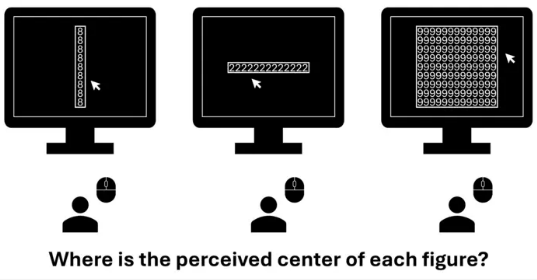
Object-Based Processing: Numbers Confuse How We Perceive Spaces

Researchers recently studied the relationship between numerical information in our vision, and...
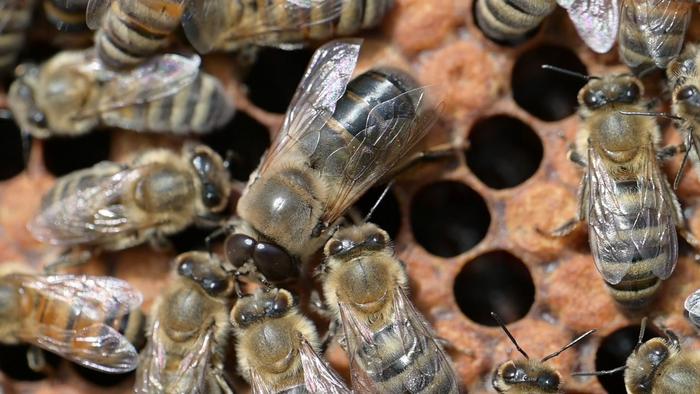
Males Are Genetically Wired To Beg Females For Food

Bees have the reputation of being incredibly organized and spending their days making sure our...

User picture.
News StaffRSS Feed of this column.

News Releases From All Over The World, Right To You... Read More »

Blogroll
A newly discovered planet, Kepler-78b, is in the constellation of Cygnus but it's a lot like Earth. If Earth were 2,000 degrees hotter and orbited the sun every 8 hours. 

But otherwise it is a lot like our planet, about 20% larger and 169% of our mass, and that makes it the smallest exoplanet to-date that has a confirmed mass and radius. The size is about the same, the density is about the same - and that's part of the mystery. How did it form so close to its star?

The sun emitted another significant solar flare, peaking at 5:54 p.m. on Oct. 29th, 2013  – the fourth X-class flare in the last week.

Solar flares are powerful bursts of radiation and while the radiation from a flare cannot pass through Earth's atmosphere to physically affect humans on the ground, when intense enough they can disturb the atmosphere in the layer where GPS and communications signals travel. The disruption to radio signals occurs for as long as the flare is ongoing, anywhere from minutes to hours.

This flare is classified as an X2.3 class flare. "X-class" denotes the most intense flares, while the number provides more information about its strength. An X2 is twice as intense as an X1, an X3 is three times as intense, etc.

A new collection featuring research on the complex evolutionary cascade theory that made the unique gigantism of sauropod dinosaurs possible has now been published in PLOS ONE.

Sauropod dinosaurs were the largest terrestrial animals to roam the Earth, exceeding all other land-dwelling vertebrates in both mean and maximal body size. While convergently evolving many features seen in large terrestrial mammals, such as upright, columnar limbs and barrel-shaped trunks, sauropods evolved some unique features, such as the extremely long necks and diminutive heads they are famous for.

The Large Underground Xenon (LUX) experiment is trying to identify the nature of dark matter, an invisible substance that physicists believe is all around us, making up most of the matter in the universe, even though it has effect on our lives.

The umbrella term 'dark matter' encompasses about 25% of the Universe, while what we know as matter makes up about 5%. The rest consists of what is called "dark energy" and no one knows anything about that other than that it is something helps make gravity behave strangely at the very large scale.

A  team at Ecole Polytechnique Fédérale de Lausanne has won an international artificial intelligence competition by creating software that can play the famous video game "Angry Birds" like a human.

If you have never seen "Angry Birds”, the game’s goal is to crush pigs by catapulting angry birds towards them. It is the most downloaded game of all time on mobile platforms.

Jason Li, postdoctoral researcher at EPFL, together with Mirko Katanic and Arnaud Jutzeler, created a program that is able to reproduce the way humans play this game and it became the “Angry Birds” world champion in August at the Beijing International Joint Conference on Artificial Intelligence (IJCAI).

A 34 centimeter diameter spherical flying robot does things that probably don't make sense to most people.


