

Banner
Social Media Is A Faster Source For Unemployment Data Than Government

Government unemployment data today are what Nielsen TV ratings were decades ago - a flawed metric...

Gestational Diabetes Up 36% In The Last Decade - But Black Women Are Healthiest

Gestational diabetes, a form of glucose intolerance during pregnancy, occurs primarily in women...

Object-Based Processing: Numbers Confuse How We Perceive Spaces

Researchers recently studied the relationship between numerical information in our vision, and...
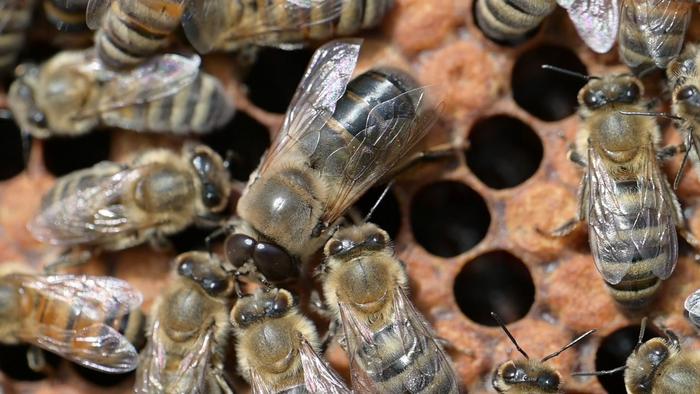
Males Are Genetically Wired To Beg Females For Food

Bees have the reputation of being incredibly organized and spending their days making sure our...

User picture.
News StaffRSS Feed of this column.

News Releases From All Over The World, Right To You... Read More »

Blogroll

The bottom of the deep ocean is not the most hospitable place in the world, but it is not devoid of life either.

Scientists have recently documented that oxygen is disappearing from seawater circulating through deep oceanic crust, a possible step in understanding the way life in the "deep biosphere" beneath the sea floor is able to survive and thrive.

Previous research into genetic variants has shown that dancers really are different than most people and a new neuroscience study sheds some light on ballet brains as well.

Differences in the brain structure of ballet dancers may help them avoid feeling dizzy when they perform pirouettes - and that ability to suppress signals from the balance organs in the inner ear can happen as a result of training, which could help to improve treatment for patients with chronic dizziness. 

Native small mammals on forest islands created by a large hydroelectric reservoir in Thailand faced extinction and a new paper says species living in rainforest fragments could be far more likely to disappear than was previously thought.

The authors draw parallels between logging and the islands created by hydroelectric power and say they were motivated by a desire to understand how long species can live in forest fragments. If they persist for many decades, this gives conservationists a window of time to create wildlife corridors or restore surrounding forests to reduce the harmful effects of forest isolation. 

The first rock that scientists analyzed on Mars with a pair of chemical instruments aboard the Curiosity rover turned out to be a doozy – a pyramid-shaped volcanic rock called a "mugearite" that is unlike any other Martian igneous rock ever found.

Dubbed "Jake_M" – after Jet Propulsion Laboratory engineer Jake Matijevic – the rock is similar to mugearites found on Earth, typically on ocean islands and in continental rifts. The process through which these rocks form often suggests the presence of water deep below the surface, according to Martin Fisk, an Oregon State University marine geologist and member of the Mars Science Laboratory team.

The first scoop of soil analyzed by the analytical suite in the belly of NASA's Curiosity rover reveals that fine materials on the surface of the planet contain several percent water by weight. 

The quest for evidence of life on Mars could be more complicated than previously thought due to  perchlorate,, a salt comprised of chlorine and oxygen, that interferes with the techniques used by the Curiosity rover to test for traces of life. The chemical causes the evidence to burn away during the tests.



