

Banner
Social Media Is A Faster Source For Unemployment Data Than Government

Government unemployment data today are what Nielsen TV ratings were decades ago - a flawed metric...

Gestational Diabetes Up 36% In The Last Decade - But Black Women Are Healthiest

Gestational diabetes, a form of glucose intolerance during pregnancy, occurs primarily in women...

Object-Based Processing: Numbers Confuse How We Perceive Spaces

Researchers recently studied the relationship between numerical information in our vision, and...
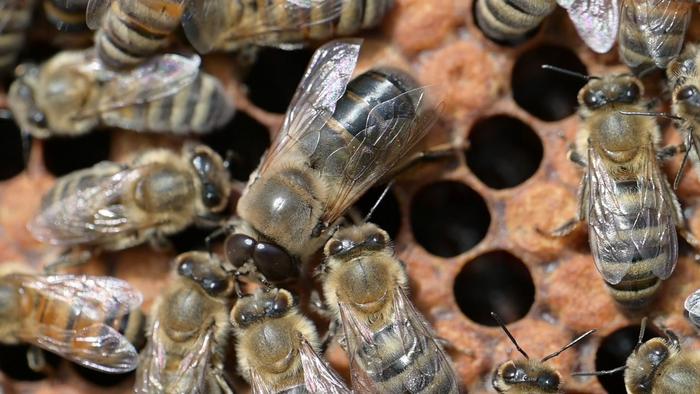
Males Are Genetically Wired To Beg Females For Food

Bees have the reputation of being incredibly organized and spending their days making sure our...

User picture.
News StaffRSS Feed of this column.

News Releases From All Over The World, Right To You... Read More »

Blogroll

NASA's Curiosity Rover has sampled a surprising diversity of soils and sediments along a half-kilometer route during its first few months on Mars. And what it has found tells a complex story about the gradual desiccation of the Red Planet.

Perhaps most notable among findings from the ChemCam team is that all of the dust and fine soil contains small amounts of water.

In a series of papers covering the rover's top discoveries during its first three months on Mars, the rover's ChemCam instrument team up with an international cadre of scientists affiliated with the CheMin, APXS, and SAM instruments to describe the planet's seemingly once-volcanic and aquatic history.

Reports of a new hepatitis virus earlier this year were a false alarm, according to U.C. San Francisco researchers who correctly identified the virus as a contaminant present in a type of glassware used in many research labs.

The finding highlights both the promise and peril of today’s powerful “next-generation” lab techniques that are used to track down new agents of disease. 

 IGR J18245-2452, located about 18,000 light-years from Earth in the constellation Sagittarius in a cluster of stars known as M28, is a neutron star with the peculiar ability to transform from a radio pulsar into an X-ray pulsar and back again.

The star's capricious behavior appears to be fueled by a nearby companion star and may give new insights into the birth of millisecond pulsars.

New methods are needed to fight the infection Clostridium difficile and better use of antibiotics could be key, according to a new paper.

Clostridium difficile (C.diff) causes severe diarrhoea, cramps and sometimes life-threatening complications, and has traditionally been thought to be transmitted within hospitals from other sick C.diff patients.
 

In a United Kingdom study, the team mapped all cases of Clostridium difficile (C.diff) in Oxfordshire over a three-year period (2008 to 2011) and found that less than one in five cases of the "hospital superbug" were likely to have been caught from other hospital cases of C.diff, where the focus of infection control measures has been.

Earlier studies have suggested that omega-3 fatty acids,  found in fatty fish such as salmon and in nuts, benefit thinking skills. A new paper in Neurology, based on a study that involved 2,157 women age 65 to 80 who were enrolled in the Women's Health Initiative clinical trials of hormone therapy,  disputes that.

The women were given annual tests of thinking and memory skills for an average of six years. Blood tests were taken to measure the amount of omega-3s in the participants' blood before the start of the study.

The discovery of what may be the earliest known creature with what can be discerned as a face has been reported in Nature. Entelognathus primordialis is an exceptionally well-preserved 419-million-year-old fish from China that is the most primitive vertebrate to have a modern type of jaw.

This fish is a placoderm, one of a member of an extinct group of gnathostomes (jawed vertebrates), but its jaw is much more like that of a modern bony fish: its discovery may offer a new perspective on the early evolution of these creatures.




