
Banner
Object-Based Processing: Numbers Confuse How We Perceive Spaces

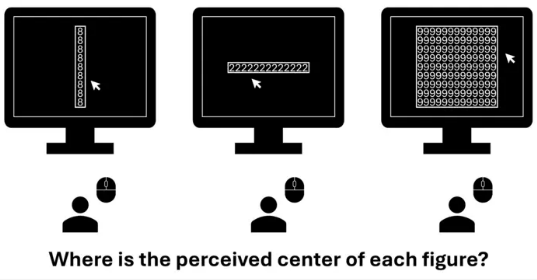
Researchers recently studied the relationship between numerical information in our vision, and...
Males Are Genetically Wired To Beg Females For Food

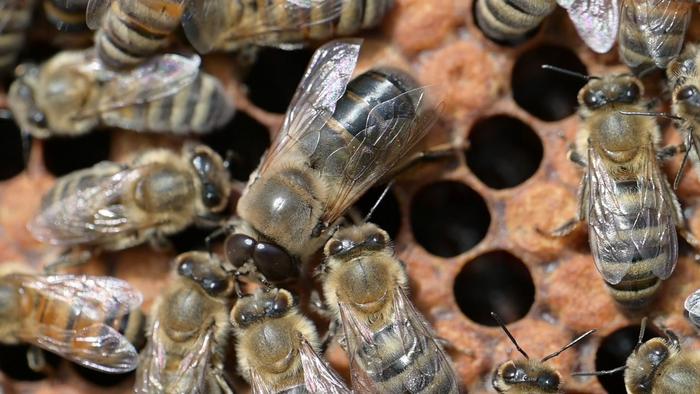
Bees have the reputation of being incredibly organized and spending their days making sure our...
The Scorched Cherry Twig And Other Christmas Miracles Get A Science Look

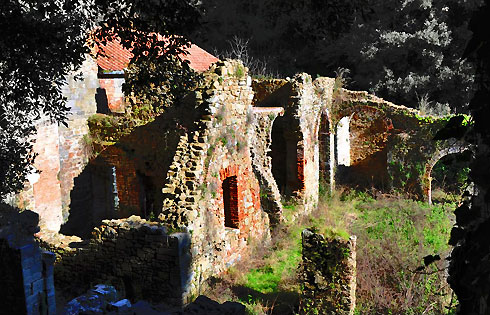
Bleeding hosts and stigmatizations are the best-known medieval miracles but less known ones, like ...

$0.50 Pantoprazole For Stomach Bleeding In ICU Patients Could Save Families Thousands Of Dollars

The inexpensive medication pantoprazole prevents potentially serious stomach bleeding in critically...

User picture.
News StaffRSS Feed of this column.

News Releases From All Over The World, Right To You... Read More »

Blogroll

If you want to see Aurora Borealis (the northern lights) in 3-D with your SLR cameras, and even determine the altitude where electrons in the atmosphere emit the light that produces aurora,  Ryuho Kataoka from the National Institute of Polar Research in Tokyo, Japan can show you how.

Kataoka came up with an idea for a new method to measure the height of aurora borealis after working on a 3D movie for a planetarium. They used two digital single-lens reflex (SLR) cameras set 8 km apart.

Researchers have uncovered the largest single volcano yet documented on Earth.

Tamu Massif covers an area roughly equivalent to the British Isles or the state of New Mexico, making it nearly as big as the giant volcanoes of Mars and placing it among the largest in the Solar System. Tamu Massif covers an area of about 120,000 square miles. By comparison, Hawaii's Mauna Loa – the largest active volcano on Earth – is approximately 2,000 square miles, or roughly 2 percent the size of Tamu Massif. Olympus Mons on Mars has a giant volcano visible on a clear night with a good backyard telescope, and that is only about 25 percent larger by volume than Tamu Massif.

If you have ever been trading a flurry of text messages with someone and there was an awkward pause, don't assume they are doing some work or have a life, you probably should be suspicious.

An analysis has determined that when people lie in digital messages – texting, social media or instant messaging – they take longer to respond, make more edits and they write shorter responses than usual.

The University of Florida's Blueberry Breeding Program has been developing successful blueberry lines for more than 60 years and those lines are credited with helping to create a Florida blueberry industry that was valued at $48 million in 2010 and for allowing rapid expansion of blueberry production in other subtropical areas of the world.

In the past, blueberry flavor selection in the program was based on two standards: subjective ratings from breeders, and a berry's sugar-to-acid ratio. Recently, scientists have determined that the "eating quality" of blueberries has a much higher correlation to consumer acceptance and indication of "blueberry-like flavor intensity" than the traditional measures of sweetness, acidity, or sugar/acid ratios.

 What happens when you tell a lie? Ethical concerns aside, what goes on in your brain when you willfully deceive someone? And what happens later, when you attempt to access the memory of your deceit?

How you remember a lie may be impacted profoundly by how you lie, according to a paper by Kathleen M. Vieira and Sean Lane. They examines two kinds of lies – false descriptions and false denials – and the different cognitive machinery that we use to record and retrieve them.

The Sun is a magnetically active star. Its activity manifests itself as dark sunspots and bright faculae - granular structures that are slightly hotter or cooler than the surrounding photosphere - on its visible surface, as well as violent mass ejections and the acceleration of high-energy particles resulting from the release of magnetic energy in its outer atmosphere. 

The frequency with which these phenomena occur varies in a somewhat irregular activity cycle of about 11 years, during which the global magnetic field of the Sun reverses. The solar magnetic field and the activity cycle originate in a self-excited dynamo mechanism based upon convective flows and rotation in the outer third of the solar radius.


