Banner
Gestational Diabetes Up 36% In The Last Decade - But Black Women Are Healthiest

Gestational diabetes, a form of glucose intolerance during pregnancy, occurs primarily in women...
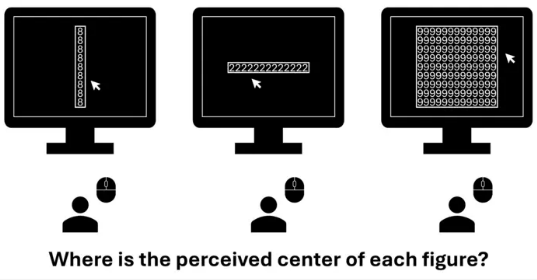
Object-Based Processing: Numbers Confuse How We Perceive Spaces

Researchers recently studied the relationship between numerical information in our vision, and...
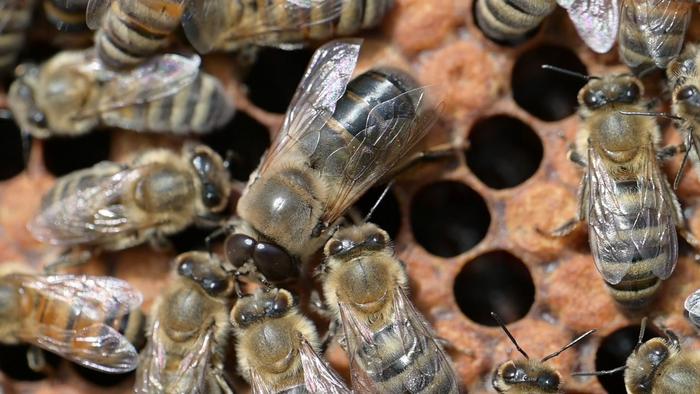
Males Are Genetically Wired To Beg Females For Food

Bees have the reputation of being incredibly organized and spending their days making sure our...

The Scorched Cherry Twig And Other Christmas Miracles Get A Science Look

Bleeding hosts and stigmatizations are the best-known medieval miracles but less known ones, like ...

User picture.
News StaffRSS Feed of this column.

News Releases From All Over The World, Right To You... Read More »

Blogroll

Medicine of the 21st century is getting a hand from an idea Henry Ford had in the 19th century and implemented in 1908 - the concept of continuous mass production.

Billions of tablets, capsules and other forms of medicine that people take each year are still made made batch-wise.   A batch of ingredients typically undergoes a series of batch-wise reactions with isolation of solid intermediates before finally being isolated and drummed into bulk containers. The active pharmaceutical ingredient then moves on to the next step, processing into a granular form, followed by collecting into bulk containers. The processing continues through drying and other stages before being compressed into tablets and coated.

Research into the role of proteins called sirtuins in enhancing longevity has yielded contradictory results from many different scientists - while it's been fine for mouse studies, weaning human babies on a diet near starvation isn't possible. As a result, the benefits of a low-calorie diet are accepted by people who want to believe it.

While the Plantagenets are getting all of the attention in England these days due to the discovery of Richard III's remains (though the German Saxe-Coburg and Gotha family currently holding the monarchy also got a lot of attention thanks to a new baby), the Tudors are not done in Leicester.

Two Tudor tomb monuments originally intended to stand in Thetford Priory, Norfolk, are in an exhibition at the Ancient House Museum, Thetford, Norfolk, today until 29 March 2014.
Obese teenagers who lose weight are at greater risk of developing eating disorders such as anorexia nervosa and bulimia nervosa, a sign that there may be a psychology issue regarding their relationship to food.

But because weight loss is a healthy positive to both doctors and family members, eating disorders may not be adequately detected.  Up to 6 percent of American adolescents suffer from eating disorders, and in surveys more than 55 percent of high school females and 30 percent of males claim disordered eating symptoms including engaging in one or more maladaptive behaviors (fasting, diet pills, vomiting, laxatives, binge eating) to induce weight loss.

In the classic story "Mary Poppins", the lead character told the children she was caring for that she would stay until the wind changed.

Things are a little different in Britain. In many parts of the US, the wind changes every five minutes, but she meant that there was a season (and a reason) she would remain and the wind would be a harbinger that her job was done and she would move on. 

We might like to think that on a cosmic scale, things are more predictable than the weather in Kentucky but, if they are, it is only slightly. Researchers benefiting from data gathered by 11 spacecraft over four decades have determined that even the interstellar wind - the particles streaming into the solar system from interstellar space - changes direction.

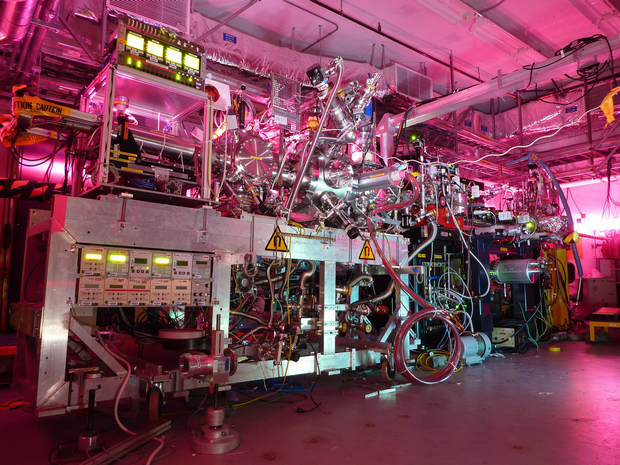
Scientists at the synchrotron PETRA III have investigated X-ray absorption of highly charged iron ions.

 Highly charged ions - that is, atoms which have been stripped of most of their electrons - play an important role in astrophysics. Within the large accumulations of visible (luminous) matter in the universe, the highly charged state is the natural one. This is the case in stellar atmospheres as well as in the interior of stars, where temperatures of several million degrees Celsius rule. Highly charged ions also abound around exotic objects such as neutron stars or black holes. Before matter plunges into their cores, it delivers gravitational energy, heating up and emitting extremely intense X-rays, which can be observed.