Banner
Gestational Diabetes Up 36% In The Last Decade - But Black Women Are Healthiest

Gestational diabetes, a form of glucose intolerance during pregnancy, occurs primarily in women...

Object-Based Processing: Numbers Confuse How We Perceive Spaces

Researchers recently studied the relationship between numerical information in our vision, and...

Males Are Genetically Wired To Beg Females For Food

Bees have the reputation of being incredibly organized and spending their days making sure our...
The Scorched Cherry Twig And Other Christmas Miracles Get A Science Look

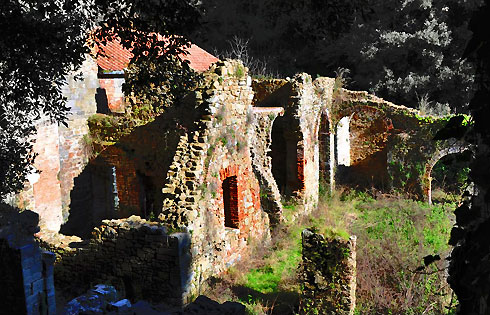
Bleeding hosts and stigmatizations are the best-known medieval miracles but less known ones, like ...

User picture.
News StaffRSS Feed of this column.

News Releases From All Over The World, Right To You... Read More »

Blogroll

NASA's Voyager 1 spacecraft has been hurtling away from the Sun since it was launched in 1977 and various reports have indicated that the spacecraft has left the heliosphere, the bubble of hot, energetic charged particles surrounding the Solar System, and entered into a region of cold, dark space, known as interstellar space.

New measurements show that plasma densities around the spacecraft are consistent with theoretical predictions of the interstellar medium and that Voyager 1 arrived in this cold, unexplored interstellar region on or about 25 August, 2012. 

TheSkyNet, a community computing project dedicated to astronomy that was initiated by the International Centre of Radio Astronomy Research (ICRAR) in Perth, Western Australia,  is celebrating its two year anniversary today with the official launch of a new research project, called T2 – Transform 2.  

The world has plenty of water but not where people actually live. Arid regions lack both water and the energy to make water potable. Ironically, the energy needed to make water potable or ship it to arid regions will result in greenhouse gas emissions that result in less water, according to a new paper.

The authors write that current targets for greenhouse gas emissions - which would set the mean temperature increase at around 3.5°C above pre-industrial levels - will expose 668 million people worldwide to new or aggravated water scarcity. 

If you have confidence in the future of science, you might be inclined to believe that a technology solution decades from now could make CO2 clean-up cheaper and more effective than what is available right now.

A group of economists argue just the opposite, they say that costs will be higher and that would make it less likely for decision-makers to ever push for a low-carbon economy. Global economic growth would be cut back by up to 7 percent within the first decade after climate policy implementation if the current international stalemate is continued until 2030, compared to 2 percent if a climate agreement is reached by 2015.

Astronomers have provided the best three-dimensional map yet of the central parts of the Milky Way. It shows that the inner regions take on a peanut-like appearance from some angles. This odd shape was mapped by using public data from ESO’s VISTA survey telescope along with measurements of the motions of hundreds of very faint stars in the central bulge.

One of the most important and massive parts of the galaxy is the galactic bulge. This huge central cloud of about 10 000 million stars spans thousands of light-years, but its structure and origin were not well understood.

Cilantro, a favorite ingredient in spicy cuisine, may also be an inexpensive new way of purifying drinking water, according to research done by undergraduate students at Ivy Tech Community College.

Douglas Schauer, Ph.D., reporting on the work at the American Chemical Society meeting, said that cilantro, also known as coriander and Thai parsley, shows promise as a "biosorbent" for removing lead and other potentially toxic heavy metals from contaminated water.