

Banner
Gestational Diabetes Up 36% In The Last Decade - But Black Women Are Healthiest

Gestational diabetes, a form of glucose intolerance during pregnancy, occurs primarily in women...
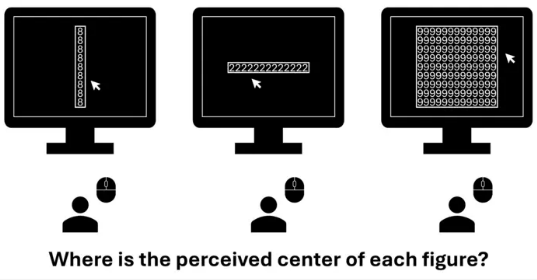
Object-Based Processing: Numbers Confuse How We Perceive Spaces

Researchers recently studied the relationship between numerical information in our vision, and...
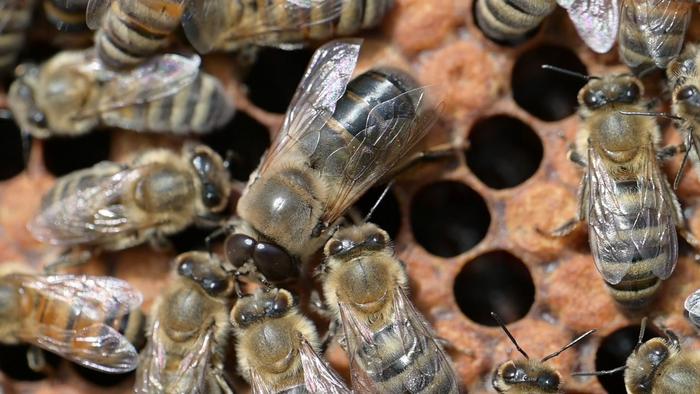
Males Are Genetically Wired To Beg Females For Food

Bees have the reputation of being incredibly organized and spending their days making sure our...

The Scorched Cherry Twig And Other Christmas Miracles Get A Science Look

Bleeding hosts and stigmatizations are the best-known medieval miracles but less known ones, like ...

User picture.
News StaffRSS Feed of this column.

News Releases From All Over The World, Right To You... Read More »

Blogroll

Researchers at Université Pierre et Marie Curie in France have unveiled a new technique that allows microscope users to manipulate samples using a technology known as haptic optical tweezers.

The new technique allows users to explore the microworld by sensing and exerting piconewton-scale forces with trapped microspheres with the haptic optical tweezers, allowing improved dexterity of micromanipulation and micro-assembly. 

An environmentally-friendly electronic alloy consisting of 50 aluminum atoms bound to 50 atoms of antimony may be promising for building next-generation "phase-change" memory devices, which could be an alternative to slower speed, lower storage density flash memory for data storage applications.

Phase-change memory relies on materials that change from a disordered, amorphous structure to a crystalline structure when an electrical pulse is applied. The material has high electrical resistance in its amorphous state and low resistance in its crystalline state -- corresponding to the 1 and 0 states of binary data.

It often takes several weeks to feel the effect of newly prescribed antidepressants - a lingering mystery and a frustration to both patients and physicians.

CREB, and CREM to some degree, has been implicated in the pathophysiology of depression, as well as in the efficacy of antidepressants. However, whenever CREB is deleted, CREM is upregulated, further complicating the story.

A new study has found that not only does fish skin resemble the gut morphologically, but key components of skin immune responses are also akin to those of the gut. 

Fish skin is unique in that it lacks keratin, the fibrous protein found in mammalian skin that provides a barrier against the environment. Instead, the epithelial cells of fish skin are in direct contact with the immediate environment: water. Similarly, the epithelial cells that line the gastrointestinal tract are also in direct contact with their immediate milieu.

The cyclic wobble of the Earth on its axis, axial precession, controls the production of  "fixed" nitrogen, a nutrient essential to the health of the ocean, according to a new study.

Before there was life on Earth, there was a primordial soup of molecules, and at some point a specialized molecules began replicating. This self-replication kick-started a biochemical process that would lead to the first organisms.

How those molecules began replicating has been one of science's enduring mysteries.

In the early 1980s, researchers found that ribozymes — RNA enzymes — act as catalysts. It was evidence that RNA can be both the blueprints and the chemical catalysts that put those blueprints into action. This finding led to the "RNA World" hypothesis, which posits that RNA alone triggered the rise of life from a sea of molecules.



