
Banner
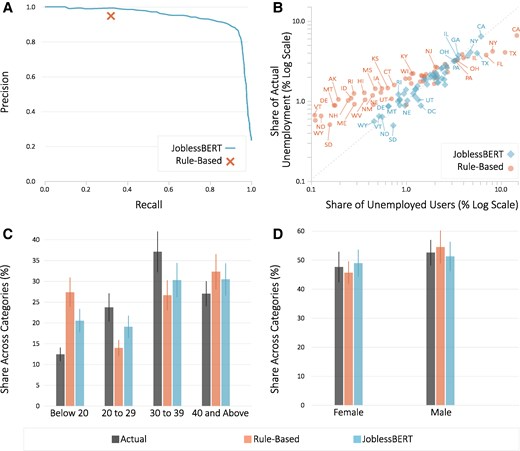
Social Media Is A Faster Source For Unemployment Data Than Government

Government unemployment data today are what Nielsen TV ratings were decades ago - a flawed metric...

Gestational Diabetes Up 36% In The Last Decade - But Black Women Are Healthiest

Gestational diabetes, a form of glucose intolerance during pregnancy, occurs primarily in women...
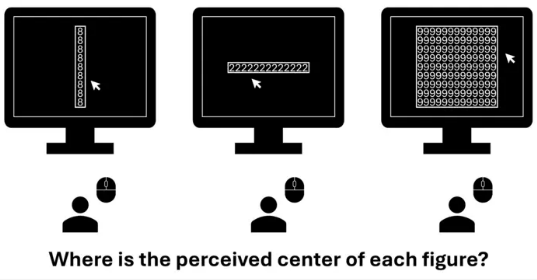
Object-Based Processing: Numbers Confuse How We Perceive Spaces

Researchers recently studied the relationship between numerical information in our vision, and...
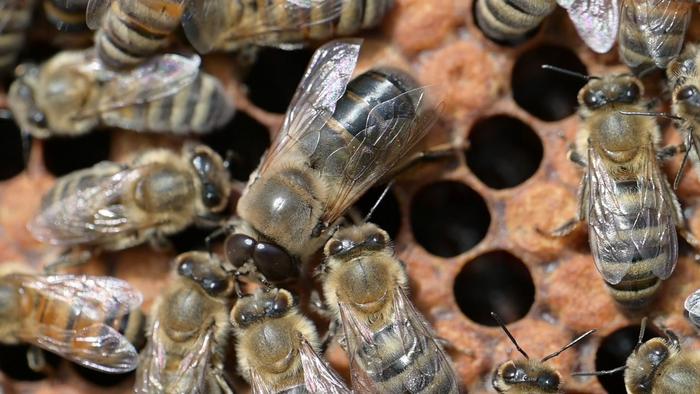
Males Are Genetically Wired To Beg Females For Food

Bees have the reputation of being incredibly organized and spending their days making sure our...

User picture.
News StaffRSS Feed of this column.

News Releases From All Over The World, Right To You... Read More »

Blogroll

 What happens when you tell a lie? Ethical concerns aside, what goes on in your brain when you willfully deceive someone? And what happens later, when you attempt to access the memory of your deceit?

How you remember a lie may be impacted profoundly by how you lie, according to a paper by Kathleen M. Vieira and Sean Lane. They examines two kinds of lies – false descriptions and false denials – and the different cognitive machinery that we use to record and retrieve them.

The Sun is a magnetically active star. Its activity manifests itself as dark sunspots and bright faculae - granular structures that are slightly hotter or cooler than the surrounding photosphere - on its visible surface, as well as violent mass ejections and the acceleration of high-energy particles resulting from the release of magnetic energy in its outer atmosphere. 

The frequency with which these phenomena occur varies in a somewhat irregular activity cycle of about 11 years, during which the global magnetic field of the Sun reverses. The solar magnetic field and the activity cycle originate in a self-excited dynamo mechanism based upon convective flows and rotation in the outer third of the solar radius. 

Government and academic analysts say that cheaper labor in China is not the reason for Asian dominance in solar panels, but rather larger-scale manufacturing and resulting supply-chain benefits.

Fat-tailed dwarf lemurs are the only primates that hibernate - and their sleep patterns during hibernation are different from other animals that hibernate, like ground squirrels, which also hibernate at similar temperatures. 

During hibernation, dwarf lemurs experience periods of rapid eye movement (REM) sleep at relatively high ambient temperatures, but no non-REM sleep. Ground squirrels, by contrast, experience only periods of non-REM sleep at high temperatures.

The sleep patterns observed confirm a link between ambient temperature while sleeping and metabolic rate.

Researchers have discovered a protein that is the missing link in the complicated chain of events that lead to Alzheimer's disease. They also found that blocking the protein with an existing drug can restore memory in mice with brain damage that mimics the disease.

"What is very exciting is that of all the links in this molecular chain, this is the protein that may be most easily targeted by drugs," said Stephen Strittmatter, a Yale University School of Medicine Professor of Neurology and senior author of the study. "This gives us strong hope that we can find a drug that will work to lessen the burden of Alzheimer's."

The evolution of similar traits in different species, a process known as convergent evolution, is widespread not only at the physical level, but also at the genetic level, and scientists who investigated the genomic basis for echolocation, one of the most well-known examples of convergent evolution, sought to examine the frequency of the process at a genomic level. 

Echolocation is a complex physical trait that involves the production, reception and auditory processing of ultrasonic pulses for detecting unseen obstacles or tracking down prey, and has evolved separately in different groups of bats and cetaceans (including dolphins).




