Banner
The Scorched Cherry Twig And Other Christmas Miracles Get A Science Look

Bleeding hosts and stigmatizations are the best-known medieval miracles but less known ones, like ...

$0.50 Pantoprazole For Stomach Bleeding In ICU Patients Could Save Families Thousands Of Dollars

The inexpensive medication pantoprazole prevents potentially serious stomach bleeding in critically...

Metformin Diabetes Drug Used Off-Label Also Reduces Irregular Heartbeats

Adults with atrial fibrillation (AFib) who are not diabetic but are overweight and took the diabetes...

Your Predator: Badlands Future - Optical Camouflage, Now Made By Bacteria

In the various 'Predator' films, the alien hunter can see across various spectra while enabling...

User picture.
News StaffRSS Feed of this column.

News Releases From All Over The World, Right To You... Read More »

Blogroll
What group has above average interest in systems and scores below average in empathy?

If you answered autistic people, you are correct. If you answered girls with anorexia, also correct.

Girls with anorexia nervosa show a mild echo of the characteristics of autism, suggests new research. At first glance, anorexia and autism seem very different, but they both share certain features, such as rigid attitudes and behaviours, a tendency to be very self-focussed, and a fascination with detail. Both conditions also share similar alterations in structure and function of brain regions involved in social perception.

A young child buried in the medieval town of Ribe in Denmark 800 years ago had an unpleasant life even before that - because the child had been given a large dose of mercury in an attempt to cure a severe, ongoing illness. 

A new methodology developed by chemist Kaare Lund Rasmussen from University of Southern Denmark and colleagues can reveal an unprecedented amount of details about the time even shortly before a person's death. Mercury is of particular interest for the archaeologists as many cultures in different part of the world have been in contact with the rare (and toxic) element.

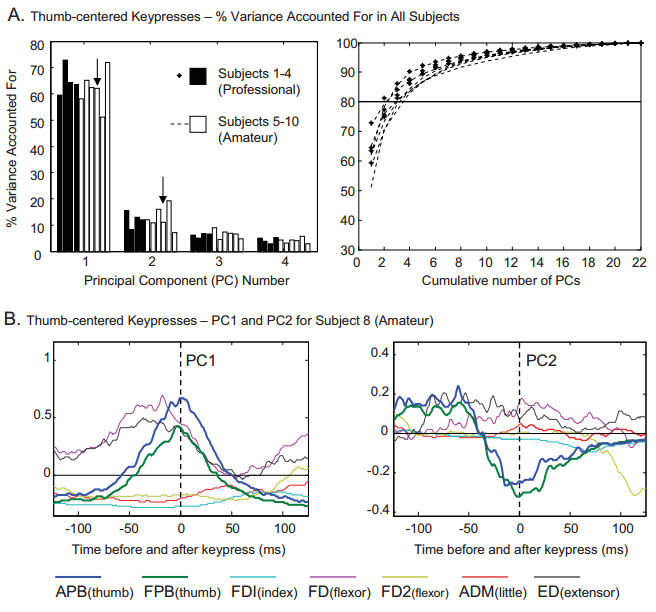
There is a phenomenon in speech called coarticulation, in which certain sounds are produced differently depending on the sounds that come before or after them.

For example, though the letter n is usually pronounced with the tongue pressed near the middle of the mouth's roof (as in the word "ten") but it's pronounced with the tongue forward when it's followed by a –th, as in tenth).

A decade ago, researchers discovered that coarticulation extends to a different kind of communication - American Sign Language. Knowing that hand movements could be affected according to where they fit in during sign language, researchers wondered if there was a similar effect on hands when they were used to produce sound, such as playing the piano. 

Surveys show that people have less empathy for battered human adults than they do dogs, according to a paper at the American Sociological Association.

Jack Levin  and Arnold Arluke, sociology professors at Northeastern University, used the opinions of 240 men and women, most of whom were white and between the ages of 18-25 (college students), at a large northeastern university (guess which one) who randomly received one of four fictional news articles about; the beating of a one-year-old child, an adult in his thirties, a puppy, or a 6-year-old dog. The stories were identical except for the victim's identify. After reading their story, respondents were asked to rate their feelings of empathy towards the victim.

Cocaine use may cause profound metabolic changes which can result in dramatic weight gain during recovery, a distressing phenomenon that can lead to relapse - the reason is because chronic cocaine use may reduce the body's ability to store fat, the authors of a new paper suggest.

It is widely believed that cocaine suppresses the appetite and that the problematic weight gain during rehabilitation was a result of patients substituting food for drugs. 

Inherited diseases such as cystic fibrosis or Huntington disease involve disease-causing genetic mutations that damage or remove a protein that has an essential role in the body. This protein defect is the root cause of the disease symptoms.

But for congenital muscular dystrophies (CMDs), the sequence of the protein that is central to normal function is typically unaffected. Instead, the defects lie in processing proteins—ones that are responsible for modifying the central protein by adding sugar chains (glycans). Either loss of the glycans or disruption of their structure is sufficient to cause muscle disease.