

Banner
The Scorched Cherry Twig And Other Christmas Miracles Get A Science Look

Bleeding hosts and stigmatizations are the best-known medieval miracles but less known ones, like ...

$0.50 Pantoprazole For Stomach Bleeding In ICU Patients Could Save Families Thousands Of Dollars

The inexpensive medication pantoprazole prevents potentially serious stomach bleeding in critically...
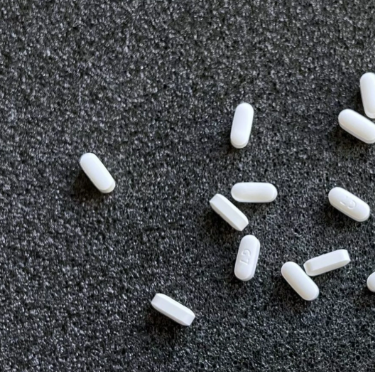
Metformin Diabetes Drug Used Off-Label Also Reduces Irregular Heartbeats

Adults with atrial fibrillation (AFib) who are not diabetic but are overweight and took the diabetes...

Your Predator: Badlands Future - Optical Camouflage, Now Made By Bacteria

In the various 'Predator' films, the alien hunter can see across various spectra while enabling...

User picture.
News StaffRSS Feed of this column.

News Releases From All Over The World, Right To You... Read More »

Blogroll
Caffeine drinks are in some kind of arms race and as caffeine levels escalate, so do reports of caffeine overdose. It's not just those terrible-tasting energy drinks, it's also in snacks, candy, and even chewing gum.

EnergyFiend.com has  tracked caffeine levels for the past 8 years and found that the number of caffeinated products does not appear to be slowing down. According to editor Ted Kallmyer, “We’re now tracking over 1,000 items, and among those are some products with very high levels of caffeine. They are clearly targeted to the teen market.”

How would you measure the 'evolution' - that is to say, changes - in human culture and psychology over the last 200 years? 

Psychologist Patricia Greenfield of the University of California, Los Angeles used the Google Ngram Viewer to examine the frequencies of specific words in a corpus of over 1,160,000 English-language books published in the United States between 1800 and 2000. At least it tells us how linguistics evolved.

The result, says Greenfield, is that people have shifted from rural environment to urban. 

She has coined this hypothesis the "Theory of Social Change and Human Development" and believes that the usage of specific words waxes and wanes as a reflection of psychological adaptation to sociocultural change. 

Mathematics is a skill. Some people are better at it than others, so an individual person's math ability can range anywhere from being able to do simple arithmetic to calculus and abstract set theory. 

But there is some math ability we all share, according to psychologists: a simple ability to estimate and compare quantities without overtly counting, like when choosing a checkout line at the grocery store - guesstimating, though not quite as lazy as it sounds.

Though it makes microbiologists gasp in horror, sous vide ("under vacuum") cooking - which uses lower temperatures with claims it improves food quality - is all the rage in food circles now.

But it's unclear what the risks are. Advocates of it have history on their side; preserving and cooking food in leaves, fat, salt and animal bladders before being cooked is as ancient as cooking. And isolating food from air, such as vacuum sealing, can arrest the decay of food.

Dolphins can recognize the whistles of former tank mates even after being separated for more than 20 years; that's the longest social memory known outside people.

This adds to evidence that dolphins have a level of cognitive sophistication comparable to few other species, including chimpanzees and elephants. Dolphins' talent for social recognition may be even comparable or more long-lasting than facial recognition among humans, since human faces change over time but the signature whistle that identifies a dolphin remains stable over many decades. 

"This shows us an animal operating cognitively at a level that's very consistent with human social memory," said Dr. Jason Bruck of the University of Chicago's program in Comparative Human Development. 

Women are given a 'due date' for their baby that is calculated as 280 days after the onset of their last menstrual period. 

Yet it's unlikely to be anything more than a guide. Only 4 percent of women deliver at 280 days and only 70% deliver within 10 days of their estimated due date, even when that date is calculated with the help of ultrasound. In the real world, the length of pregnancy can vary naturally by as much as five weeks 

Researchers have been able to pinpoint the precise point at which a woman ovulates and a fertilised embryo implants in the womb during a naturally conceived pregnancy, and follow the pregnancy through to delivery. Using this information, they have been able to calculate the length of 125 pregnancies.





