Why Both Stimulating And Blocking GLP-1R Helps People Lose Weight
Understanding which brain circuits respond to weight loss medications and how they behave could lead to better weight loss with fewer side effects.
Understanding which brain circuits respond to weight loss medications and how they behave could lead to better weight loss with fewer side effects.

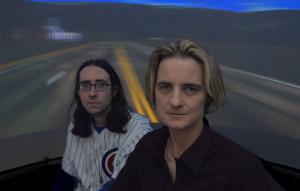
Video games that contain high levels of action, such as Unreal Tournament, can actually improve your vision.
Researchers at the University of Rochester have shown that people who played action video games for a few hours a day over the course of a month improved by about 20 percent in their ability to identify letters presented in clutter—a visual acuity test similar to ones used in regular ophthalmology clinics.
In essence, playing video game improves your bottom line on a standard eye chart.
Perhaps Daphne Bavelier and Shawn Green will work on reasons to skip school and eat Fritos next. (Image courtesy of University of Rochester)

A giant elliptical galaxy seen in an image from the Hubble Space Telescope is the closest gravitational lens yet known, according to information released by the Hubble Heritage Project Tuesday (Feb. 6).
John Blakeslee, an assistant professor with the Department of Physics and Astronomy at Washington State University, working with colleagues from the University of Hawaii and the University of Durham in England, targeted the galaxy for a closer look by Hubble.
Elliptical Galaxy ES) 325-G004 in the Abell Cluster S0740. (Credit: NASA, ESA, and The Hubble Heritage Team (STScI/AURA) / Acknowledgment: J. Blakeslee (Washington State University))
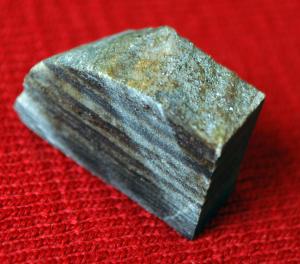
A greenhouse gas that has become the bane of modern society may have saved Earth from completely freezing over early in the planet's history, according to the first detailed laboratory analysis of the world's oldest sedimentary rocks.
Scientists have for years theorized that high concentrations of greenhouse gases could have helped Earth avoid global freezing in its youth by allowing the atmosphere to retain more heat than it lost.
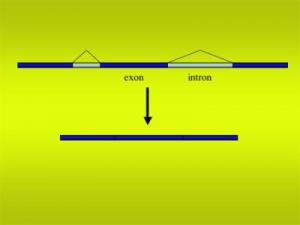
Many human proteins are not as good as they might be because the gene sequences that code for them have a double role which slows down the rate at which they evolve, according to new research published in PLoS Biology.
By tweaking these dual role regions, scientists could develop gene therapy techniques that produce proteins that are even better than those found in nature, and could one day be used to help people recover from genetic disorders.
The stretch of DNA which codes for a specific protein is often interrupted by sections of apparently useless DNA – known as introns – which need to be edited out in order to produce a new protein.
Before a transcribed gene is translated into t

Wouldn't it be great if we could get computer chips to grow on trees? Or at least use the specific bonds of DNA molecules to get nanostructures to grow themselves right in the test tube? This technology could be used to build everything from tiny electronics components to machines that sequence DNA. This is shown in a dissertation from Mid Sweden University.
Building structures as tiny as a few nanometers is a major problem with today's technology. This is an important hurdle, because really tiny things can be extremely useful.
During development and during pathological processes in the adult, cells are constantly changing their function. One, well-characterized, cellular transition that occurs during development, as well as during wound healing, tissue fibrosis, and tumor metastasis, is the transition from an epithelial cell to a mesenchymal cell (often a fibroblast).
This change in cell type and function is known as epithelial-mesenchymal transition (EMT) and it has been shown that a protein known as FSP1 is important for this transition.
Debate over euthanasia continues in many countries. Opinions were divided for months in Italy over the case of Piergiorgio Welby, who died Dec. 20 when he was administered a sedative and his artificial respiration was turned off.
More recently, in Australia, cancer sufferer John Elliot traveled to Zurich, Switzerland, to put an end to his life with the aid of the organization Dignitas. As often happens with these cases, pro-euthanasia activists exploited the emotional appeal of a suffering and terminally ill patient to push for a so-called right to die.
Elliot was accompanied in his journey by Australian euthanasia advocate, Philip Nitschke, as well as a reporter from the Melbourne-based Age newspaper, the periodical reported Jan. 27.
Carnegie Mellon University's Philip LeDuc predicts the use of artificially created cells could be a potential new therapeutic approach for treating diseases in an ever-changing world. LeDuc, an assistant professor of mechanical and biomedical engineering, penned an article for the January edition of Nature Nanotechnology Journal about the efficacy of using man-made cells to treat diseases without injecting drugs.
This idea was developed by a team of researchers from disciplines including biology, chemistry and engineering during an exciting conference organized by the National Academies and the Keck Foundation for developing new disease-fighting approaches for the future.
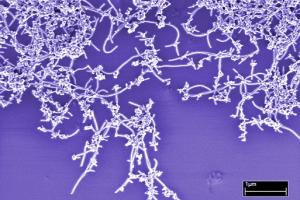
Researchers at the National Institute of Standards and Technology (NIST) have developed a sensitive new method for rapidly assessing the quality of carbon nanotubes. Initial feasibility tests show that the method not only is faster than the standard analytic technique but also effectively screens much smaller samples for purity and consistency and better detects sample variability.
A new NIST method for rapidly assessing the quality of carbon nanotubes was evaluated in part by comparing the results to electron micrographs, which revealed uneven composition such as large bundles of nanotubes and impurities such as metallic particles. (Color added.) (Credit: NIST)
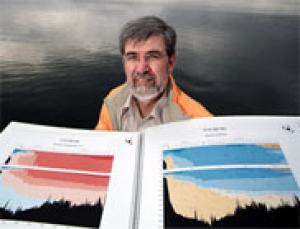
The climate system, and in particular sea level, may be responding more quickly to rising carbon emissions than climate scientists have estimated with climate models.
An international team of climate scientists has cautioned against suggestions that the Intergovernmental Panel on Climate Change (IPCC) has previously overestimated the rate of climate change.
The team, from six institutions around the world, reviewed actual observations of carbon dioxide, temperature and sea level from 1990 to 2006 and compared them with projected changes for the same period.
CSIRO Marine and Atmospheric Research and Antarctic Climate and Ecosystems CRC scientist, Dr. John Church.
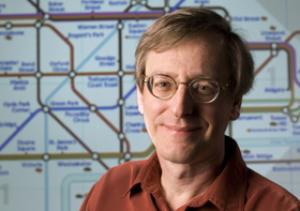
For Duke University theoretical chemist David Beratan, the results of his 15 years of studying how electrons make their way through some important protein molecules can be summed up with an analogy: how do big city dwellers get from here to there?
It's often swiftest to take the subway, Beratan notes, but riders may sometimes elect to alter their route by exiting the train for a short cab ride or a walk down the street. And they also may have to work around a route that is temporarily out of service.
David Beratan poses with subway route map. (Photo Credit: Megan Morr)
MORGANTOWN, W.Va., Feb. 5 (UPI) -- U.S. scientists are using a computer program to develop an objective method of determining when a boxing match should be stopped.
The researchers at West Virginia University say a computerized approach to counting punches at ringside identifies certain characteristics related to deaths in the ring.
"This approach could provide sufficient data to stop matches that might result in fatalities," said Drs. Vincent Miele and Julian Bailes of West Virginia University School of Medicine.
Miele and Bailes performed a computer-assisted video analysis to compare three groups of professional boxing matches.