Banner
Social Media Is A Faster Source For Unemployment Data Than Government

Government unemployment data today are what Nielsen TV ratings were decades ago - a flawed metric...

Gestational Diabetes Up 36% In The Last Decade - But Black Women Are Healthiest

Gestational diabetes, a form of glucose intolerance during pregnancy, occurs primarily in women...

Object-Based Processing: Numbers Confuse How We Perceive Spaces

Researchers recently studied the relationship between numerical information in our vision, and...

Males Are Genetically Wired To Beg Females For Food

Bees have the reputation of being incredibly organized and spending their days making sure our...

User picture.
News StaffRSS Feed of this column.

News Releases From All Over The World, Right To You... Read More »

Blogroll

If you've been to a whispering gallery, a quiet, circular space often underneath a dome or vault that captures and amplifies sounds as quiet as a whisper, you have witnessed parabolics in action. The sound waves are efficiently propagated by the concave surface and similar whispering-gallery waves are evident in light.

Researchers are applying similar principles in the development optomechanical sensors that will help unlock vibrational secrets of chemical and biological samples at the nanoscale.

Using social media like Twitter, Facebook and others is said to be like drinking from a fire hose.

A team of data scientists at the Department of Energy's Pacific Northwest National Laboratory, is trying to drink from 7 billion firehoses.  They have created a system capable of analyzing billions of tweets and other social media messages in an effort to discover patterns and make sense of all the information. They call the analysis tool "SALSA" (SociAL Sensor Analytics).

"The world is equipped with human sensors – more than 7 billion and counting. It's by far the most extensive sensor network on the planet. What can we learn by paying attention?"  Court Corley, data scientist at PNNL, said.

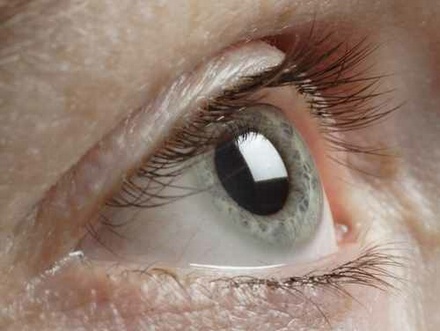
Visually impaired individuals and people with uncorrected refractive error, those who could benefit from glasses to achieve normal vision but don't wear glasses, have a significantly greater risk of diminished balance with their eyes closed on a compliant, foam surface than individuals with normal vision.

The research suggests that vision may play an important role in calibrating the vestibular system, which includes the bones and soft tissue of the inner ear, to help optimize physical balance. The work provides direction for more targeted studies on how poor vision impacts vestibular balance, and how to better develop fall prevention strategies for those with poor vision.

Combat troops must minimize the 'human-ness' of their enemies in order to kill them, they can't be effective fighters if they're distracted by feelings of empathy for opponents.

But if the opponent is dehumanized, which entails seeing them as disgusting animals, the possibility for war crimes is greater, note psychologists writing in NeuroImage. Indifference to the enemy, rather than loathing, may help prevent war crimes and provide troops with a better path back to healthy civilian lives, they propose.

Their hypothesis is based on new work showing how the brain operates when people objectify—that is, think of others as mere objects — or dehumanize, which entails seeing others as disgusting animals.

NASA's Tropical Rainfall Measuring Mission (TRMM satellite) flew directly above tropical storm Andrea on Thursday, June 6, 2013 at 0508 UTC (1:08 a.m. EDT). This orbit showed that Andrea had a large area of moderate to heavy rainfall in the northeast quadrant of the storm and precipitation was spreading over the state of Florida.

Spindle-shaped inclusions in 3 billion-year-old rocks are microfossils of plankton probably inhabited the oceans around the globe during that time - but these inclusions in the rocks were not only biological in origin, they were also likely planktonic autotrophs - free-floating, tiny ocean organisms that produce energy from their environment.