Banner
Social Media Is A Faster Source For Unemployment Data Than Government

Government unemployment data today are what Nielsen TV ratings were decades ago - a flawed metric...

Gestational Diabetes Up 36% In The Last Decade - But Black Women Are Healthiest

Gestational diabetes, a form of glucose intolerance during pregnancy, occurs primarily in women...

Object-Based Processing: Numbers Confuse How We Perceive Spaces

Researchers recently studied the relationship between numerical information in our vision, and...

Males Are Genetically Wired To Beg Females For Food

Bees have the reputation of being incredibly organized and spending their days making sure our...

User picture.
News StaffRSS Feed of this column.

News Releases From All Over The World, Right To You... Read More »

Blogroll

"I think I can safely say that nobody understands quantum mechanics," spoke American physicist, educator and quote machine Richard Feynman — underlining the idea that even leading scientists struggle to develop an intuitive feeling for quantum mechanics. 

One reason for this is that quantum phenomena often have no counterpart in classical physics, as we see in quantum entanglement: Entangled particles seem to directly influence one another, no matter how widely separated they are. It looks as if the particles can 'communicate' with one another across arbitrary distances. Albert Einstein, famously, called this seemingly paradoxical behavior "spooky action at a distance."

In animals that reproduce by internal fertilization, as humans do, the penis is invaluable, from an evolutionary point of view. 

Yet birds have evolved to not need them. Developmentally speaking, birds' penises have gone. Land fowl, which have only rudimentary penises as adults, have normally developing penises as early embryos. Later in development, however, the birds turn on a genetic program that leads their budding penises to stop growing and then wither away.

Astronomers can look back in time by gathering light from distant stars that was sent billions of years ago. Another way to learn about the past is to study similar stars to our own, but at a much younger age.

New work  studying the young star TW Hydrae, located about 190 light-years from Earth in the southern constellation Hydra the Water Snake, suggests that our Sun was both active and "feisty" in its infancy, growing in fits and starts while burping out bursts of X-rays.

Studies have shown that religious people are actually helped by faith in stressful situations.

Oxford University psychologists suggest atheists are also helped by belief during times of crisis; the explanatory and revealing power of science increases in the face of stress or anxiety, they have found.

The social psychologists argue that a 'belief in science' may help non-religious people deal with adversity by offering similar comfort and reassurance that religious people get from spirituality.

Karlsruhe's Institute of Technology, Freie Universität Berlin and the University of Geneva set out to determine whether and how far laser light and plasma can influence cloud formation.

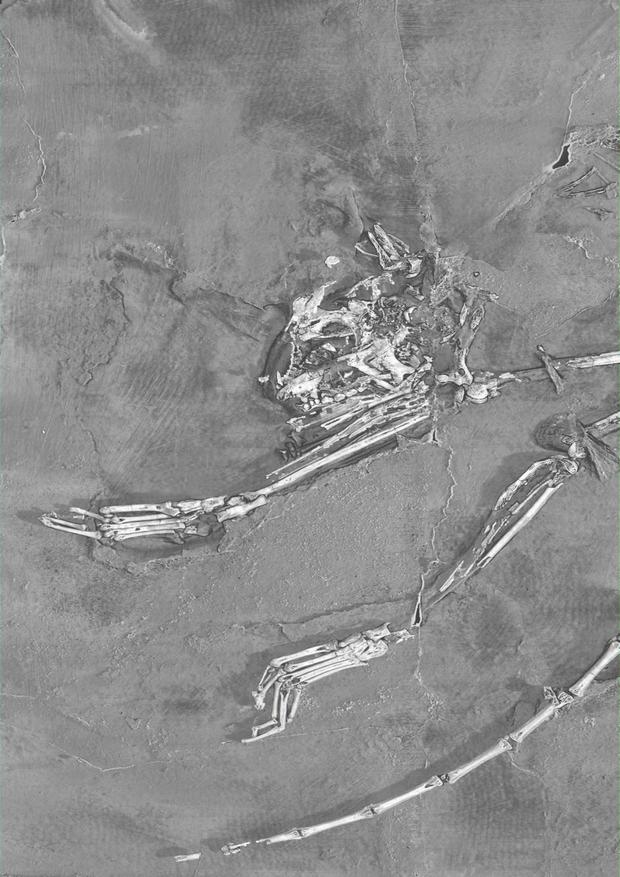
The world’s oldest known fossil primate skeleton, unearthed from an ancient lake bed in central China’s Hubei Province, near the course of the modern Yangtze River, represents a previously unknown genus and species that has been named Archicebus achilles, according to the paper in Nature

The new fossil takes its name from the Greek arche (meaning beginning or first; the same root as archaeology) and the Greek kebos (meaning long-tailed monkey). The species name achilles (derived from the mythological Greek warrior Achilles) highlights the new fossil’s unusual ankle anatomy.