The El Niño climate phenomenon is consistently inconsistent, which plays havoc with computer models hoping to anticipate the effects of increased emissions from large polluting countries like China.
It may even be causing periodic booms and busts in spiders and overall insects.
Don't worry, there won't be a marketing campaign from environmental groups over this like there are honeybees. Arthropods, including insects and spiders, are the vast majority of animal species on the planet. Like the weather, the ecosystem is too complex to predict and often involves politics rather than science, but the science shows they are vital food sources for birds and other larger animals so if there is a decline and not just anecdotes, that could be a concern.
A team set out to prove there is a decline even in the tropics, where residents certainly wish there were fewer, and they want to implicate El Niño and climate change. They used statistical analysis so this is only EXPLORATORY, there is no cause for media alarm.
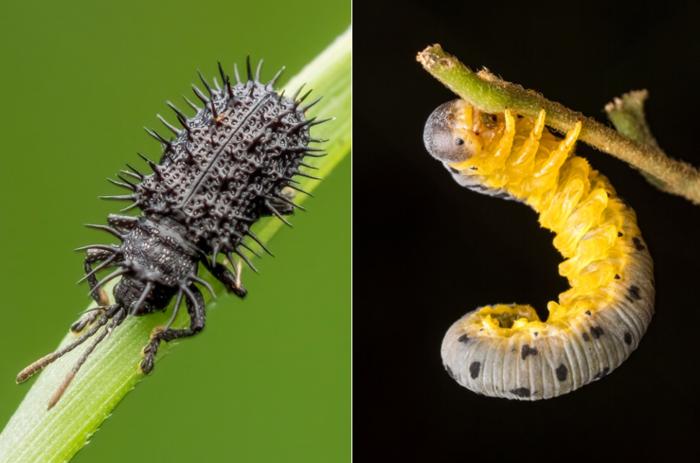
Credit: Marco Chan
They looked at 80 other studies in tropical forest sites that have never been commercially altered by humans and found statistically significant biodiversity loss in multiple types of arthropod, including butterflies, beetles and spiders. This matched drops in the amount of live leaf material consumed by arthropods over time, and substantial instability in the amount of dead leaves decomposed by arthropods. In Yellowstone, environmentalists cheer that they got politicians to reintroduce wolves and it caused this effect but here it is considered a negative.
They then drew a link between climate change and the declines in arthropods. The tropics experience natural but irregular year-to-year variation in climate, driven by atmospheric El Niño Southern Oscillation. Any long-term changes to the cycle caused by climate change could be behind the arthropod declines they say they have found.
The opposing El Niño and La Niña stages of the cycle can impact arthropods, just like hard winters and bursts of varroa mite infestations can cause higher honeybee overwinter deaths. Yet it's hard to predict even though there is a dramatic swing across the tropics. El Niño conditions are hot and dry while La Niña conditions are often cooler and wetter.
The authors say the concern is that El Niño is becoming more frequent and more intense due to climate change and losses they detected in their meta-analysis can rule out habitat loss, pesticides, pollution and various other threats. El Niño must be the prime suspect because the studies they looked at found the largest declines in arthropods occurred in those that favor La Niña conditions. If El Niño is becoming detrimental due to climate change, then its occurrence is sure to further chip away at arthropod biodiversity into the future.