Fake Banner
Happy Twelfth Night - Or Divorce Day, Depending On How Your 2026 Is Going

Today is, in Christian observance, Twelfth Night, the end of The 12 Days of Christmas in that song...

Blood Pressure Medication Adherence May Not Be Cost, It May Be Annoyance At Defensive Medicine

High blood pressure is an important risk factor for developing cardiovascular disease and premature...

On January 5th, Don't Get Divorced Because Of Hallmark Movies

The Monday after New Year's is colloquially called Divorce Day, but it's more than marriages ending...

Does Stress Make Holidate Sex More Likely?

Desire to have a short-term companion for the holidays - a "holidate" - is common enough that it...

User picture.
picture for Tommaso Dorigopicture for Fred Phillipspicture for Hontas Farmerpicture for picture for Patrick Lockerbypicture for Ilias Tyrovolas
Hank CampbellRSS Feed of this column.

I founded Science 2.0® in 2006 and since then it has become the world's largest independent science communications site, with over 300,000,000 direct readers and reach approaching one billion. Read More »

Blogroll
A new analysis has affirmed what many in the science audience already knew; mainstream media prefer weak observational studies. It's why you're reading this article here instead of the New York Times.

And that is not just in regards to social psychology correlations made using surveys of college students or sociology mysticism, it happens in medical coverage too. The examination found that observational studies get far better coverage than actual randomized controlled trials, which are what should really be important to most people.
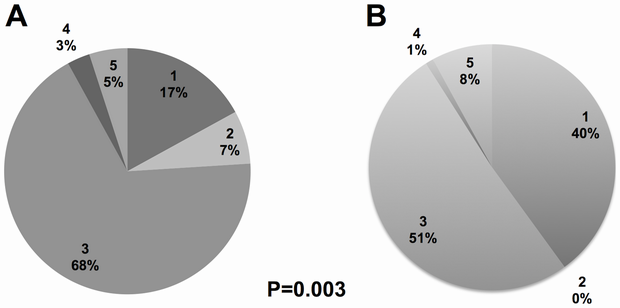
Some recent poll results show that right wing people in America have widened the gap of evolution acceptance. Generally, only a few points on this issue have separated the parties but if you know your framing of the last decade, you know that meant it's been okay for Democrats to say Republicans are 'more' in denial of science. This latest Pew survey (1,983 adults, +/- 3 percent at a 95% confidence interval, weighted results) shows the acceptance gap has widened in numerous demographics - but if you do a search about these results you will find people are only talking about the stupidity of the political party they happen not to be.
When it was fashionable to do so, Germany claimed they were scuttling their nuclear power plants. Their energy companies, bolstered by billions of Euros in government subsidies, rushed to replace nuclear energy with solar and other alternative energy schemes.

But the projected increases in efficiencies never came to pass - companies that rely on subsidies are not in any rush to make technology better. And Germany has seen the US send its CO2 emissions from the energy sector drop back to early 1990s levels, and from dirty coal back to early 1980s levels, using natural gas - so now policymakers have decided they want to be a part of it.
In the introduction to Science Left Behind, I wrote about a bizarre effort by MoveOn.org-sponsored (think Tea Party, but of the left) progressives who helped gain control of Congress in the 2006 election to make good on their promises to Make America Green - and how in order to do so, they latched onto every pseudoscientific fairy tale they could, like replacing spoons in the Congressonal cafeteria with the kind made from corn. 
Comic book heroes get into all kinds of crazy situations, everything from alien invaders to losing their powers. Most often, though, might simply makes right -  but what happens when the thing you are fighting gets stronger from being hit? How do you defeat something like that?

It actually happened in "The Mighty Thor" #140 from 1967.

Comics were a lot different in 1967; fantastic, supernatural events were routine plot devices, but even then Marvel was the more 'scientific' of the two large superhero comics companies. Marvel loved genetic mutations and scientists were often heroes or villains but decades ago the resolution of the plot was going to be fast and likely something of a letdown.
There's no greater feel-good fallacy than the belief that organic food is somehow superior to conventionally farmed food. In reality, organic food isn't more environmentally responsible, it is worse, it isn't better for your health, it is worse and, for the most part, it isn't even grown by small farmers, it is giant conglomerates who, like with gluten-free, fat-free or any other food fad, encourage proponents and the mythology of health benefits because they can charge more money.