Fake Banner
What AI Can't Do: Humanity’s Last Exam

By this time 26 years ago, the "Dot-Com Bubble" was ready to burst. People who wanted to raise...

Does NBA Income Inequality Impact Team Performance?

A new paper says that players where a few superstars get the money leads to less cooperation and...

Dogs And Coffee: Finally, Epidemiology You Can Trust

In 2026, it is easy to feel intellectually knocked around by all of the health claims you read...

Chloe Kim And Eileen Gu In Media As Anti-Asian Narrative

Olympians Chloe Kim and Eileen Gu are both Americans but have Asian descent. Yet Kim competed for...

User picture.
picture for Tommaso Dorigopicture for picture for Fred Phillipspicture for Hontas Farmerpicture for Atreyee Bhattacharyapicture for Patrick Lockerby
Hank CampbellRSS Feed of this column.

I founded Science 2.0® in 2006 and since then it has become the world's largest independent science communications site, with over 300,000,000 direct readers and reach approaching one billion. Read More »

Blogroll
If you have been in science media for any period of time, you have seen a predictable pattern; epidemiologists look through columns and rows of foods people claim they eat and diseases or lack thereof and if they get enough to declare "statistical significance" they write a paper noting down at the bottom that they can't show a causal relationship but then send press releases to New York Times journalists who believe in acupuncture absolutely suggesting causation.
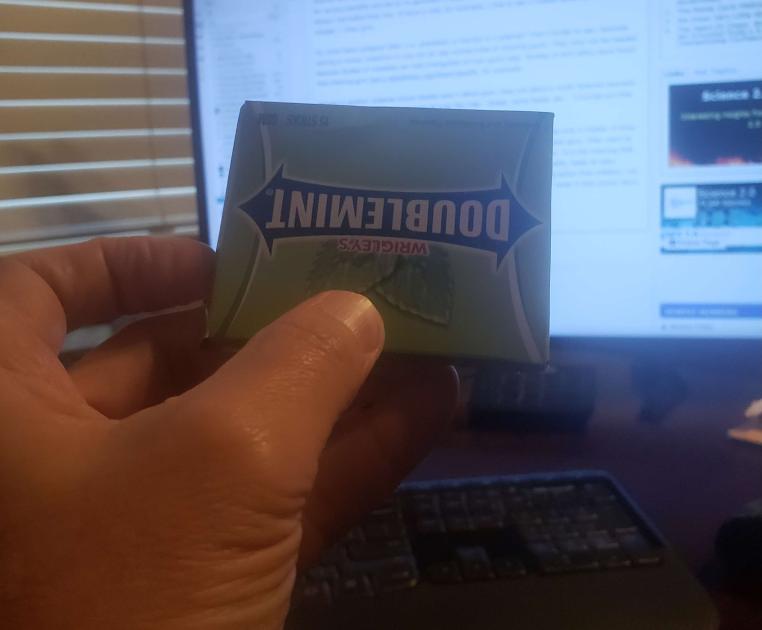
During the COVID-19 pandemic, chewing gum had a bit of a resurgence. Though gum companies disavow any health benefits - they like being in the candy aisle - people have always used it off-label for various benefits and did so to generate a response against possible virus exposures.  People have always had habits they like. If have a cold, for example, I like to eat a cheese sandwich. If I get nausea, I chew gum.
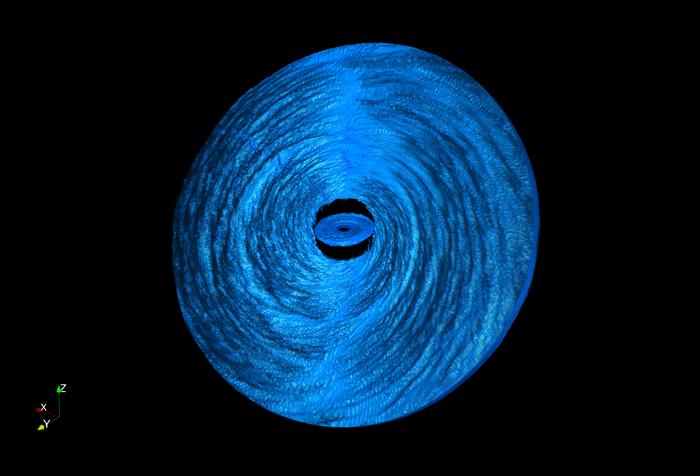
Astronomers have speculated that black holes eat slowly. A recent paper argues that their computer simulation shows just the opposite. 

Don't get too excited, this is still a computer simulation about theoretical physics, which isn't out there with science-fiction but is limited by the fact that we know very little about black holes - including how fast they consume the universe around them. The new estimate is that a black hole can tear apart space-time and consume the accretion disk of material around it in months, rather than the hundreds of years that some believe.
When a pandemic is happening in real time, it's only possible to know in hindsight what was a successful mitigation strategy, what was hype to help a presidential candidate, or even what was suppressed for geopolitical interests.

There is no question mitigation was good, but political and corporate media pressure to keep the world locked down and terrified into 2022 was always immunologically suspect. Many lives their lost due to the pandemic, some lost their lives because it was suggested people should not seek medical care due to imagery of COVID bodies stacked in parking lots, but a whole lot of damage won't be known for a decade or more.
In the past, you may have seen various 'we detected X in urine' papers endorsed by suspect names like homeopathy believer Phil Landrigan and endorsed by organic industry apologist Chuck Benbrook.

What do such claims even mean? In science, nothing. We can detect anything in anything now, but groups like Heartland Health Research Alliance Ltd are prized by litigators who sue "at the drop of a rat" and need any detection in humans - bonus points if they can claim pregnant women - of any chemical that can kill a mouse at 10,000 times a real-world dose. Any reason to send a teary press release sent to the New York Times.(1)
The International Agency for Research on Cancer(IARC) was once so heralded in a field so rigorous and methodologically conservative that epidemiologists were last to accept a hereditary aspect of cancer. That's right, they didn't see enough evidence to think family history of cancer mattered, and only agreed when overwhelming data were found. They were so thorough that when they declared smoking caused cancer, Big Tobacco was doomed.