
Banner
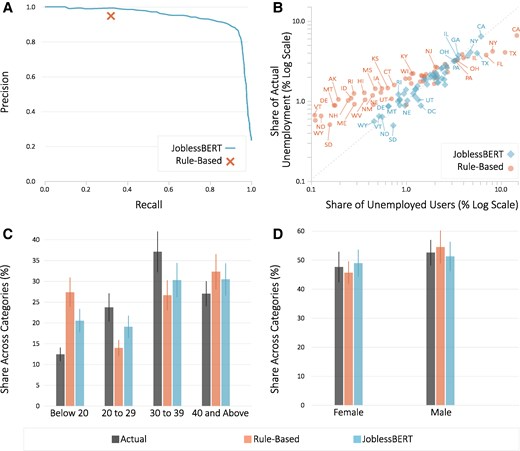
Social Media Is A Faster Source For Unemployment Data Than Government

Government unemployment data today are what Nielsen TV ratings were decades ago - a flawed metric...

Gestational Diabetes Up 36% In The Last Decade - But Black Women Are Healthiest

Gestational diabetes, a form of glucose intolerance during pregnancy, occurs primarily in women...

Object-Based Processing: Numbers Confuse How We Perceive Spaces

Researchers recently studied the relationship between numerical information in our vision, and...

Males Are Genetically Wired To Beg Females For Food

Bees have the reputation of being incredibly organized and spending their days making sure our...

User picture.
News StaffRSS Feed of this column.

News Releases From All Over The World, Right To You... Read More »

Blogroll

For two generations of physicists, it has been a standard belief that the neutron, an electrically neutral elementary particle and a primary component of an atom, actually carries a positive charge at its center and an offsetting negative charge at its outer edge.

The notion was first put forth in 1947 by Enrico Fermi, a Nobel laureate noted for his role in developing the first nuclear reactor. But new research by a University of Washington physicist shows the neutron's charge is not quite as simple as Fermi believed.

Using precise data recently gathered at three different laboratories and some new theoretical tools, Gerald A.

Good-looking people capture our attention and render us temporarily helpless to turn our eyes away from them, according to a new Florida State University study. That applies to men and women and, in the case of married people, even to looking at the same sex.

“It’s like magnetism at the level of visual attention,” said Jon Maner, an assistant professor of psychology at FSU, who studied the role mating-related motives can play in a psychological phenomenon called attentional adhesion. The paper is one of the first to show how strongly, quickly and automatically we are attuned to attractive people, he said.

The "Victorian Era", named for the period when Queen Victoria was Queen of England and the British Empire was at its apex, is now regarded as one of either impeccable manners and dress or one of sexual repression and quiet frustration.

Ian Christopher McManus of the University College London says that Victorian society also seems to have repressed left-handedness. 11 percent of people today are left-handed yet according to his research only 3 percent of people born in 1900 were. They say that threefold difference merits explanation and they looked to old films for answers.

"Left-handedness is important because more than 10 percent of people have their brains organized in a qualitatively different way to other people," said McManus. "That has to be interesting.

For the first time scientists have been able to film, in real time, the nanoscale interaction of an enzyme and a DNA strand from an attacking virus.

Women and men appear to respond differently to the same biochemical manipulation. Major depressive disorder (MDD) is one of the most common mental disorders, and it is also one of the most studied. It is already known that reduced serotonin transmission contributes to the pathophysiology, or functional changes, associated with MDD and most of today’s most popular antidepressants block the serotonin “uptake site”, also known as the transporter, in the brain. It is also known that people with MDD are frequently found to have impaired impulse control.

A new study published in Nature Genetics on Sunday 16 September 2007 show that common, complex diseases are more likely to be due to genetic variation in regions that control activity of genes, rather than in the regions that specify the protein code.

This surprising result comes from a study at the Wellcome Trust Sanger Institute of the activity of almost 14,000 genes in 270 DNA samples collected for the HapMap Project. The authors looked at 2.2 million DNA sequence variants (SNPs) to determine which affected gene activity.

They found that activity of more than 1300 genes was affected by DNA sequence changes in regions predicted to be involved in regulating gene activity, which often lie close to, but outside, the protein-coding regions.



