Banner
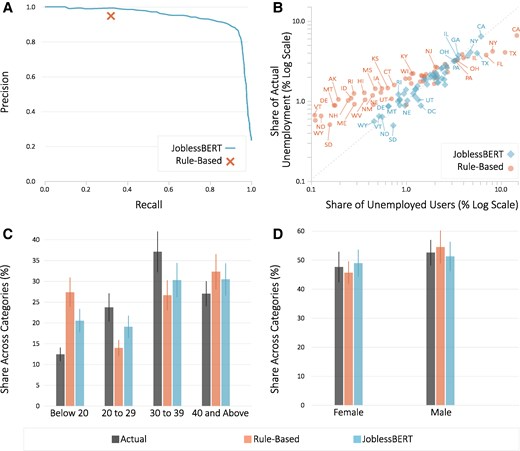
Social Media Is A Faster Source For Unemployment Data Than Government

Government unemployment data today are what Nielsen TV ratings were decades ago - a flawed metric...

Gestational Diabetes Up 36% In The Last Decade - But Black Women Are Healthiest

Gestational diabetes, a form of glucose intolerance during pregnancy, occurs primarily in women...

Object-Based Processing: Numbers Confuse How We Perceive Spaces

Researchers recently studied the relationship between numerical information in our vision, and...

Males Are Genetically Wired To Beg Females For Food

Bees have the reputation of being incredibly organized and spending their days making sure our...

User picture.
News StaffRSS Feed of this column.

News Releases From All Over The World, Right To You... Read More »

Blogroll

In a report that is among the first to describe the prevalence of HIV and Hepatitis B and C viruses in Afghanistan, a researcher from the University of California, San Diego (UCSD) School of Medicine voiced concerns that increasing injection drug use and accompanying high-risk behavior could lead to an HIV epidemic in Afghanistan.

“Our findings suggest that interventions to reduce high-risk behaviors among injection drug users are urgently needed in Afghanistan,” said Catherine S. Todd, M.D., MPH, assistant professor in UCSD’s Division of International Health and Cross-cultural Medicine, who is currently working in Kabul, Afghanistan.

A new poisonous frog was recently discovered in a remote mountainous region in Colombia by a team of young scientists supported by the Conservation Leadership Programme (CLP). The new frog, which is almost two centimetres in length, was given the name the “golden frog of Supatá.”

Originally, the young scientists thought the frog was similar to several other common species in the area. However, after scientific analysis of the frog’s characteristics, and review of their findings by experts at Conservation International, it was determined that the golden frog of Supatá is unique and only found within a 20 hectare area in Colombia’s Cundinamarca region.

Turbulence plays an important role in Earth’s weather system, and can be more than an inconvenience - hundreds of injuries have occurred on commercial flights due to turbulence. It is studied both in Earth's atmosphere and in that of Saturn's moon, Titan, aided by data from ESA’s Huygens probe. The study of one is helping the other.

Giles Harrison, atmospheric physicist at the University of Reading in the UK, devised an inexpensive way to measure the effects of turbulence using weather balloons. The instrument package contains a magnetic field sensor which measures fluctuations in Earth’s magnetic field due to turbulence.

Dating younger women is not just about trophy wives, say the researchers behind the PLoS paper, "Why Men Matter: Mating Patterns Drive Evolution of Human Lifespan." It's also about understaning evolution.

Male reproduction begins and ends later than women’s, and declines much more gradually. In many population a fraction of men continue to father children into their 60s and 70s with younger women.

Colorectal cancer is one of the most prevalent cancers in the Western world. The tumor starts off as a polyp but then turns into an invasive and violent cancer, which often spreads to the liver. Prof. Avri Ben-Ze’ev and Dr. Nancy Gavert of the Weizmann Institute’s Molecular Cell Biology Department reveal mechanisms that help this cancer metastasize.

In a majority of cases, colorectal cancer is initiated by changes in a key protein – beta-catenin. One of the roles of this protein is to enter the cell nucleus and activate gene expression. But in colorectal and other cancers, beta-catenin over-accumulates in the cell and inappropriately activates genes, leading to cancer.

Genetically modified wheat hasn’t yet been introduced into the U.S. market. When that happens, public acceptance of the product may depend on what people know about it. Currently, they don’t know much.

A Food Safety Consortium survey conducted by Kansas State University indicated that most respondents had little to no prior knowledge about biotechnology, but about the same number of people said they would still purchase genetically modified (GM) wheat products. But when provided information about opposition to GM products, respondents were more likely to refrain from buying GM products.