Banner
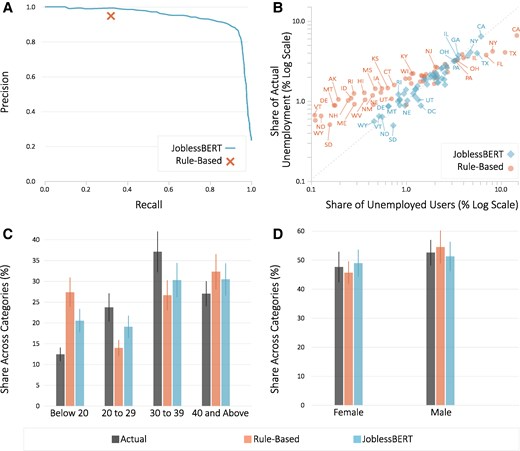
Social Media Is A Faster Source For Unemployment Data Than Government

Government unemployment data today are what Nielsen TV ratings were decades ago - a flawed metric...

Gestational Diabetes Up 36% In The Last Decade - But Black Women Are Healthiest

Gestational diabetes, a form of glucose intolerance during pregnancy, occurs primarily in women...

Object-Based Processing: Numbers Confuse How We Perceive Spaces

Researchers recently studied the relationship between numerical information in our vision, and...
Males Are Genetically Wired To Beg Females For Food

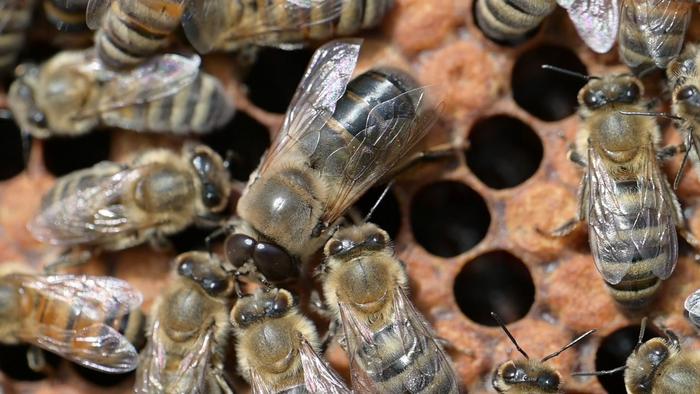
Bees have the reputation of being incredibly organized and spending their days making sure our...

User picture.
News StaffRSS Feed of this column.

News Releases From All Over The World, Right To You... Read More »

Blogroll

300 years after its discovery, the crystal structure of mercury fulminate has been determined.

Though well known by alchemists for its explosive capability and later used as a detonator for dynamite, mercury fulminate's crystal structure has been unknown until now. As Wolfgang Beck, Thomas Klapötke and their team report in the journal ZAAC – Journal of Inorganic and General Chemistry, the orthorhombic crystals consist of separate, nearly linear Hg(CNO)2 molecules.

The alchemists of the seventeenth century were already aware that mixtures of “spiritus vini” (ethanol) and mercury in “aqua fortis” (nitric acid) made for an explosive brew.

A situation in which wages increase 2.3% and prices increase 3.1% is equivalent to a situation in which wages fall by 0.8% at constant prices. Though the two scenarios are equivalent in real terms there are people who perceive these situations differently. These people are said to be prone to 'money illusion.'

It has been commonly thought that the impact of irrational behavior is limited in markets because “smart agents” can take advantage of irrational traders.

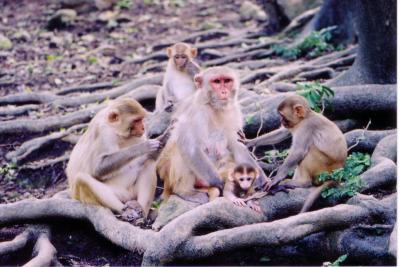
Female rhesus monkeys use special vocalizations while interacting with infants, the way human adults use motherese, or “baby talk,” to engage babies’ attention, new research at the University of Chicago shows.

“Motherese is a high pitched and musical form of speech, which may be biological in origin,” said Dario Maestripieri, Associate Professor in Comparative Human Development at the University.

Huntington's is an inherited degenerative neurological disease that affects up to 8 people out of every 100,000 in Western countries. Any person whose parent has Huntington's has a 50-50 chance of inheriting the faulty gene that causes it and everyone with the defective gene will, at some point, develop the disease.

It is characterized by a loss of neurons in certain regions of the brain and progressively affects a sufferer’s cognition, personality and motor skills. In its later stages, sufferers almost certainly require continual nursing care.

Scientists have shown in literally thousands of studies that the p53 gene deserves its reputation as “the guardian of the genome.” It calls to action an army of other genes in the setting of varied cell stresses, permitting repair of damaged DNA or promoting cell death when the cell damage is too great. A key net effect of p53’s action is to prevent development of cancerous cells.

Now, University of Michigan Medical School scientists provide the most thorough evidence yet that p53 also regulates a trio of genes from the realm of so-called “junk” genes — the roughly 97 percent of a cell’s genetic material whose function is only beginning to be understood.

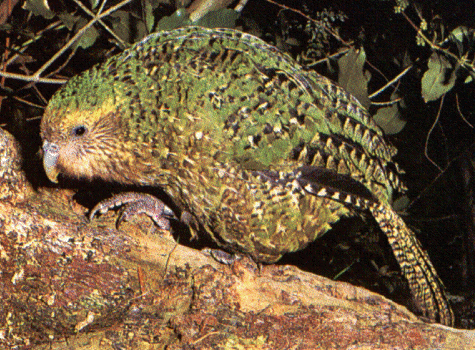
One of the strangest and most endangered birds in the world, the kakapo, is being brought back from the brink of extinction with the help of scientists from the University of Glasgow.

The largest of all parrot species, flightless, nocturnal and plant-eating, the kakapo used to be found all over New Zealand. But ecological changes, habitat clearance and the introduction of predatory mammals combined to cause a catastrophic decline in numbers to only 51 in 1995.

Another factor in their near extinction is that kakapo breed infrequently. This is because they rear their young on the fruits of native trees. These trees - pink pine and rimu – only fruit every 2-6 years and kakapo only breed on those occasions.