Banner
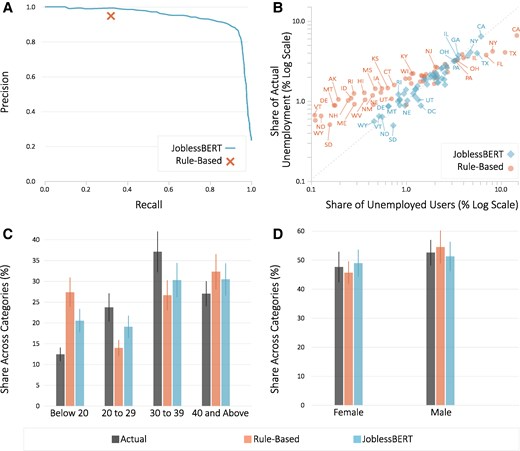
Social Media Is A Faster Source For Unemployment Data Than Government

Government unemployment data today are what Nielsen TV ratings were decades ago - a flawed metric...

Gestational Diabetes Up 36% In The Last Decade - But Black Women Are Healthiest

Gestational diabetes, a form of glucose intolerance during pregnancy, occurs primarily in women...
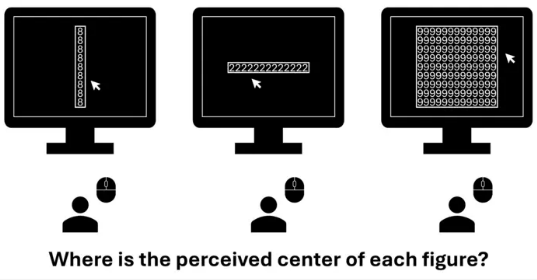
Object-Based Processing: Numbers Confuse How We Perceive Spaces

Researchers recently studied the relationship between numerical information in our vision, and...
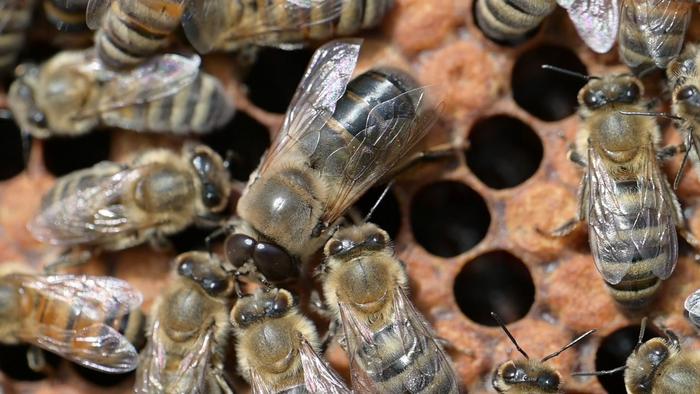
Males Are Genetically Wired To Beg Females For Food

Bees have the reputation of being incredibly organized and spending their days making sure our...

User picture.
News StaffRSS Feed of this column.

News Releases From All Over The World, Right To You... Read More »

Blogroll

Much like a superconductor loses no energy to resistance, a superfluid moves like a completely frictionless liquid, able to propel itself without any hindrance from gravity or surface tension.

The physics underlying these materials, which appear to defy the common sense precepts of conventional physics, has been a source of fascination for decades. 

Liquid helium is an example. When cooled to extremely low temperatures, helium exhibits behavior that is otherwise impossible in ordinary fluid - the superfluid can squeeze through pores as small as a molecule, and climb up and over the walls of a glass. It can even remain in motion years after a centrifuge containing it has stopped spinning. 

A lingering space mystery has been how electrons within Earth's radiation belt can suddenly become energetic enough to kill orbiting satellites. Thanks to data gathered from a pair of NASA probes roaming the harsh environment of near-Earth space, scientists have found an answer: an internal electron accelerator operating within the Van Allen radiation belts.

Scientists knew that something in space accelerated particles in the radiation belts to more than 99 percent the speed of light but they didn't know what that something was. New results from NASA's Van Allen Probes now show that the acceleration energy comes from within the belts themselves.

As the world population grows, one terrific science and technology solution to expensive and environmentally damaging fertilizers would be enabling all of the world's crops to take nitrogen from the air.

Nitrate pollution is a major problem as is the pollution of the atmosphere by ammonia and oxides of nitrogen. In addition, nitrate pollution is a health hazard and also causes oxygen-depleted 'dead zones' in our waterways and oceans. A recent study estimates that that the annual cost of damage caused by nitrogen pollution across Europe is between £60 billion and £280 billion per year. 

Homing pigeons fly off from an unknown place in unfamiliar territory and still manage to find their way home.

This ability has always been fascinating to humans and nothing would ever happen in "Game of Thrones" if birds couldn't deliver messages. Yet despite intensive research, it is not yet definitively clear where this unusual gift comes from. All we seem to know is that homing pigeons and migratory birds determine their flight direction with the help of the Earth's magnetic field, the stars and the position of the sun. 

In the aftermath of Japan's earthquake and tsunami in March 2011, the Fukushima Daiichi nuclear plant was initially driven into shutdown by the magnitude 9.0 quake; its emergency generators then failed because they were inundated by the tsunami.

If you don't sleep well during a full moon, it is not because you have epigenetically become a werewolf after watching "Twilight" too many times, lunar cycles and human sleep behavior are connected, according to results of a study on endogenous rhythms of circalunar periodicity.

Prof. Christian Cajochen of the Psychiatric Hospital of the University of Basel and colleagues analyzed the sleep of over 30 volunteers in two age groups in the lab. While they were sleeping, the scientists monitored their brain patterns, eye movements and measured their hormone secretions.