
Banner
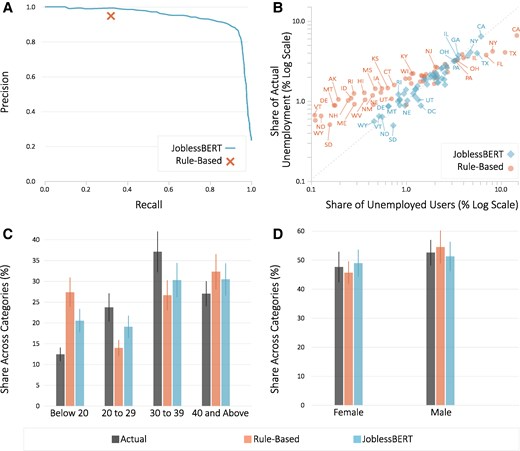
Social Media Is A Faster Source For Unemployment Data Than Government

Government unemployment data today are what Nielsen TV ratings were decades ago - a flawed metric...

Gestational Diabetes Up 36% In The Last Decade - But Black Women Are Healthiest

Gestational diabetes, a form of glucose intolerance during pregnancy, occurs primarily in women...

Object-Based Processing: Numbers Confuse How We Perceive Spaces

Researchers recently studied the relationship between numerical information in our vision, and...

Males Are Genetically Wired To Beg Females For Food

Bees have the reputation of being incredibly organized and spending their days making sure our...

User picture.
News StaffRSS Feed of this column.

News Releases From All Over The World, Right To You... Read More »

Blogroll

A potential barrier to deep Antarctic circumpolar flow until the late Miocene?

On July 18th, 2013, at 9:06 a.m. EDT, the Solar and Heliospheric Observatory (SOHO) captured an image of a gigantic coronal hole hovering over the sun's north pole.

Coronal holes are dark, low density regions of the sun's outermost atmosphere, the corona, and contain little solar material and lower temperatures so they appear much darker than their surroundings.

The orbital motion of two distinct populations of stars in an ancient globular star cluster, 47 Tucanae, have offered proof they formed at different times and it provides a rare look back into the Milky Way galaxy's early days.

The researchers combined recent Hubble observations with eight years' worth of data from the telescope's archive to determine the motions of the stars in 47 Tucanae, located about 16,700 light-years away in the southern constellation Tucana. The analysis enabled researchers, for the first time, to link the movement of stars in the clusters with the stars' ages. The two populations in 47 Tucanae differ in age by less than 100 million years.

Neural tube defects affect more than 300,000 babies born around the world each year, according to the U.S. Centers for Disease Control and Prevention. Neural tube defects, including anencephaly and spina bifida, are caused by the incomplete closure or development of the spine and skull. 

Using dogs as a model, researchers recently found that a gene related to neural tube defects in man's best friend may be an important risk factor for human neural tube defects. The cause of neural tube defects is poorly understood but has long been thought to be associated with genetic, nutritional and environmental factors. 

Bacteriorhodopsin found in the membranes of ancient microorganisms in desert salt flats have been used generate environmentally friendly hydrogen fuel by researchers at Argonne National Laboratory.

Cancer occurs most often in adults because it often takes decades of accumulating genetic errors for a tumor to develop - pediatric tumors are another issue.

Recently, researchers may have found a missing piece of the pediatric cancer puzzle; a mechanism behind the early development of some pediatric solid tumors.

In healthy cells, a checkpoint prompts the cell to repair damaged DNA before it replicates. Many researchers believe that cancer cells flourish when these checkpoints are skipped or inhibited, as the mutated cells can survive and rapidly reproduce. A growing collection of damaged cells can lead to the solid tumors of many childhood cancers, such as those of rhabdomyosarcoma, neuroblastoma and osteosarcoma.



