Banner
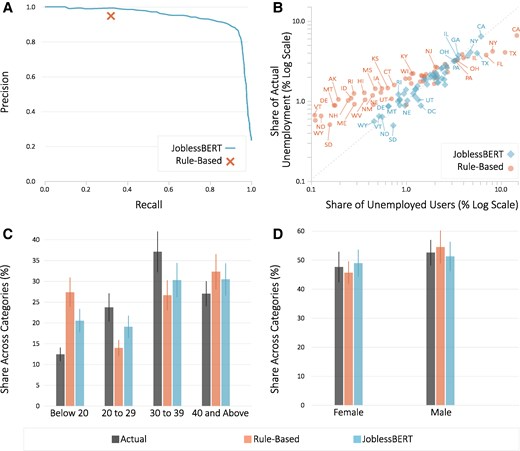
Social Media Is A Faster Source For Unemployment Data Than Government

Government unemployment data today are what Nielsen TV ratings were decades ago - a flawed metric...
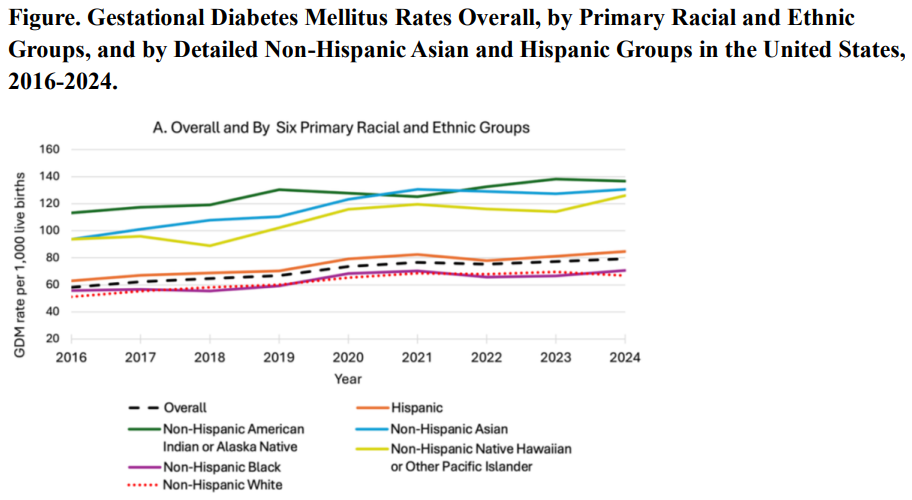
Gestational Diabetes Up 36% In The Last Decade - But Black Women Are Healthiest

Gestational diabetes, a form of glucose intolerance during pregnancy, occurs primarily in women...
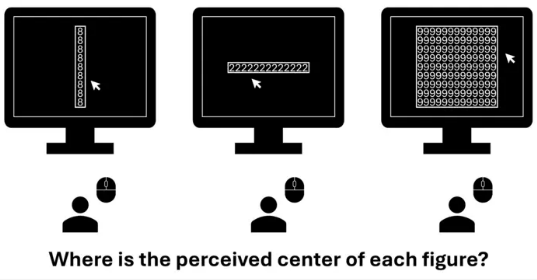
Object-Based Processing: Numbers Confuse How We Perceive Spaces

Researchers recently studied the relationship between numerical information in our vision, and...
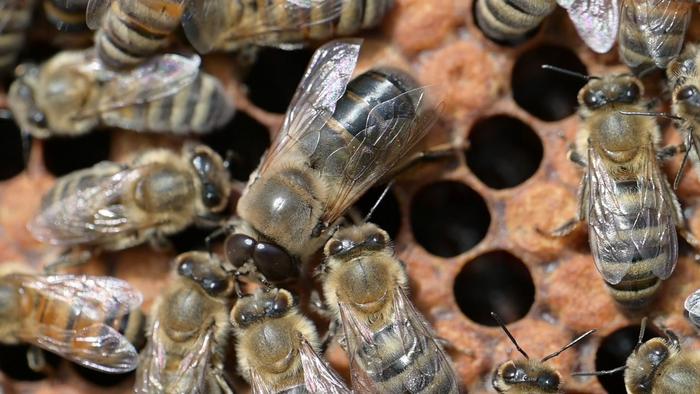
Males Are Genetically Wired To Beg Females For Food

Bees have the reputation of being incredibly organized and spending their days making sure our...

User picture.
News StaffRSS Feed of this column.

News Releases From All Over The World, Right To You... Read More »

Blogroll

In Europe, the arrival of the farmers who replaced Mesolithic hunter-gatherers happened in force 9,000 years ago but it was happening elsewhere prior to that. In Syria, there is even evidence of scientific trait selection in grains in 10,000 B.C. but in other parts of the world agriculture came much later.  

A region in sub-tropical China which did not have agriculture until the arrival of domesticated rice from elsewhere may have gotten agriculture prior to that - as far back as 3,000 B.C., according to a new paper.

Because energy resources in the body must be optimized as much as possible, a new paper says, tasks inherently related to survival, like immune function, take priority. Any leftover energy is then dedicated to reproduction.

 By simply manipulating chemical gradients in a beaker of fluid, researchers have been able to create delicate flower structures -  not at the scale of inches, but microns.

These minuscule sculptures don't resemble the cubic or jagged forms normally associated with crystals, though that's what they are. Rather, fields of carnations and marigolds seem to bloom from the surface of a submerged glass slide, assembling themselves a molecule at a time.

Do you see music the same way as your neighbor? Apparently so.  U.C. Berkeley psychologists say people in both the United States and Mexico linked the same pieces of classical orchestral music with the same colors, suggesting that humans share a common emotional palette – when it comes to music and color – that appears to be intuitive and can cross cultural barriers. They suggest that
our brains are wired to make music-color connections depending on how the melodies make us feel 

Uranus and Neptune have a lot in common, climate-wise, even though Uranus is tipped on its side with the pole facing the sun during winter.  They are both home to extreme winds blowing at speeds of over 1000 km/hour, they have hurricane-like storms as big as our whole planet and immense weather systems can last for years. 

But what about their origins? Do the atmospheric patterns arise from deep down in the planet, or are they confined to shallower processes nearer the surface?  Understanding the atmospheric circulation is not simple for a planet without a solid surface, where Earth-style boundaries between solid, liquid and gas layers do not exist.

Terror networks are comparable in their structure to hierarchical organization in companies and certain online social networks, say the authors of a paper outlining how
a mathematical model to disrupt flow of information in a complex real-world network, like a terrorist organization, can work, using minimal resources. 

In those hierarchical social networks, information flows in one direction from a source, which produces the information or data, downwards to sinks, which consume it.