
Banner
Social Media Is A Faster Source For Unemployment Data Than Government

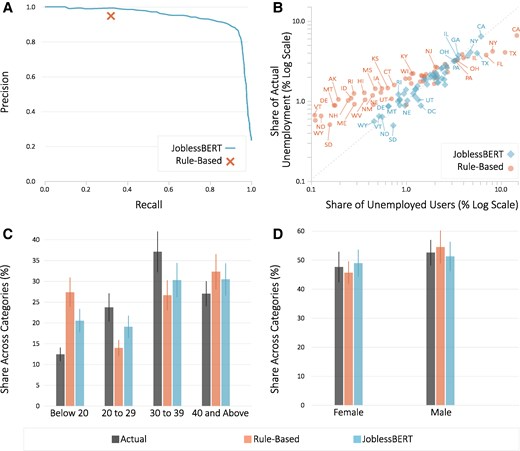
Government unemployment data today are what Nielsen TV ratings were decades ago - a flawed metric...

Gestational Diabetes Up 36% In The Last Decade - But Black Women Are Healthiest

Gestational diabetes, a form of glucose intolerance during pregnancy, occurs primarily in women...

Object-Based Processing: Numbers Confuse How We Perceive Spaces

Researchers recently studied the relationship between numerical information in our vision, and...

Males Are Genetically Wired To Beg Females For Food

Bees have the reputation of being incredibly organized and spending their days making sure our...

User picture.
News StaffRSS Feed of this column.

News Releases From All Over The World, Right To You... Read More »

Blogroll

A desire for expensive, high-status stuff is related to feelings of social status, not social status itself, and that helps why minorities are attracted to 'bling', say psychologists.

Previous psychology work has shown that racial minorities spend a larger portion of their incomes than do whites on conspicuous consumption and buying products that suggest high status, like cars with rims made of platinum or gold teeth inserts. But bling is not actually biological, so whites also crave expensive, high-status products - if they imagine themselves in a low-status position. Thus, corrosive "bling culture" that is not unique to urban minorities, says Philip Mazzocco, lead author of a new paper and assistant professor of psychology at Ohio State University's Mansfield campus.

Researchers say they have discovered a new form of cell division in human cells, which they believe serves as a natural back-up mechanism during faulty cell division, preventing some cells from going down a path that can lead to cancer. 

"If we could promote this new form of cell division, which we call klerokinesis, we may be able to prevent some cancers from developing," says lead researcher Dr. Mark Burkard, an assistant professor of hematology-oncologyat the UW School of Medicine and Public Health, who studies cancers in which cells contain too many chromosomes, a condition called polyploidy, and also sees breast cancer patients.

Phragmites australis is an invasive species of plant called common reed that grows rapidly into dense stands of tall plants and then pose an extreme threat to Great Lakes coastal wetlands.

 a GROUP FROM Michigan Technological University', the US Geological Survey (USGS), Boston College and the US Fish and Wildlife Service (USFWS). have mapped the coastline of all five U.S. Great Lakes using satellite technologies and, combined with field studies along those coastlines to confirm the satellite data, their map shows the locations of large stands of the invasive Phragmites located within 6.2 miles of the water's edge.   

By combining insulin and an inhibitor of the epidermal growth factor (EGF) betacellulin,  Cleveland Clinic researcher Bela Anand-Apte, MD, PhD
was able to halt the progression of diabetic macular edema (DME), according to data preseneted at the American Society for Cell Biology Annual Meeting last week in San Francisco.

The study, conducted with insulin-dependent diabetic mice, showed that by thwarting "cross-talk" between insulin and betacellulin (BTC), which promotes the regeneration of pancreatic beta cells that stores and releases insulin, the EGF inhibitor preserved the animals' vascular integrity, she explained.

A new paper that uses the

temperature record from Byrd Station, a scientific outpost in the center of the West Antarctic Ice Sheet (WAIS),

 says that the western part of the ice sheet is experiencing nearly twice as much warming as previously thought.

The temperature record from Byrd Station shows an increase of 4.3 degrees Fahrenheit in average annual temperature since 1958, three times faster than the average temperature rise around the globe.  If those older temperature readings are accurate, this temperature increase is nearly double what previous examinations have suggested.

Autistic-like behaviors in
laboratory mice
can be partially remedied by normalizing excessive levels of protein synthesis in the brain, according to a new paper

The researchers focused on the EIF4E gene, whose mutation is associated with autism. The mutation causing autism was proposed to increase levels of the eIF4E, the protein product of EIF4E, and lead to exaggerated protein synthesis. Excessive eIF4E signaling and exaggerated protein synthesis also may play a role in a range of neurological disorders, including fragile X syndrome (FXS).





