
Banner
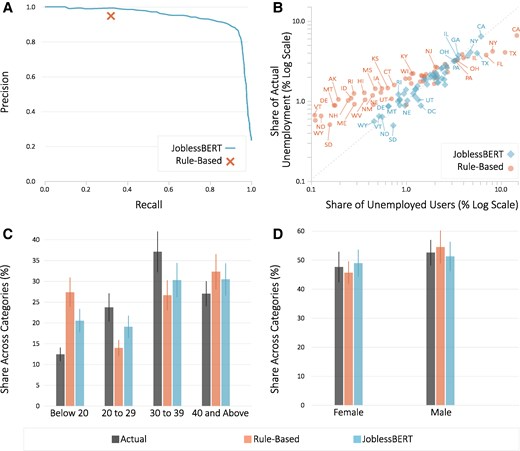
Social Media Is A Faster Source For Unemployment Data Than Government

Government unemployment data today are what Nielsen TV ratings were decades ago - a flawed metric...

Gestational Diabetes Up 36% In The Last Decade - But Black Women Are Healthiest

Gestational diabetes, a form of glucose intolerance during pregnancy, occurs primarily in women...
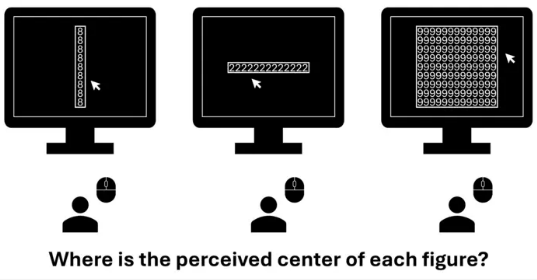
Object-Based Processing: Numbers Confuse How We Perceive Spaces

Researchers recently studied the relationship between numerical information in our vision, and...
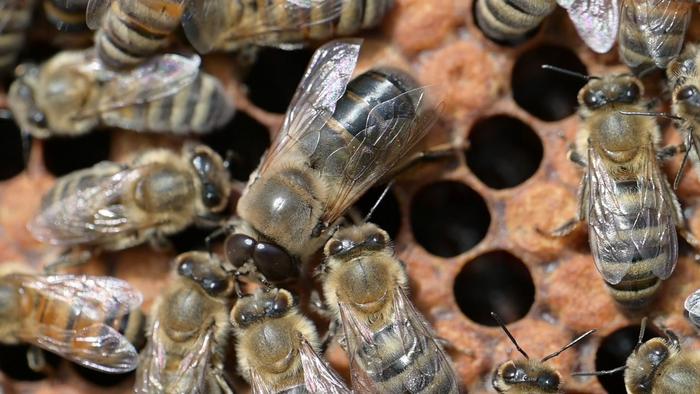
Males Are Genetically Wired To Beg Females For Food

Bees have the reputation of being incredibly organized and spending their days making sure our...

User picture.
News StaffRSS Feed of this column.

News Releases From All Over The World, Right To You... Read More »

Blogroll

The plague-causing bacteria Yersinia pestis evades detection and establishes a stronghold without setting off the body's early alarms but new discoveries reported this week help explain how the stealthy agent of Black Death avoids tripping a self-destruct mechanism inside germ-destroying cells. 

Normally, certain defender cells are programmed to burst if they are either invaded by or detect the presence of pathogens. This host defense mechanism called pyroptosis ("going up in flames") eliminates places for the germs to reproduce. As it splits open, the cell spills antimicrobial chemicals and emits signals to alert of an attack and its precise location. Tissues become inflamed as more cells arrive to fight the infection. 

Srinivasa Ramanujan was a self-taught Indian mathematician known for intuiting extraordinary numerical patterns and connections without using proofs or modern mathematical tools. Instead, the devout Hindu genius said that his findings were divine and were revealed to him in dreams by the goddess Namagiri.

The ability to accurately recall the shapes and spatial relationships of objects has been shown to be reduced by long-term use of anabolic-androgenic steroids (AAS), according to a recent paper. 

Quantum entanglement is a central principle of quantum physics - the science of sub-atomic particles. Multiple particles, such as photons, are connected with each other even when they are very far apart and what happens to one particle can have an effect on the other one at the same moment, even though these effects cannot be used to send information faster than light.

In 1935, Albert Einstein, Boris Podolsky, and Nathan Rosen, referred to in the shorthand form EPR today, published a thought experiment designed to show that quantum mechanics, by itself, is not sufficient to describe reality. 

Blocking even a single tiny blood vessel in the brain can harm neural tissue and alter behavior, says a study from U.C. San Diego.

All is not lost, though. The effects can be mitigated by  the FDA-approved drug memantine, suggesting treatment that could slow the progress of dementia associated with cumulative damage to miniscule blood vessels that feed brain cells.

If you did not know Arctic hurricanes happen, you are not alone. They even come with a central "eye", extreme low barometric pressure and towering 30-foot waves that can sink ships and cover metal platforms with thick ice, threatening oil and gas exploration.

Climate scientists report the first conclusive evidence that Arctic hurricanes, also known as polar lows, play a significant role in driving ocean water circulation and climate.  Their results point to potentially cooler conditions in Europe and North America in the 21st century than other models predict.



