
Banner
Social Media Is A Faster Source For Unemployment Data Than Government

Government unemployment data today are what Nielsen TV ratings were decades ago - a flawed metric...

Gestational Diabetes Up 36% In The Last Decade - But Black Women Are Healthiest

Gestational diabetes, a form of glucose intolerance during pregnancy, occurs primarily in women...
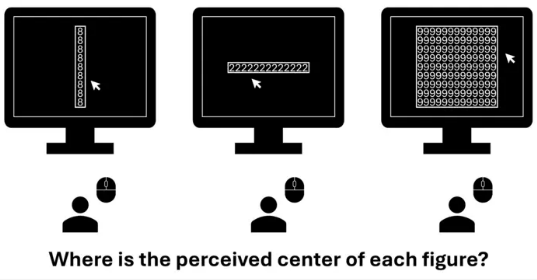
Object-Based Processing: Numbers Confuse How We Perceive Spaces

Researchers recently studied the relationship between numerical information in our vision, and...
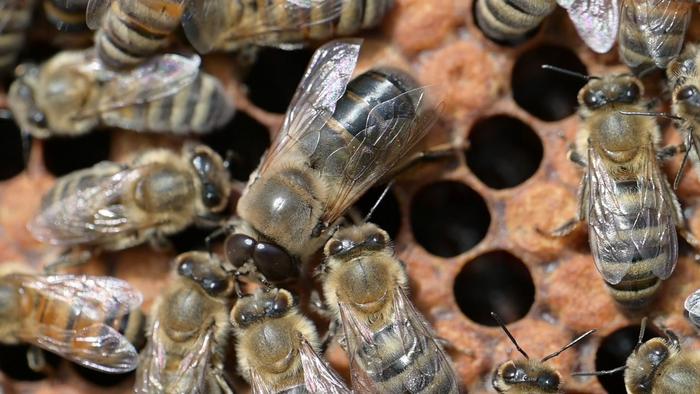
Males Are Genetically Wired To Beg Females For Food

Bees have the reputation of being incredibly organized and spending their days making sure our...

User picture.
News StaffRSS Feed of this column.

News Releases From All Over The World, Right To You... Read More »

Blogroll

Paternal recognition, being able to identify males from your father's line, is one way that mammals avoid inbreeding - some can do this is through recognizing the calls of paternal kin. This was thought to occur only in large-brained animals having complex social groups, but a new study shows it can happen in a tiny, solitary primate.

The study finds that the grey mouse lemur (Microcebus murinus) – a small-brained, solitary foraging mammal endemic to Madagascar – is able to recognize paternal relatives via vocalizations, thus providing evidence that this is not dependent upon having a large brain and a high social complexity, as previously suggested.

At the Excellence in Paediatrics Conference, Madrid, academics from the International Scientific Forum on Home Hygiene (IFH),  a not‐for profit, non‐governmental organization which works to develop and promote home hygiene practice based on sound scientific principles, call for a radical change in how we think about cleanliness and hygiene in the home. 

The Grand Canyon is spectacular to look at but figuring out how old it is can be frustrating. A new paper says that conventional models and estimates of the last 150 years are way off - it is far older than the 5 to 6 million years old commonly thought.

"Rather than being formed within the last few million years, our measurements suggest that a deep canyon existed more than 70 million years ago,"  says Kenneth A. Farley, Keck Foundation Professor of Geochemistry at Caltech and coauthor of the study.

Astronomers find planets in strange places and wonder if they might support life. One such place would be in orbit around a white or brown dwarf. While neither is a star like the sun, both glow and so could be orbited by planets with the right ingredients for life.

No terrestrial, or Earth-like planets have yet been confirmed orbiting white or brown dwarfs, but there is no reason to assume they don't exist. However, new research by Rory Barnes of the University of Washington and René Heller of Germany's Leibniz Institute for Astrophysics Potsdam hints that planets orbiting white or brown dwarfs will prove poor candidates for life.