Banner
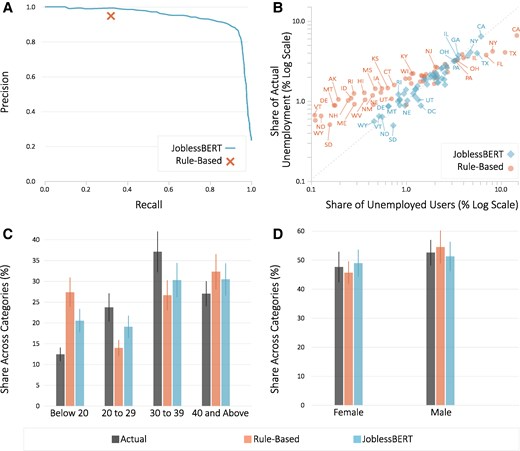
Social Media Is A Faster Source For Unemployment Data Than Government

Government unemployment data today are what Nielsen TV ratings were decades ago - a flawed metric...

Gestational Diabetes Up 36% In The Last Decade - But Black Women Are Healthiest

Gestational diabetes, a form of glucose intolerance during pregnancy, occurs primarily in women...
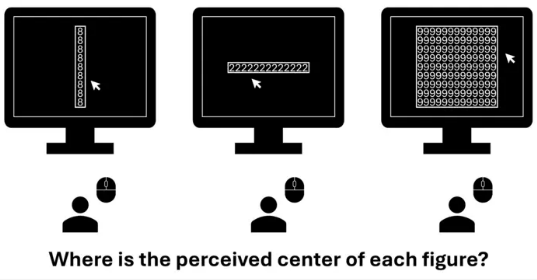
Object-Based Processing: Numbers Confuse How We Perceive Spaces

Researchers recently studied the relationship between numerical information in our vision, and...
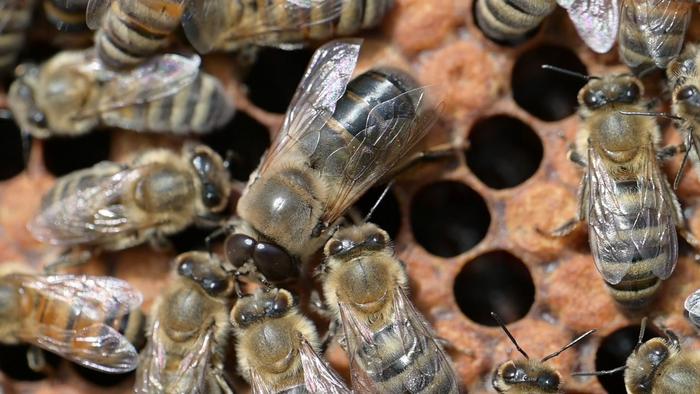
Males Are Genetically Wired To Beg Females For Food

Bees have the reputation of being incredibly organized and spending their days making sure our...

User picture.
News StaffRSS Feed of this column.

News Releases From All Over The World, Right To You... Read More »

Blogroll

A robotic therapy device may help people regain strength and normal use of affected hands long after a stroke, according to a University of California, Irvine study.

Stroke patients with impaired hand use reported improved ability to grasp and release objects after therapy sessions using the Hand-Wrist Assisting Robotic Device (HOWARD). Each patient had at least moderate residual weakness and reduced function of the right hand, although the affected hands were neither totally paralyzed nor unable to feel.

This NASA Hubble Space Telescope image shows the colorful "last hurrah" of a star like our Sun. The star is ending its life by casting off its outer layers of gas, which formed a cocoon around the star's remaining core. Ultraviolet light from the dying star then makes the material glow. The burned-out star, called a white dwarf, appears as a white dot in the center. Our Milky Way Galaxy is littered with these stellar relics, called planetary nebulae. Hubble's Wide Field Planetary Camera 2 captured this image of planetary nebula NGC 2440 on Feb. 6, 2007.

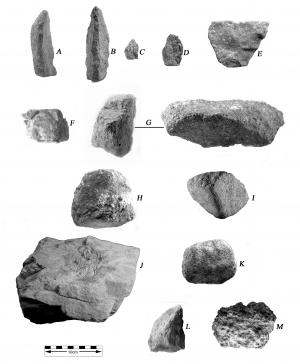
A University of Calgary archaeologist has found the first prehistoric evidence of chimpanzee technology, adding credence to the theory that some of humanity's behavioral hallmarks were actually inherited by both humans and great apes from a common ancestor.

Dr. Julio Mercader, one of the few archaeologists in the world who studies the material culture of great apes, especially chimpanzees, uncovered stone 'hammers' last year in the Taï rainforest of Africa's Côte D'Ivoire (Ivory Coast) that date back 4,300 years.


Examples of some of the stones that were excavated. Analysis shows they were used by chimpanzees some 4,300 years ago to crack nuts.

Human nerve stem cells transplanted into rats' damaged spinal cords have survived, grown and in some cases connected with the rats' own spinal cord cells in a Johns Hopkins laboratory, overturning the long-held notion that spinal cords won't allow nerve repair.

A report on the experiments will be published online this week at PLoS Medicine and "establishes a new doctrine for regenerative neuroscience," says Vassilis Koliatsos, M.D., associate professor of neuropathology at Johns Hopkins.

Just as homes have smoke detectors, cells have an enzyme that responds to a buildup of fatty acids by triggering the production of a key molecule in the biochemical pathway that breaks down these fatty acids, according to investigators at St. Jude Children's Research Hospital. This breakdown of fatty acids, in turn, provides the cell energy while reducing the chance that excess fatty acids will accumulate.

The St. Jude discovery explains how the fatty acid-sensing enzyme PanK2 tailors production of this key molecule, coenzyme A (CoA), to the cell's energy demands. Understanding PanK2 function is also important because mutations in this enzyme cause an inherited neurodegenerative disease.

How do you get information from a preparation that is transparent? How can you still see a three-dimensional image through a microscope? Dutch researcher Rajesh S. Pillai investigated a new way of illuminating preparations under the microscope. For example, he could investigate the microstructure of food, which is important for the taste and shelf-life. Furthermore, this technique is highly promising for research into how fat is stored in the human body.

A blow with the hammer

Images can only be made under the microscope if the preparation is illuminated. Sometimes using a single lamp is not enough, for example when a three-dimensional image of a transparent sample is needed. In this project Pillai used a laser that emitted extremely short pulses of infrared light.