
Banner
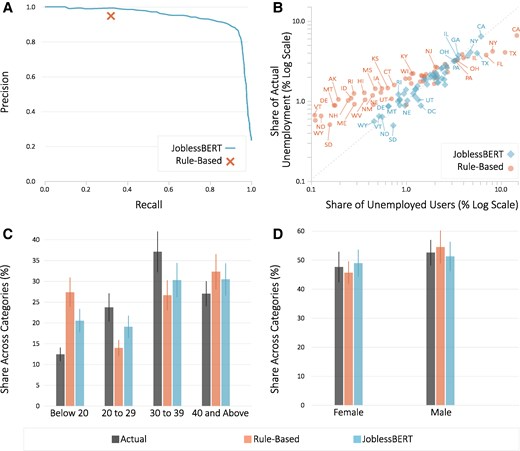
Social Media Is A Faster Source For Unemployment Data Than Government

Government unemployment data today are what Nielsen TV ratings were decades ago - a flawed metric...

Gestational Diabetes Up 36% In The Last Decade - But Black Women Are Healthiest

Gestational diabetes, a form of glucose intolerance during pregnancy, occurs primarily in women...

Object-Based Processing: Numbers Confuse How We Perceive Spaces

Researchers recently studied the relationship between numerical information in our vision, and...
Males Are Genetically Wired To Beg Females For Food

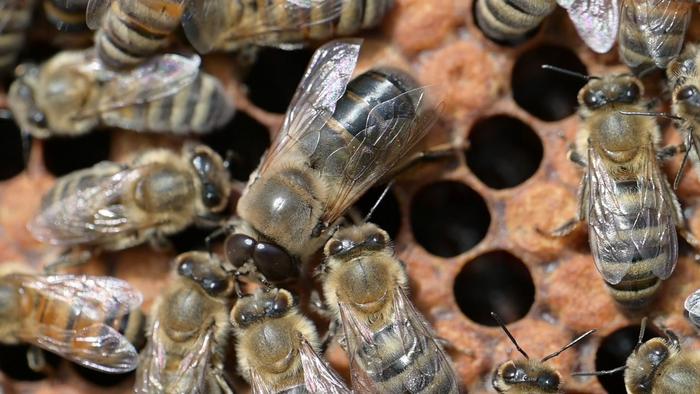
Bees have the reputation of being incredibly organized and spending their days making sure our...

User picture.
News StaffRSS Feed of this column.

News Releases From All Over The World, Right To You... Read More »

Blogroll

Researchers have found that the melanopsin pigment in the eye is potentially more sensitive to light than its more famous counterpart, rhodopsin, the pigment that allows for night vision.

For more than two years, the staff of the Laboratory for Computational Photochemistry and Photobiology (LCPP) at Ohio's Bowling Green State University (BGSU), have been investigating melanopsin, a retina pigment capable of sensing light changes in the environment, informing the nervous system and synchronizing it with the day/night rhythm. Most of the study's complex computations were carried out on powerful supercomputer clusters at the Ohio Supercomputer Center (OSC).

One of the issues of the Atapuerca sites that generates the most scientific debate is the dating of the strata where the fossils are found. Therefore, researchers at the Spanish National Research Centre for Human Evolution, among others, strive to settle the dates. A study published by the 'Journal of Archaeological Science' has clarified that the sediment of Gran Dolina, where the first remains of Homo antecessor were discovered in 1994, is 900,000 years old.

The findings at the Lower Palaeolithic cave site of Gran Dolina, in the Sierra de Atapuerca mountain range (Burgos), have led to major advancements in our knowledge of human evolution and occupation of Eurasia.

The lipid-rich membranes of cells are largely impermeable to proteins, but evolution has provided a way through – in the form of transmembrane tunnels. A new study shows in unmatched detail what happens as proteins pass through such a pore.

A large body of literature has shown that genetically-modified plants that produce proteins from the bacterium Bacillus thuringiensis (Bt) to protect themselves from insect pests have little to no effect on a wide range of nontarget insects. However, concerns about Bt crops still exist. Now two new studies using more exacting methods show that Bt crops have no negative effects on two beneficial insect predators or on a beneficial, entomopathogenic nematode.

A new study may alleviate concerns that the human papillomavirus (HPV) vaccine leads to either the initiation of sex or unsafe sexual behaviors among teenage girls and young women.

WASHINGTON - Single-sex education does not educate girls and boys any better than coed schools, according to research published by the American Psychological Association analyzing 184 studies of more than 1.6 million students from around the world. The findings are published online Feb. 3 in the APA journal Psychological Bulletin.

"Proponents of single-sex schools argue that separating boys and girls increases students' achievement and academic interest," said author Janet Shibley Hyde, PhD, of University of Wisconsin-Madison. "Our comprehensive analysis of the data shows that these advantages are trivial and, in many cases, nonexistent."

