
Banner
Social Media Is A Faster Source For Unemployment Data Than Government

Government unemployment data today are what Nielsen TV ratings were decades ago - a flawed metric...
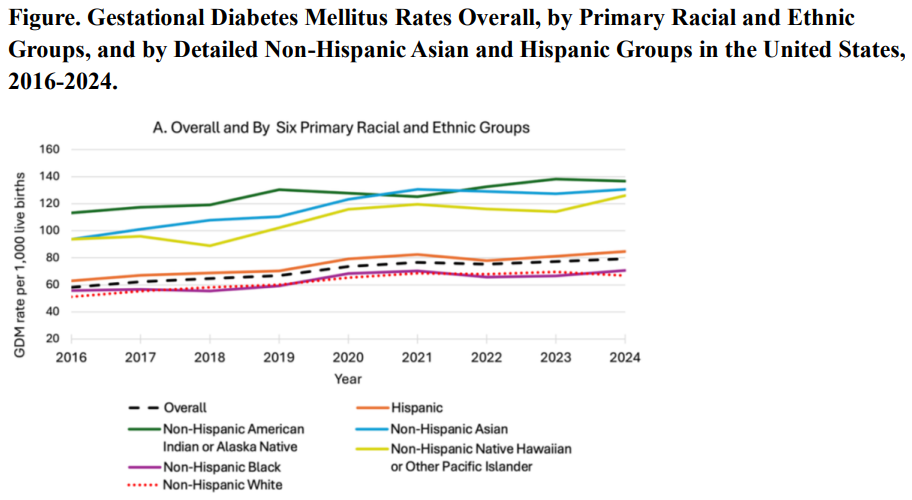
Gestational Diabetes Up 36% In The Last Decade - But Black Women Are Healthiest

Gestational diabetes, a form of glucose intolerance during pregnancy, occurs primarily in women...
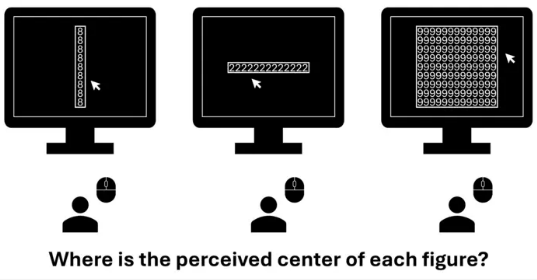
Object-Based Processing: Numbers Confuse How We Perceive Spaces

Researchers recently studied the relationship between numerical information in our vision, and...
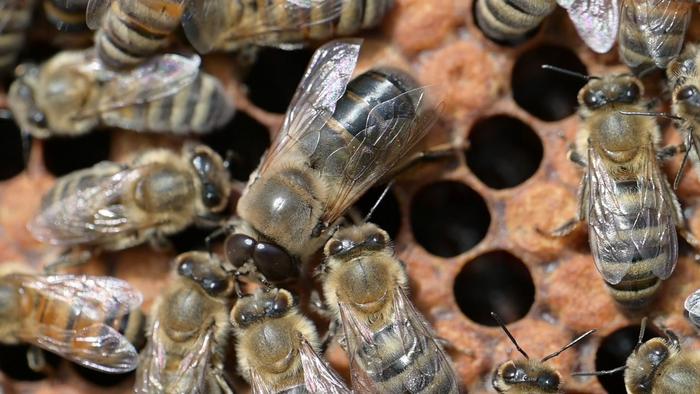
Males Are Genetically Wired To Beg Females For Food

Bees have the reputation of being incredibly organized and spending their days making sure our...

User picture.
News StaffRSS Feed of this column.

News Releases From All Over The World, Right To You... Read More »

Blogroll

Cambridge, Mass. – January 28, 2014 – Scientists at Harvard University and the Marine Biological Laboratory (MBL) hope new understanding of the natural nanoscale photonic device that enables a small marine animal to dynamically change its colors will inspire improved protective camouflage for soldiers on the battlefield.

The cuttlefish, known as the "chameleon of the sea," can rapidly alter both the color and pattern of its skin, helping it blend in with its surroundings and avoid predators. In a paper published January 29 in the Journal of the Royal Society Interface, the Harvard-MBL team reports new details on the sophisticated biomolecular nanophotonic system underlying the cuttlefish's color-changing ways.

Air pollution in China has exhibited noticeable changes over the past 30 years, shifting from point-source pollution (around factories and industrial plants) in the 1980s to urban pollution in the 1990s. Since the start of this century, air pollution has become increasingly regional and more complex. Recent research has indicated that the cooperative transition of SO2 and NOx into secondary aerosols (sulfate and nitrate) played a critical role in the haze pollution episode in China in January 2013.

Is your significant other fickle? Blame evolution, say psychologists in a new
Psychological Bulletin paper.

The authors analyzed dozens of published and unpublished studies to try and determine how women's preferences for mates change throughout the menstrual cycle. They suggest that ovulating women have evolved to prefer mates who display sexy traits – such as a masculine body type and facial features, dominant behavior and certain scents – but not traits typically desired in long-term mates.  

A hundred years ago, progressive efforts to bring about Utopia led to eugenics and social Darwinism, efforts to breed out undesirable traits by sterilizing people who had them. The concept was endorsed by luminaries such as the author H.G. Wells, economist John Maynard Keynes and Supreme Court Justice Oliver Wendell Holmes. Oh, and eventually the New York Times and Adolph Hitler.

Racism as a social and scientific concept recurs periodically and researchers need to be careful that the growth of genomics does not bring about another resurgence of scientific racism, according to anthropologist Nina Jablonski of Penn State.

Waste treatment facilities in the United States process more than 8,000,000 tons of biosolids - semi-solid sewage - about half of which is recycled into fertilizer and spread on crop land and which helps solve storage issues and produces revenue to support the treatment plants.

But what else is being spread in that sludge? As industry invents new materials and chemicals for modern products, many find their way to our skin and bloodstream and, subsequently, into our sinks and toilet bowls. More than 500 different organic chemicals have been identified in the biosolids used as fertilizer across the United States. 

There is a reason some schools on the coast of California only have a 25 percent vaccination rate. Not 25 percent exemption, 25 percent vaccination. In California overall, exemptions rates rose by 25 percent just between 2008 and 2010 and that trend has been mirrored in states like Washington and Oregon.

The recent rash in anti-vaccination hysteria can be mathematically modeled, say scholars from the University of Guelph and the University of Waterloo.