
Banner
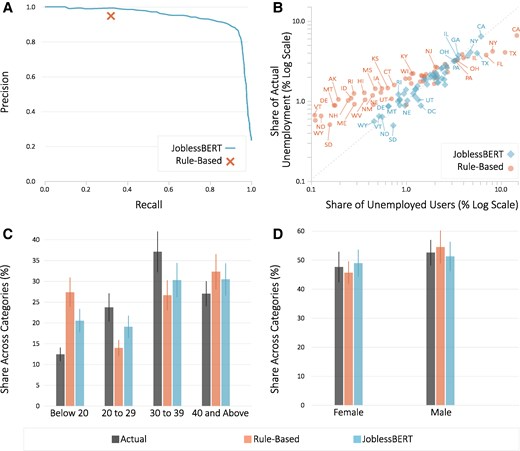
Social Media Is A Faster Source For Unemployment Data Than Government

Government unemployment data today are what Nielsen TV ratings were decades ago - a flawed metric...

Gestational Diabetes Up 36% In The Last Decade - But Black Women Are Healthiest

Gestational diabetes, a form of glucose intolerance during pregnancy, occurs primarily in women...
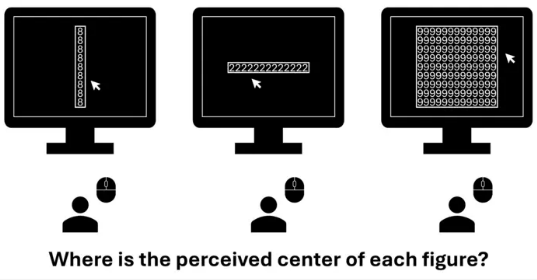
Object-Based Processing: Numbers Confuse How We Perceive Spaces

Researchers recently studied the relationship between numerical information in our vision, and...
Males Are Genetically Wired To Beg Females For Food

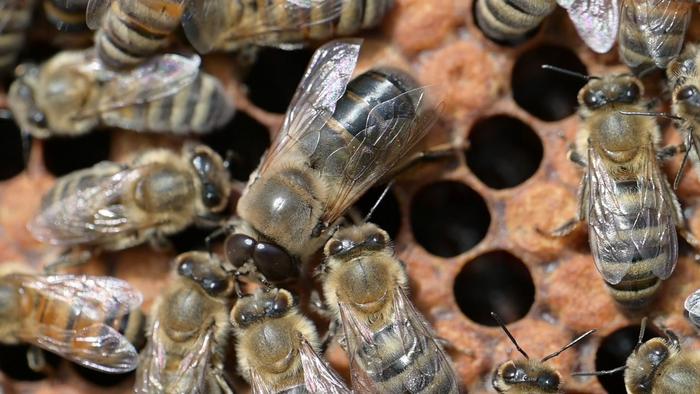
Bees have the reputation of being incredibly organized and spending their days making sure our...

User picture.
News StaffRSS Feed of this column.

News Releases From All Over The World, Right To You... Read More »

Blogroll

Male túngara frogs call from puddles to attract females. The production of the call incidentally creates ripples that spread across the water. Researchers at the Smithsonian Tropical Research Institute in Panama revealed that these ripples are used by other male frogs to assess the level of competition in the puddle. Unfortunately for the frogs, their main predator, the frog-eating bat, senses the ripples too, making the frogs easier targets.

A viral pathogen that typically infects plants has been found in honeybees and could help explain their decline. Researchers working in the U.S. and Beijing, China report their findings in mBio, the online open-access journal of the American Society for Microbiology.

The routine screening of bees for frequent and rare viruses "resulted in the serendipitous detection of Tobacco Ringspot Virus, or TRSV, and prompted an investigation into whether this plant-infecting virus could also cause systemic infection in the bees," says Yan Ping Chen from the U.S. Department of Agriculture's Agricultural Research Service (ARS) laboratory in Beltsville, Maryland, an author on the study.

SAN FRANCISCO - Jan. 21, 2014 - The probability of blindness due to the serious eye disease glaucoma has decreased by nearly half since 1980, according to a study published this month in Ophthalmology, the journal of the American Academy of Ophthalmology. The researchers speculate that advances in diagnosis and therapy are likely causes for the decrease, but caution that a significant proportion of patients still progress to blindness.

A new brain-imaging technique enables people to 'watch' their own brain activity in real time and to control or adjust function in pre-determined brain regions. The study from the Montreal Neurological Institute and Hospital – The Neuro, McGill University and the McGill University Health Centre, published in NeuroImage, is the first to demonstrate that magnetoencephalography (MEG) can be used as a potential therapeutic tool to control and train specific targeted brain regions. This advanced brain-imaging technology has important clinical applications for numerous neurological and neuropsychiatric conditions.

New research finds significantly higher levels of infectious pathogens in water from faucet taps with aerators compared to water from deeper in the plumbing system. Contaminated water poses an increased risk for infection in immunocompromised patients. The study was published in the February issue of Infection Control and Hospital Epidemiology, the journal of the Society for Healthcare Epidemiology of America.

"Aerators are a reservoir for drug-resistant bacteria and a source of infection for patients at risk," said Maria Luisa Cristina, PhD, a lead author of the study. "Safe water is vital to ensuring patient safety where waterborne infections increase morbidity, mortality, treatment costs, compensation claims and prolong hospital stays."

Given a choice, male dyeing poison frogs snub empty pools in favor of ones in which their tiny tadpoles have to metamorphose into frogs in the company of larger, carnivorous ones of the same species. The frog fathers only choose to deposit their developing young in unoccupied pools when others are already filled with tadpoles of a similar size as their own. These are seemingly counterintuitive decisions, given how often cannibalism involving a large tadpole eating a smaller one takes place in natural pools, writes Bibiana Rojas of the University of Jyväskylä in Finland. Her findings are published in Springer's journal Behavioral Ecology and Sociobiology.

