
Banner
Social Media Is A Faster Source For Unemployment Data Than Government

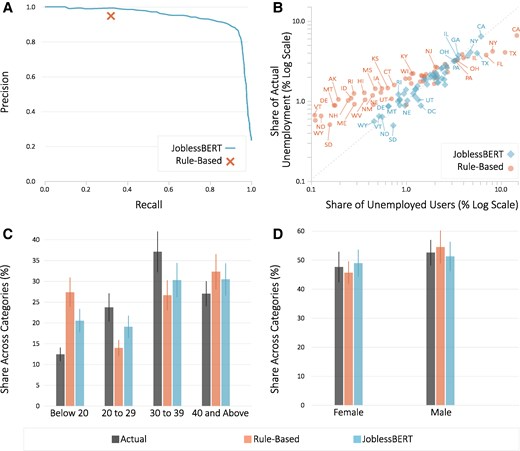
Government unemployment data today are what Nielsen TV ratings were decades ago - a flawed metric...

Gestational Diabetes Up 36% In The Last Decade - But Black Women Are Healthiest

Gestational diabetes, a form of glucose intolerance during pregnancy, occurs primarily in women...

Object-Based Processing: Numbers Confuse How We Perceive Spaces

Researchers recently studied the relationship between numerical information in our vision, and...

Males Are Genetically Wired To Beg Females For Food

Bees have the reputation of being incredibly organized and spending their days making sure our...

User picture.
News StaffRSS Feed of this column.

News Releases From All Over The World, Right To You... Read More »

Blogroll

Setting the stage for possible advances in pain treatment, researchers at The Johns Hopkins University and the University of Maryland report they have pinpointed two molecules involved in perpetuating chronic pain in mice. The molecules, they say, also appear to have a role in the phenomenon that causes uninjured areas of the body to be more sensitive to pain when an area nearby has been hurt. A summary of the research will be published on Jan. 23 in the journal Neuron.

Neuroscientists from the University of Leicester, in collaboration with the Department of Neurosurgery at the University California Los Angeles (UCLA), are to reveal details of how the brain determines the timing at which neurons in specific areas fire to create new memories.

This research exploits the unique opportunity of recording multiple single-neurons in patients suffering from epilepsy refractory to medication that are implanted with intracranial electrodes for clinical reasons.

The study, which is to be published in the academic journal Current Biology, is the result of collaboration between Professor Rodrigo Quian Quiroga and Dr Hernan Rey at the Centre for Systems Neuroscience at the University of Leicester and Professor Itzhak Fried at UCLA.

Bigger really is better – at least it was for early prehistoric life.

A NASA research group featuring University of Toronto Mississauga professor Marc Laflamme has helped to explain why some prehistoric organisms evolved into larger animals.

Laflamme, an assistant professor with the Department of Chemical and Physical Sciences, and his colleagues at the Massachusetts Institute of Technology Node of NASA's Astrobiology Institute suggest that height offered a distinct advantage to the earliest forms of multicellular life.

MAYWOOD, Il. – Physical activity significantly extends the lives of male cancer survivors, a new study of 1,021 men has found.

During the period while the men were followed, those who expended more than 12,600 calories per week in physical activity were 48 percent less likely to die than those who burned fewer than 2,100 calories per week.

Kathleen Y. Wolin, PhD, of Loyola University Chicago Stritch School of Medicine, is co-author of the study, published in the Journal of Physical Activity & Health, the official journal of the International Society for Physical Activity and Health.

Scientists have mapped the genetic changes that drive tumors in rhabdomyosarcoma, a pediatric soft-tissue cancer, and found that the disease is characterized by two distinct genotypes. The genetic alterations identified in this malignancy could be useful in developing targeted diagnostic tools and treatments for children with the disease. The study, by researchers at the National Cancer Institute (NCI), part of the National Institutes of Health, and their colleagues, appeared in the Jan. 23, 2014, issue of the journal Cancer Discovery.

CAMBRIDGE, Mass-- Flexible, layered materials textured with nanoscale wrinkles could provide a new way of controlling the wavelengths and distribution of waves, whether of sound or light. The new method, developed by researchers at MIT, could eventually find applications from nondestructive testing of materials to sound suppression, and could also provide new insights into soft biological systems and possibly lead to new diagnostic tools.

The findings are described in a paper published this week in the journal Physical Review Letters, written by MIT postdoc Stephan Rudykh and Mary Boyce, a former professor of mechanical engineering at MIT who is now dean of the Fu Foundation School of Engineering and Applied Science at Columbia University.

