Banner
Social Media Is A Faster Source For Unemployment Data Than Government

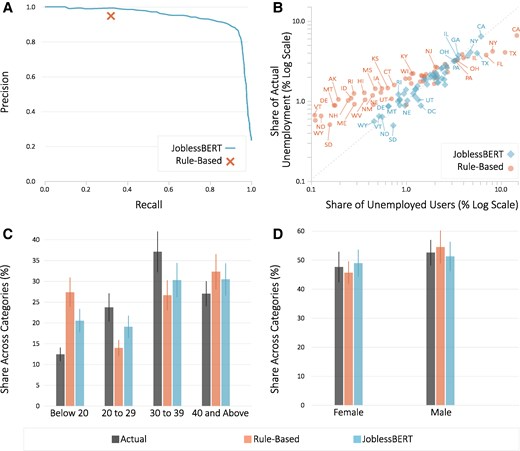
Government unemployment data today are what Nielsen TV ratings were decades ago - a flawed metric...

Gestational Diabetes Up 36% In The Last Decade - But Black Women Are Healthiest

Gestational diabetes, a form of glucose intolerance during pregnancy, occurs primarily in women...

Object-Based Processing: Numbers Confuse How We Perceive Spaces

Researchers recently studied the relationship between numerical information in our vision, and...

Males Are Genetically Wired To Beg Females For Food

Bees have the reputation of being incredibly organized and spending their days making sure our...

User picture.
News StaffRSS Feed of this column.

News Releases From All Over The World, Right To You... Read More »

Blogroll

Yield is economically important in field corn production, and there is no question that has been a success, but sweet corn has an additional metric for being considered a win. It's reported that  crop yield responses due to sweet corn research are actually helpful to the industry, but are they?

Writing
in Field Crops Research, Marty Williams, a USDA-ARS ecologist and University of Illinois crop sciences researcher, analyzes results after collecting and studying sweet corn data representing 31 hybrids across 22 locations in Illinois over an 8-year period. The result: A disconnect in what researchers are measuring in the field and what processors and seed companies need to know in order to make improved production decisions.

Voice voting is still used at some civic, local and county meetings. In more of a traditional sense, it's also still employed in Congress and some state meetings.

But new paper finds that a single loud voice can skew the result if that's not accounted for - the louder the voice, the cloudier the choice, according to a paper in the Journal of the Acoustical Society of America.

In voice voting, if you have never witnessed it, a presiding officer states a question, and the group that replies either yea or nay. The loudest is declared the winner, because volume is usually representative of numbers.

Everyone claims to care about diversity, individualism and tolerance. Very few people (R.I.P. Pete Seeger) really do. Instead, they want their beliefs affirmed and they want to demonize the opposition at every turn

The remoteness and anonymity of social media makes aggressive and cultural political posturing easy - that is why people  who think the majority of their friends have differing opinions than their own engage less on Facebook. Politically active tend to stick in their own circles, ignore those on the other side and become more polarized.   

Why were there old, enormously massive galaxies no longer forming new stars in the very early universe?

The first stars already emerged in the very early universe about 200 million years after the Big Bang. Gas is the raw material used to form stars and giant clouds of hydrogen and helium and dust (and whatever "dark matter" will eventually be) contracted and eventually the gas became so compact that the pressure heated the matter so that glowing gas balls were formed and new stars were born. 

What separates us from other primates?

The psychologists behind a new MRI study say it is key components in the ventrolateral frontal cortex area of the human brain, and how these components were connected up with other brain areas. When compared to equivalent MRI data from 25 macaque monkeys, the authors determined that it is unlike anything in the brains of some of our closest evolutionary relatives. 

Military veterans exposed to the herbicide Agent Orange may be at higher risk for certain types of skin cancer, suggests a new report.

Agent Orange is a defoliant famously used by the British military during the Malayan Emergency and the U.S. military period of the Vietnam War.

The study adds to existing evidence that risk of non-melanotic invasive skin cancer (NMISC) is increased even four decades after Agent Orange exposure, with at least some exposed veterans having unusually aggressive non-melanoma skin cancers. 

Skin Cancers Present in About Half of Vets Exposed to Agent Orange