
Banner
Social Media Is A Faster Source For Unemployment Data Than Government

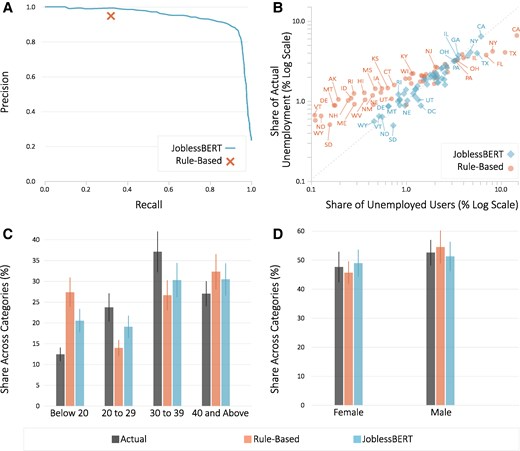
Government unemployment data today are what Nielsen TV ratings were decades ago - a flawed metric...

Gestational Diabetes Up 36% In The Last Decade - But Black Women Are Healthiest

Gestational diabetes, a form of glucose intolerance during pregnancy, occurs primarily in women...

Object-Based Processing: Numbers Confuse How We Perceive Spaces

Researchers recently studied the relationship between numerical information in our vision, and...

Males Are Genetically Wired To Beg Females For Food

Bees have the reputation of being incredibly organized and spending their days making sure our...

User picture.
News StaffRSS Feed of this column.

News Releases From All Over The World, Right To You... Read More »

Blogroll

Children who grow up in dangerous neighborhoods exhibit more aggressive behavior, according to a new paper in Societies.

Lots of U.S. studies have suggested a link between dangerous neighborhoods and aggressive behavior in kids but the authors of the new paper wanted to determine whether the pattern held true worldwide. So they interviewed parents and children from 1,293 families in nine countries: China, Colombia, Italy, Jordan, Kenya, the Philippines, Sweden, Thailand and the United States.

The questions involved dangers in their neighborhoods. Based on the answers, the researchers scored the neighborhoods according to their degree of danger.

The difference between 1 and 2 and 101 and 102 is the same, yet children perceive 1 and 2 as being much farther apart, because two is twice as much as one.

It takes years of education to recognize that the numbers in both sets are only one integer apart on a number line. But a new paper shows that different is not necessarily weaker and  educated adults retain traces of their childhood number sense — and that innate ability is more powerful than recognized. 

In every sport, an athlete who has enjoyed long-term success has the opportunity for free agency, when they can join the highest bidder.

Excess abdominal fat is an indicator for heart disease, type 2 diabetes and cancer and a person's measure of such belly fat is reflected in the ratio of waist circumference to hip circumference.

Some estimate that genetics account for a broad range, 30 to 60 percent, of this waist-to-hip ratio (WHR).

Obese children exposed to high levels of air pollutants were nearly three times as likely to have asthma, compared with non-obese children and lower levels of pollution exposure, according to a new report. 

"Adam", our most common male ancestor, walked the earth 209,000 years ago, 9,000 years earlier than previously believed and within the time frame of his other half "Eve", the genetic maternal ancestor of mankind, according to a new paper. 

Writing in the European Journal of Human Genetics, Dr. Eran Elhaik from the University of Sheffield and colleagues also take the opportunity to blow up some other research, such as the discovery that the Y chromosome predated humanity (the A00 lineage) and originated in a different species through interbreeding, which dates "Adam" to be much older.




