Banner
Social Media Is A Faster Source For Unemployment Data Than Government

Government unemployment data today are what Nielsen TV ratings were decades ago - a flawed metric...

Gestational Diabetes Up 36% In The Last Decade - But Black Women Are Healthiest

Gestational diabetes, a form of glucose intolerance during pregnancy, occurs primarily in women...

Object-Based Processing: Numbers Confuse How We Perceive Spaces

Researchers recently studied the relationship between numerical information in our vision, and...

Males Are Genetically Wired To Beg Females For Food

Bees have the reputation of being incredibly organized and spending their days making sure our...

User picture.
News StaffRSS Feed of this column.

News Releases From All Over The World, Right To You... Read More »

Blogroll

Members of the public generally have a negative view of climate engineering, the deliberate large-scale manipulation of the environment to counteract climate change, according to a new paper. This makes some sense. If we can't predict the weather a week from now, it's very difficult to say we can predict the far more complicated climate after physical changes are made to the inputs.

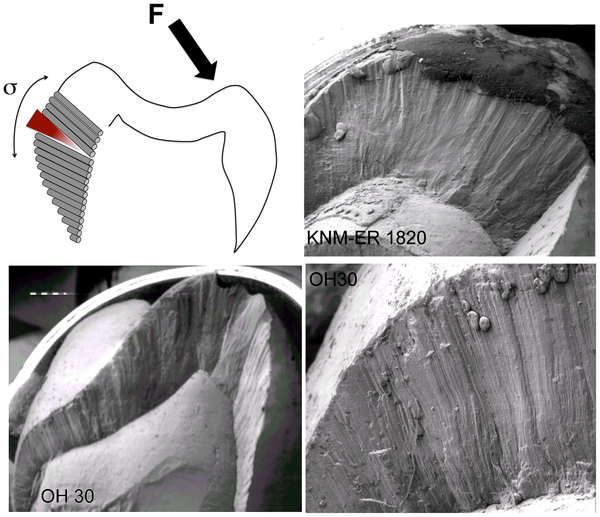
Paranthropus boisei, nicknamed "Nutcracker Man" because of his big flat molar teeth and powerful jaws,lived in East Africa between 2.4 million-1.4 million years ago.

A new paper postulates that he survived mainly on a diet of tiger nuts - edible grass bulbs still eaten in parts of the world today- along with fruits and invertebrates, like worms and grasshoppers.  

Volcanic rock textures and ages suggest that the painting of a mural by residents of Çatalhöyük was recording an explosive eruption of the Hasan Dagi volcano. 

Scientists analyzed rocks from the nearby Hasan Dagi volcano in order to determine whether it was the volcano depicted in the mural from ~6600 BC in the Catalhöyük Neolithic site in central Turkey.

To determine if Hasan Dagi was active during that time, scientists collected and analyzed volcanic rock samples from the summit and flanks of the Hasan Dagi volcano using (U-Th)/He zircon geochronology. These ages were then compared to the archeological date of the mural.

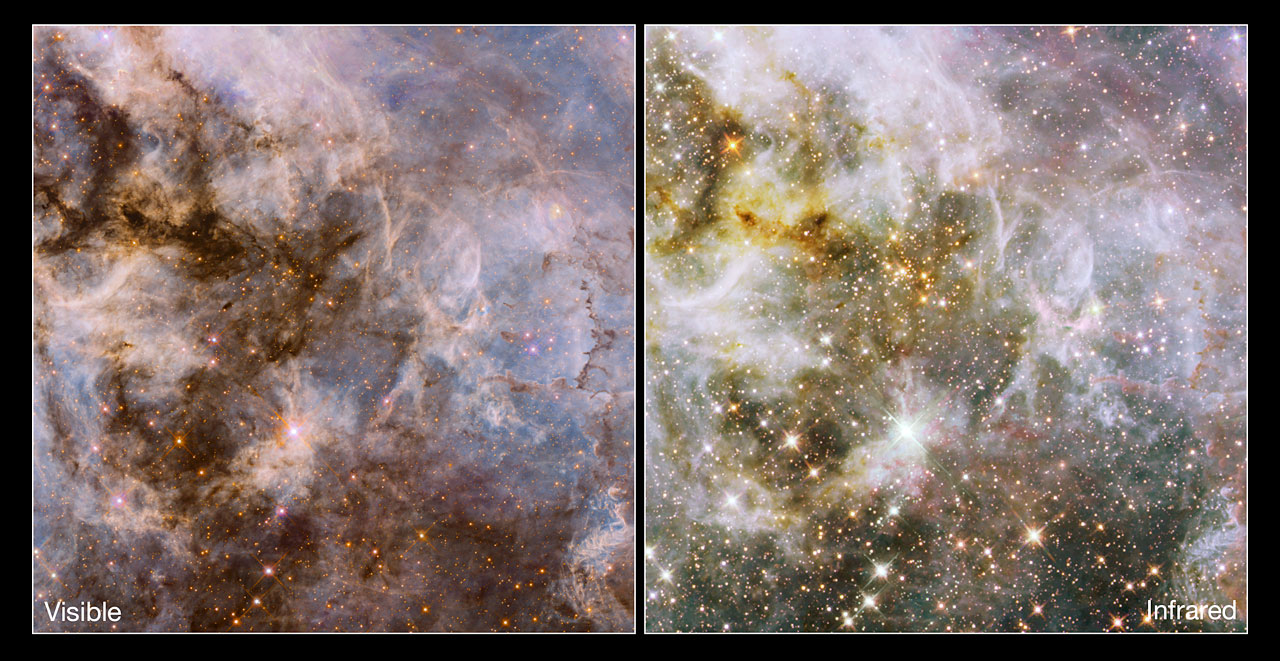
The near-infrared vision of NASA's Hubble Space Telescope has given us a new view deep inside the Tarantula Nebula - and its more than 800,000 stars and protostars within.

Everyone has seen what athletes do after a victory - footballers may take their shirts off and slide on their knees, baseball hitters may pump their fists. 

That instinctive reaction that occurs is a biological imperative to display dominance over opponents rather than a sense of personal satisfaction, according to a paper in Motivation and Emotion.

Marine cyanobacteria are tiny ocean plants that produce oxygen and make organic carbon using sunlight and CO2, and so they are primary engines of Earth's biogeochemical and nutrient cycles.

They nourish other organisms through the provision of oxygen and with their own body mass, which forms the base of the ocean food chain. Researchers have discovered a new benefit of these tiny cells: Cyanobacteria continually produce and release vesicles, spherical packages containing carbon and other nutrients that can serve as food parcels for marine organisms. The vesicles also contain DNA, likely providing a means of gene transfer within and among communities of similar bacteria, and they may even act as decoys for deflecting viruses.