Banner
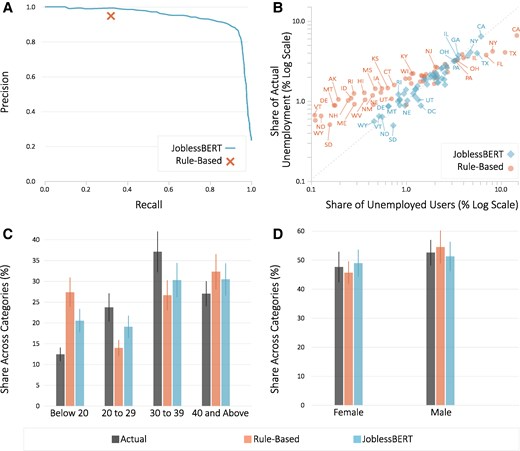
Social Media Is A Faster Source For Unemployment Data Than Government

Government unemployment data today are what Nielsen TV ratings were decades ago - a flawed metric...

Gestational Diabetes Up 36% In The Last Decade - But Black Women Are Healthiest

Gestational diabetes, a form of glucose intolerance during pregnancy, occurs primarily in women...

Object-Based Processing: Numbers Confuse How We Perceive Spaces

Researchers recently studied the relationship between numerical information in our vision, and...

Males Are Genetically Wired To Beg Females For Food

Bees have the reputation of being incredibly organized and spending their days making sure our...

User picture.
News StaffRSS Feed of this column.

News Releases From All Over The World, Right To You... Read More »

Blogroll

Oxygen is necessary for survival on Earth but the planet's atmosphere did not always contain this life-sustaining substance. One of science's greatest mysteries is how and when oxygenic photosynthesis—the process responsible for producing oxygen on Earth through the splitting of water molecules—first began.

Geobiologists writing in PNAS say they have found evidence of a precursor photosystem involving manganese that predates cyanobacteria, the first group of organisms to release oxygen into the environment via photosynthesis.  

All stars begin their lives in groups, though most, including our Sun, are born in small, benign groups that quickly fell apart. Others form in huge, dense swarms that survive for billions of years as stellar clusters.

Within such rich and dense clusters, stars jostle for room with thousands of neighbors while strong radiation and harsh stellar winds scour interstellar space, stripping planet-forming materials from nearby stars.

That's an unlikely place to find alien worlds.

Yet 3,000 light-years from Earth in the star cluster NGC 6811, astronomers have found two planets smaller than Neptune orbiting Sun-like stars. 

Aaron Hernandez, until today a young, rich ($40 million contract) tight end for the New England Patriots football team, has been arrested and charged with the murder of Odin Lloyd, who had been dating his fiancée’s sister.

The key piece of evidence: Bubblicious bubble gum. Prosecutors say they can prove Hendandez purchased gum at a gas station hours before the murder and that they believe a chewed piece of gum found at a crime scene will have DNA from Hernandez, which would place him in the vehicle involved and thus as the murderer.

Researchers in the U.S., Europe and Japan have produced the first comparison of both the DNA sequences and which genes are active, or being transcribed, between the domestic tomato and its wild cousins.

The results give insight into the genetic changes involved in domestication and may help with future efforts to breed new traits into tomato or other crops, said Julin Maloof, professor of plant biology in the College of Biological Sciences at the University of California, Davis and senior author of the study in PNAS.

If you can scorch a baseball over the mound, you can thank extinct ancestors.

That's not to say that, despite what an evolutionary psychologist might contend, our ability to throw fast and accurately evolved so our ancestors could play ball better and therefore get more dates.

Instead, this ability first evolved nearly 2 million years ago -  humans are unique in our throwing ability - to aid in hunting


Claims from Chen-Yu Zhang's group at China's Nanjing University made international headlines when they reported that, after mice ate lettuce, bits of genetic material from the plants made its way into their bloodstreams intact - and could turn the animals' own genes off.

Miracle vegetable of the week journalists said it was a triumph for the promise of medicinal food. Scare journalism of the week writers instead worried that genetically modified food might modify consumers in unanticipated ways.

Look for actual science to receive far less attention.