Banner
Social Media Is A Faster Source For Unemployment Data Than Government

Government unemployment data today are what Nielsen TV ratings were decades ago - a flawed metric...

Gestational Diabetes Up 36% In The Last Decade - But Black Women Are Healthiest

Gestational diabetes, a form of glucose intolerance during pregnancy, occurs primarily in women...

Object-Based Processing: Numbers Confuse How We Perceive Spaces

Researchers recently studied the relationship between numerical information in our vision, and...

Males Are Genetically Wired To Beg Females For Food

Bees have the reputation of being incredibly organized and spending their days making sure our...

User picture.
News StaffRSS Feed of this column.

News Releases From All Over The World, Right To You... Read More »

Blogroll

A team of researchers has identified a highly promising new anti-tuberculosis compound that attacks the tuberculosis (TB) bacterium in two different ways.

Although isoniazid and rifampin, two front-line TB drugs, came into use in 1952 and 1967 respectively, new TB infections still occur at the rate of roughly one per second. At any moment about a third of the existing human population is infected. Though it is mostly winactive, latent TB, active TB still kills over one million people each year, with Russia, Africa, China and Southeast Asia especially hard hit.

Fracking, which mines natural gas using horizontal, hydraulically fractured wells, is widespread across Pennsylvania, with high-volume horizontal hydraulic fracturing (HVHHF) from the Marcellus and Utica shales covering up to 280,000 km² of the Appalachian Basin. 

A new paper in the Annals of the New York Academy of Sciences by Dr.Erik Kiviat, of the Hudsonia ecology group, says that natural gas wells are a threat to biodiversity, including pollution from toxic chemicals, the building of well pads and pipelines, and changes to wetlands.

Natural gas is much cleaner than coal but it's also important that its energy return on investment (EROI) - the total input energy with the energy expected to be made available to end users - is similar to coal, according to a paper in the Journal of Industrial Ecology.

The paper looked at gas from horizontal, hydraulically fractured wells in the Marcellus Shale of Pennsylvania and their analysis indicates that the EROI ratio of a typical well is likely between 64:1 and 112:1, with a mean of approximately 85:1. This range assumes an estimated ultimate recovery of 3.0 billion cubic feet per well, similar to the estimated ultimate recovery of coal, which falls between 50:1 and 85:1.

If you want to design new materials that are durable, lightweight and environmentally sustainable, it makes sense to look at old kinds: Natural composites, such as bone. Bone is strong and tough because its two constituent materials, soft collagen protein and stiff hydroxyapatite mineral, are arranged in complex hierarchical patterns that change at every scale of the composite, from the micro up to the macro.

While researchers have come up with hierarchical structures in the design of new materials, going from a computer model to the production of physical artifacts has been a persistent challenge because the hierarchical structures that give natural composites their strength are self-assembled through electrochemical reactions, a process not easily replicated in the lab.

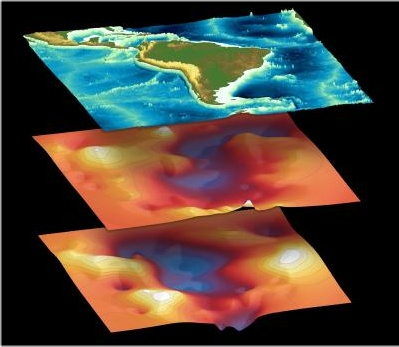
The end of the Atlantic Ocean is coming. 

A new subduction zone forming off the coast of Portugal shows that a passive margin in the Atlantic ocean is becoming active and Europe could to move closer to America, according to a paper in Geology.

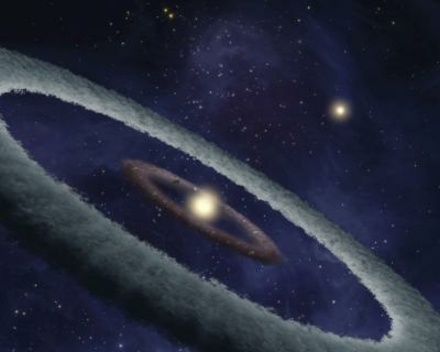
The gap between hypothesis and observation is never more evident than efforts to figure out howblack holes produce so many high-power X-rays.