Banner
Social Media Is A Faster Source For Unemployment Data Than Government

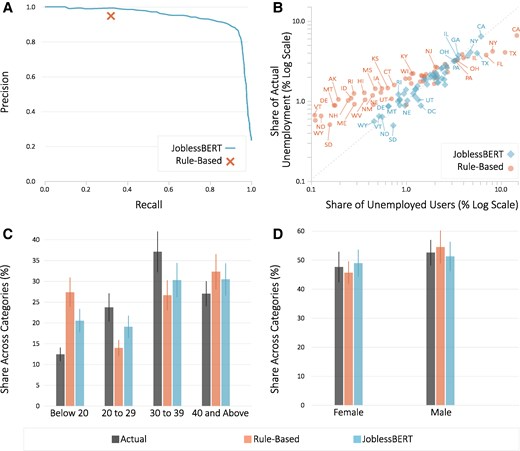
Government unemployment data today are what Nielsen TV ratings were decades ago - a flawed metric...

Gestational Diabetes Up 36% In The Last Decade - But Black Women Are Healthiest

Gestational diabetes, a form of glucose intolerance during pregnancy, occurs primarily in women...

Object-Based Processing: Numbers Confuse How We Perceive Spaces

Researchers recently studied the relationship between numerical information in our vision, and...

Males Are Genetically Wired To Beg Females For Food

Bees have the reputation of being incredibly organized and spending their days making sure our...

User picture.
News StaffRSS Feed of this column.

News Releases From All Over The World, Right To You... Read More »

Blogroll

A patch of Martian soil analyzed by NASA's rover Spirit is so rich in silica that it may provide some of the strongest evidence yet that ancient Mars was much wetter than it is now. The processes that could have produced such a concentrated deposit of silica require the presence of water.

Members of the rover science team heard from a colleague during a recent teleconference that the alpha particle X-ray spectrometer, a chemical analyzer at the end of Spirit's arm, had measured a composition of about 90 percent pure silica for this soil.

A new study in this month’s Journal of Personality and Social Psychology explains why NPR listeners always think they are right. When it comes to financial decisions or even concerns about terrorism, people are likely to be influenced by what others think but repeated exposure to one viewpoint can have almost as much influence as exposure to shared opinions from multiple people.

Hearing an opinion multiple times increases the recipient’s sense of familiarity and in some cases gives a listener a false sense that an opinion is more widespread then it actually is.

The use of targeted nanoparticles offers promising techniques for cancer treatment. Researchers in the laboratory of Mark E. Davis at the California Institute of Technology have been using small interfering RNA (siRNA), sometimes known as silencing RNA, to "silence" specific genes that are implicated in certain malignancies.

One of the primary challenges associated with this type of therapy is delivering the therapeutic agent into the body and then to the tumor in a safe and effective manner. By using targeted nanoparticles, researchers have demonstrated that systemically delivered siRNA can slow the growth of tumors in mice without eliciting the toxicities often associated with cancer therapies.

Approximately ten million American adults have problems controlling their bladders. Bladder disease affects both men and women and can include incontinence or interstitial cystitis, a chronic inflammatory condition that causes frequent, urgent and painful urination and pelvic discomfort.

Herbal agents could be used to treat inflammatory bladder diseases, according to a preliminary study that looked at the ability of green tea to protect bladder cells from inflammation. The University of Pittsburgh School of Medicine study, found that components of green tea protected bladder cells from damage in culture.

The ability to regenerate nerve cells in the body could reduce the effects of trauma and disease in a dramatic way. In two presentations at the NSTI Nanotech 2007 Conference, researchers describe the use of nanotechnology to enhance the regeneration of nerve cells. In the first method, developed at the University of Miami, researchers show how magnetic nanoparticles (MNPs) may be used to create mechanical tension that stimulates the growth and elongation of axons of the central nervous system neurons. The second method from the University of California, Berkeley uses aligned nanofibers containing one or more growth factors to provide a bioactive matrix where nerve cells can regrow.

People with obstructive sleep apnea have a markedly increased risk of severe motor vehicle crashes involving personal injury, according to a study presented at the American Thoracic Society 2007 International Conference, on Sunday, May 20.

The study of 800 people with sleep apnea and 800 without the nighttime breathing disorder found that patients with sleep apnea were twice as likely as people without sleep apnea to have a car crash, and three to five times as likely to have a serious crash involving personal injury. Overall, the sleep apnea group had a total of 250 crashes over three years, compared with 123 crashes in the group without sleep apnea.