Banner
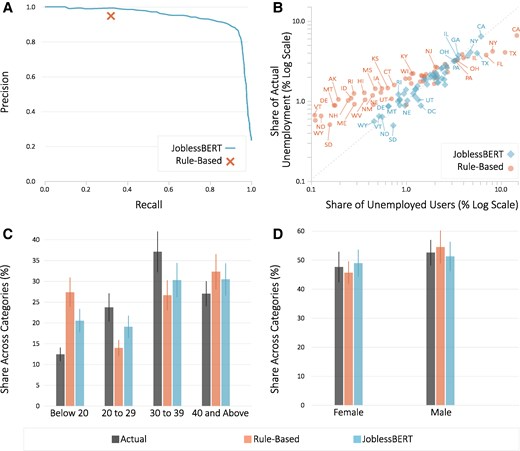
Social Media Is A Faster Source For Unemployment Data Than Government

Government unemployment data today are what Nielsen TV ratings were decades ago - a flawed metric...
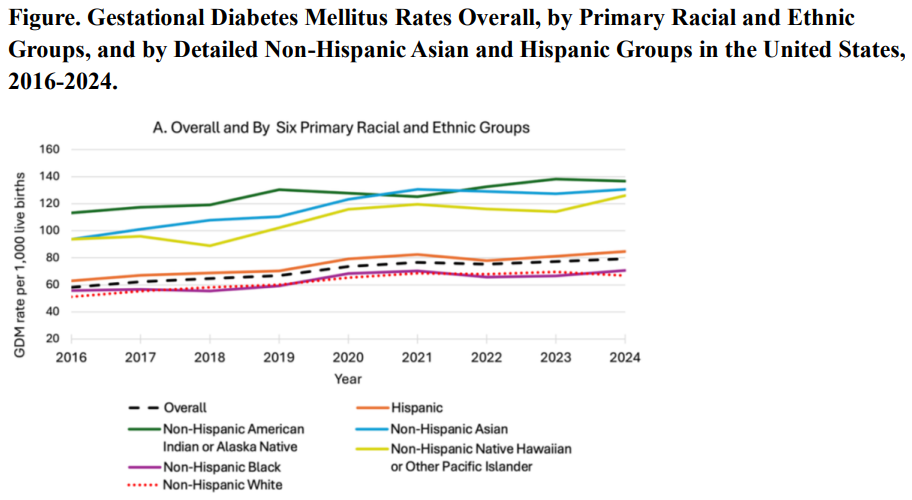
Gestational Diabetes Up 36% In The Last Decade - But Black Women Are Healthiest

Gestational diabetes, a form of glucose intolerance during pregnancy, occurs primarily in women...

Object-Based Processing: Numbers Confuse How We Perceive Spaces

Researchers recently studied the relationship between numerical information in our vision, and...

Males Are Genetically Wired To Beg Females For Food

Bees have the reputation of being incredibly organized and spending their days making sure our...

User picture.
News StaffRSS Feed of this column.

News Releases From All Over The World, Right To You... Read More »

Blogroll

How much money would it take to get you to stick a pin into your palm? How much to stick a pin into the palm of a child you don’t know? How much to slap a friend in the face (with his or her permission) as part of a comedy skit? Well, what about slapping you father (with his permission) as part of a skit? How you answer questions such as these may reveal something about your morality, and even your politics — conservatives, for example, tend to care more about issues of hierarchy and respect, while liberals concentrate on caring and fairness.

People who do well on a series of decision-making tasks involving hypothetical situations tend to have more positive decision outcomes in their lives, according to a study by decision scientists at Carnegie Mellon University and the RAND Corp.

The results suggest that it may be possible to improve the quality of people’s lives by teaching them better decision-making skills.

Yes, there are gender differences in cognitive function, but they're more limited than previously thought. And yes, income does affect cognitive performance – but less than expected when only healthy children are considered. And while basic cognitive skills steadily improve in middle childhood, they then seem to level off – questioning the idea of a burst of brain development in adolescence.

These findings, published online on May 18 in the Journal of the International Neuropsychological Society, are the first data to emerge from the National Institutes of Health (NIH) MRI Study of Normal Brain Development, a large, population-based study that began in 1999 and is documenting structural brain development and behavior from birth to young adulthood.

The James Clerk Maxwell Telescope (JCMT) on Mauna Kea in Hawaii has a new way to look at the Universe, thanks to two revolutionary instruments called HARP and ACSIS. These instruments operate together, and they recently sliced through the Orion Nebula, recording for the first time the internal movements of its star-forming gases.


This movie takes the observer through the data cube and gives a feel of how the gas is moving. The movie starts with clouds in the southern region, and then shows them progressively more towards the north as it steps through the wavelength slices. This reveals an expansion of gas. Gas to the south is moving towards the observer, while to the north it is moving away from the observer.

By applying the techniques of computer engineering to a mechanistic diagram describing the development of the Nematode C. elegans, a group of researchers in Switzerland has been able to tease out what laboratory experiments have not – how and when the crucial cross-talk between cellular signaling pathways takes place in order to determine the fates of individual cells.

Many school children in the United States memorize President Abraham Lincoln's Gettysburg Address, considered one of history's most brilliant speeches and a model of brevity and persuasive rhetoric.

But according to two medical researchers at University of Texas Medical Branch at Galveston, most historians have failed to recognize that when Lincoln delivered it on Nov. 19, 1863, he was in the early stages of a life-threatening illness — a serious form of smallpox. Their report appears in the current issue of Journal of Medical Biography, a scholarly quarterly published by the Royal Society of Medicine Press in London (www.rsmpress.co.uk/jmb.htm).