Banner
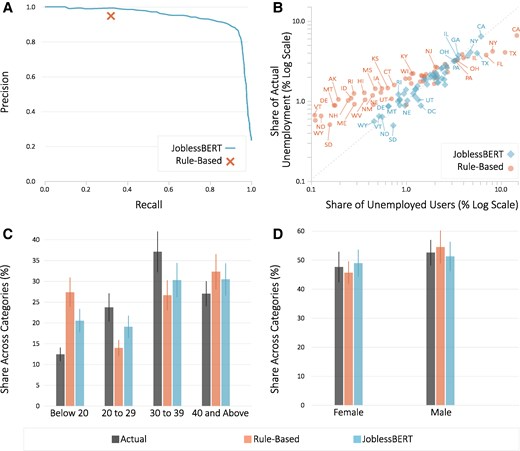
Social Media Is A Faster Source For Unemployment Data Than Government

Government unemployment data today are what Nielsen TV ratings were decades ago - a flawed metric...
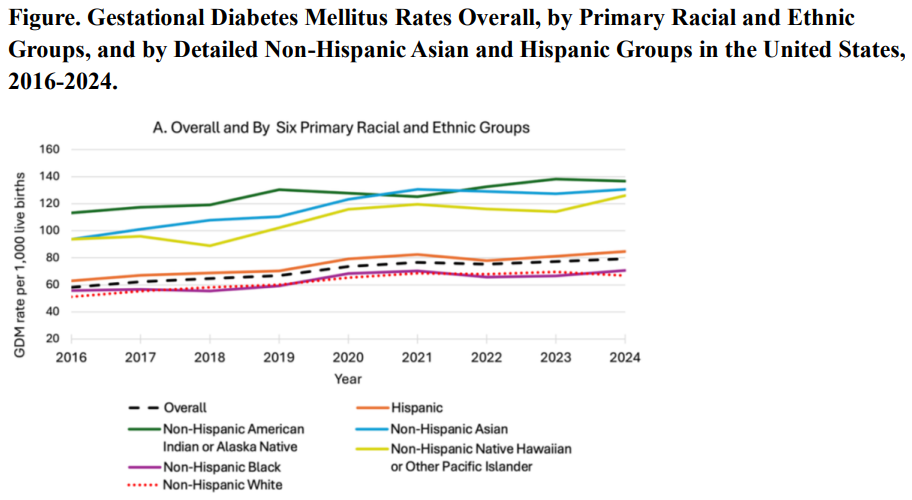
Gestational Diabetes Up 36% In The Last Decade - But Black Women Are Healthiest

Gestational diabetes, a form of glucose intolerance during pregnancy, occurs primarily in women...
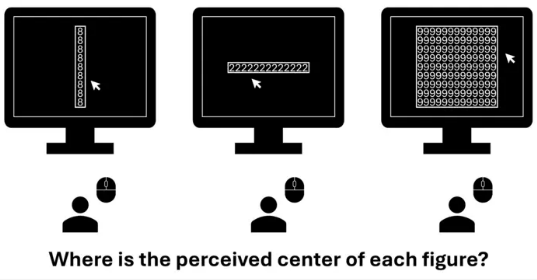
Object-Based Processing: Numbers Confuse How We Perceive Spaces

Researchers recently studied the relationship between numerical information in our vision, and...
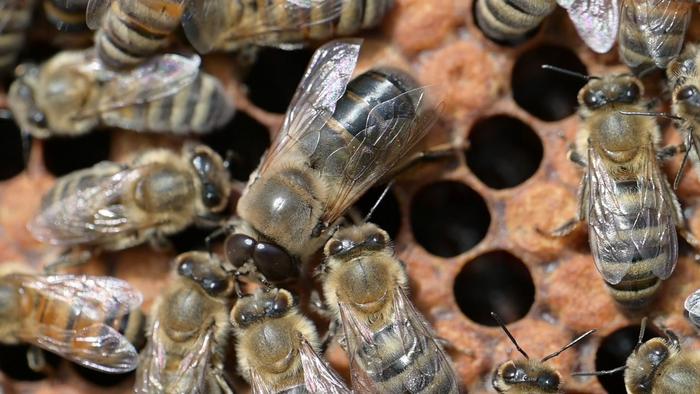
Males Are Genetically Wired To Beg Females For Food

Bees have the reputation of being incredibly organized and spending their days making sure our...

User picture.
News StaffRSS Feed of this column.

News Releases From All Over The World, Right To You... Read More »

Blogroll

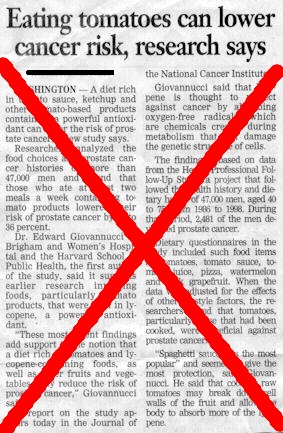
Tomatoes might be nutritious and tasty, but don’t count on them to prevent prostate cancer. In the May issue of Cancer Epidemiology, Biomarkers & Prevention, researchers based at the National Cancer Institute and Fred Hutchinson Cancer Research Center report that lycopene, an antioxidant predominately found in tomatoes, does not effectively prevent prostate cancer. In fact, the researchers noted an association between beta-carotene, an antioxidant related to lycopene, and an increased risk for aggressive prostate cancer.


Not so fast, AP

One of the world’s largest and least studied freshwater turtles has been found in Cambodia’s Mekong River, raising hopes that the threatened species can be saved from extinction.

Scientists from Conservation International (CI), World Wildlife Fund (WWF), the Cambodian Fisheries Administration, and the Cambodian Turtle Conservation Team captured and released an 11-kilogram (24.2-pound) female Cantor’s giant softshell turtle (Pelochelys cantorii) during a survey in March.


© CI-Cambodia/David Emmett
A female Cantor’s giant softshell turtle was found in Cambodia’s Mekong River.

Despite the fact that they both infect the liver, the hepatitis A and hepatitis C viruses actually have very little in common. The two are far apart genetically, are transmitted differently, and produce very different diseases.

Hepatitis A spreads through the consumption of fecal particles from an infected person (in pollution-contaminated food or water, for example), but hepatitis C is generally transmitted only by direct contact with infected blood.

Forecasters will test a new technique this summer that provides a detailed 3-D view of an approaching hurricane every six minutes and allows them to determine whether the storm is gathering strength as it nears land. The technique, developed by researchers at the National Center for Atmospheric Research (NCAR) and the Naval Research Laboratory (NRL), relies on the existing network of Doppler radars along the Southeast coast to closely monitor hurricane winds.


This map shows the locations of NOAA Doppler radars along the East and Gulf coasts. With the new technique known as VORTRAC, forecasters can use these coastal radars to monitor the intensity of landfalling hurricanes.

New Danish research has examined the mechanisms behind latent cell memory, which can come to life and cause previously non-existent capacities suddenly to appear. Special yeast cells for example, can abruptly change from being of a single sex to hermaphrodite.

Researchers from the Niels Bohr Institute at the University of Copenhagen have used mathematical models and computer simulations to examine fundamental mechanisms of cell memory.


Artistic impression of nucleosomes interaction. Credit: Mette Høst, CMOL, Niels Bohr Institute, University of Copenhagen

Astronomers have discovered the exact location and makeup of a pair of supermassive black holes at the center of a collision of two galaxies more than 300 million light years away.

Using adaptive optics (AO), which clear the blurring effects of turbulence in the Earth's atmosphere, Livermore scientists observed that the two black holes formed at the center of a rotating disk of stars in the galaxy merger known as NGC 6240 and are surrounded by a cloud of young star clusters.


Over the course of the next few hundred million years,, the two supermassive black holes, which are about 3,000 light years apart, will drift toward one another and merge to form one large