
Banner
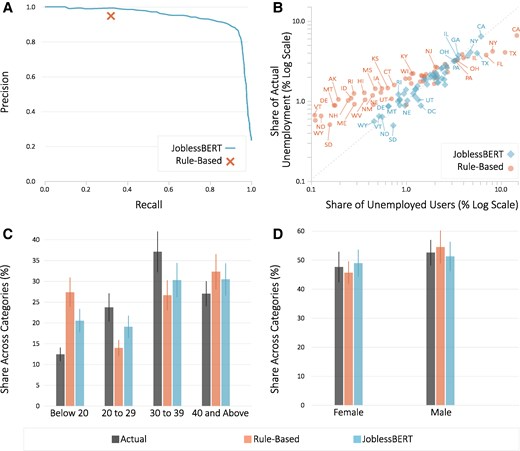
Social Media Is A Faster Source For Unemployment Data Than Government

Government unemployment data today are what Nielsen TV ratings were decades ago - a flawed metric...

Gestational Diabetes Up 36% In The Last Decade - But Black Women Are Healthiest

Gestational diabetes, a form of glucose intolerance during pregnancy, occurs primarily in women...
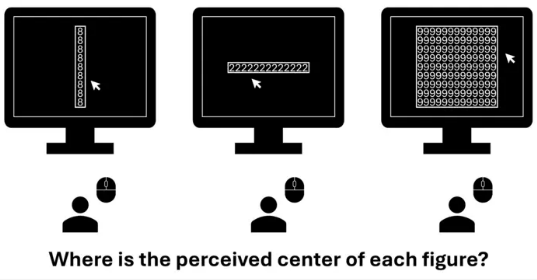
Object-Based Processing: Numbers Confuse How We Perceive Spaces

Researchers recently studied the relationship between numerical information in our vision, and...
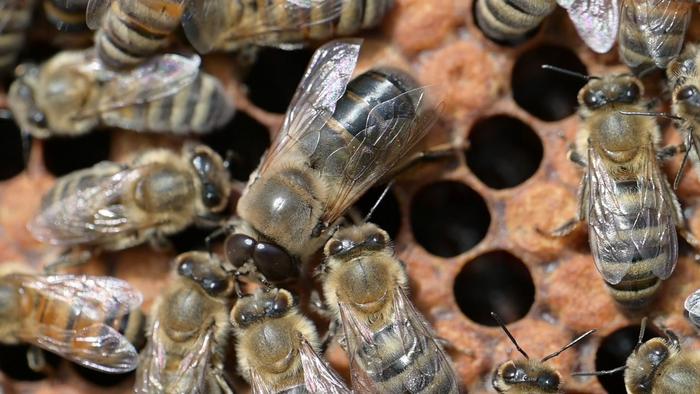
Males Are Genetically Wired To Beg Females For Food

Bees have the reputation of being incredibly organized and spending their days making sure our...

User picture.
News StaffRSS Feed of this column.

News Releases From All Over The World, Right To You... Read More »

Blogroll

Thousands of men facing surgical removal of the prostate due to cancer may someday have one less thing to worry about: post-surgical urinary incontinence.

That's because a team of expert urologic surgeons at NewYork-Presbyterian Hospital/Weill Cornell Medical Center has devised a simple, effective means of reconstructing key anatomical structures that ensure continence.

To download the 8 meter X 4 meter 900M resolution poster it is ony available through BitTorrent, the size is 3.89 GB and it can be downloaded here.

Smaller resolutions below.

The most detailed portraits ever of the Earth's land surface have been created with ESA's Envisat environmental satellite. The portraits are the first products produced as part of the ESA-initiated GlobCover project and are available online.

Bimonthly global composites for May to June 2005 and March to April 2006 can be accessed through a newly developed map server tool on ESA’s GlobCover website.

A research team, including Kent State Professor of Geology Dr. Joseph Ortiz, tracing the origin of the large carbon dioxide increase in Earth’s atmosphere at the end of the last ice age has detected two ancient "burps" that originated from the deepest parts of the southern ocean around Antarctica.

The new study showed carbon that had built up in the ocean over millennia was released in two big pulses at about 18,000 years ago and 13,000 years ago, says Dr. Thomas Marchitto of the University of Colorado at Boulder, who jointly led the study with colleague Dr. Scott Lehman.

Imagine being able to rapidly identify tiny biological molecules such as DNA and toxins using less than a drop of salt water in a system that can fit on a microchip.

In a paper appearing next week in the Proceedings of the National Academy of Sciences,* the team proves for the first time that a single nanometer-scale pore in a thin membrane can be used to accurately detect and sort different-sized polymer chains (a model for biomolecules) that pass through or block the channel.


Graphic showing a lipid bilayer membrane (blue) with an alpha-hemolysin nanopore.

Dr Pep Canadell, from the Global Carbon Project and CSIRO Marine and Atmospheric Research, says today in the journal Science that tropical deforestation releases 1.5 billion tonnes of carbon each year into the atmosphere.

"Deforestation in the tropics accounts for nearly 20 per cent of carbon emissions due to human activities," Dr Canadell says. "This will release an estimated 87 to 130 billion tonnes of carbon by 2100, which is greater than the amount of carbon that would be released by 13 years of global fossil fuel combustion. So maintaining forests as carbon sinks will make a significant contribution to stabilising atmospheric greenhouse gas concentrations."

Researchers at the University of Missouri-Columbia recently created a model of proline dehydrogenase, an important cancer-preventing enzyme in the human body, and analyzed how it works. A paper detailing their results was published today in the Journal of Biological Chemistry.




