
Banner
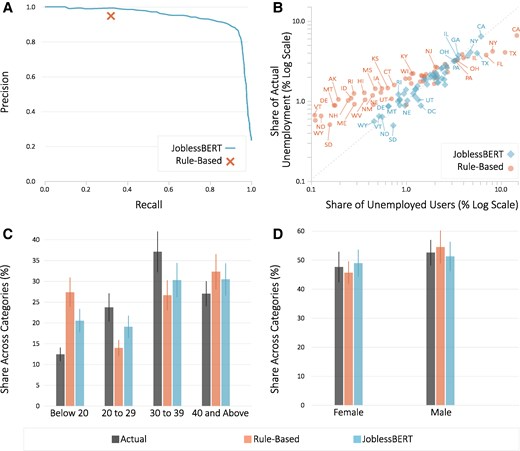
Social Media Is A Faster Source For Unemployment Data Than Government

Government unemployment data today are what Nielsen TV ratings were decades ago - a flawed metric...

Gestational Diabetes Up 36% In The Last Decade - But Black Women Are Healthiest

Gestational diabetes, a form of glucose intolerance during pregnancy, occurs primarily in women...

Object-Based Processing: Numbers Confuse How We Perceive Spaces

Researchers recently studied the relationship between numerical information in our vision, and...

Males Are Genetically Wired To Beg Females For Food

Bees have the reputation of being incredibly organized and spending their days making sure our...

User picture.
News StaffRSS Feed of this column.

News Releases From All Over The World, Right To You... Read More »

Blogroll

A new hereditary breast cancer gene has been discovered by scientists at the Lundberg Laboratory for Cancer Research and the Plastic Surgery Clinic at the Sahlgrenska Academy in Sweden. The researchers found that women with a certain hereditary deformity syndrome run a nearly twenty times higher risk of contracting breast cancer than expected.

Several research teams around the world have long been searching for new hereditary breast cancer genes, but thus far few have been found.

If you’ve ever wondered about the ultimate fate of the universe, Lawrence Krauss and Robert Scherrer have some good news - sort of. In a paper published online on April 25 in the journal Physical Review D, the two physicists show that matter as we know it will remain as the universe expands at an ever-increasing clip. That is, the current status quo between matter and its alter ego, radiation, will continue as the newly discovered force of dark energy pushes the universe apart.

One out of three sexually active older adults infected with HIV has unprotected sex, according to a study by Ohio University researchers. A survey of 260 HIV-positive older adults found that of those having sex, most were male, took Viagra and were in a relationship.

As the national repository for geological material from the Southern Ocean, the Antarctic Marine Geology Research Facility at Florida State University houses the premier collection of Antarctic sediment cores -- and a hot new acquisition will offer an international team of scientists meeting there May 1-4 its best look yet at the impact of global warming on oceans worldwide.

The remarkable new core was extracted during the recent Antarctic summer from record-setting drilling depths 4,214 feet below the sea floor beneath Antarctica's Ross Ice Shelf, the Earth's largest floating ice body. Laced with sediment dating from the present day to about 10 million years ago, the core provides a geologic record of the ice shelf's history in unprecedented detail.

University of Virginia researchers have discovered that microRNAs, a form of genetic material, can function as tumor suppressors in laboratory studies.

In the May 1 issue of Genes&Development, UVa researchers Drs. Yong Sun Lee and Anindya Dutta have shown that microRNAs can suppress the overexpression of a gene called HMGA2. This gene is related to creation of fatty tissue and certain tumors, as well as diet-induced obesity.

MicroRNA is a single-stranded RNA that is typically only 20-25 nucleotides long and is related to regulating the expression of other genes.

A Johns Hopkins team has stopped in its tracks a form of blood cancer in mice by engineering and inactivating an enzyme, telomerase, thereby shortening the ends of chromosomes, called telomeres.





