
Banner
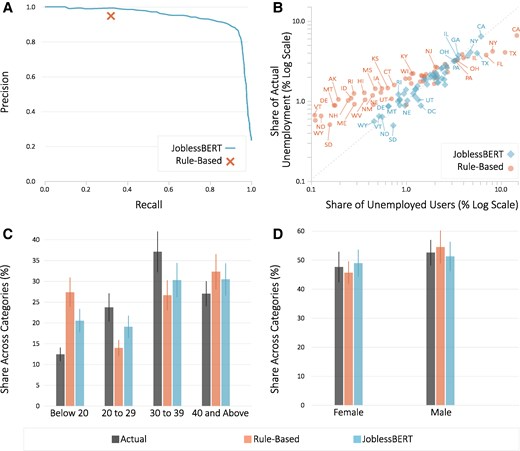
Social Media Is A Faster Source For Unemployment Data Than Government

Government unemployment data today are what Nielsen TV ratings were decades ago - a flawed metric...

Gestational Diabetes Up 36% In The Last Decade - But Black Women Are Healthiest

Gestational diabetes, a form of glucose intolerance during pregnancy, occurs primarily in women...

Object-Based Processing: Numbers Confuse How We Perceive Spaces

Researchers recently studied the relationship between numerical information in our vision, and...

Males Are Genetically Wired To Beg Females For Food

Bees have the reputation of being incredibly organized and spending their days making sure our...

User picture.
News StaffRSS Feed of this column.

News Releases From All Over The World, Right To You... Read More »

Blogroll

In recent years, researchers have worked to develop a number of vaccines to help the immune system fight tumors. Cancer vaccines are not intended to prevent cancer; rather, they are used to boost immune responses to preexisting tumors. Unlike traditional chemotherapy, vaccines have relatively low toxicity and, potentially, a high degree of efficacy.

To date, these vaccines have rarely been designed to directly stimulate one of the body's most critical immune responders, the helper T cells. Though helper T cells contain receptors on their cell surfaces that are capable of recognizing and binding to tumor-related antigens, scientists have been stymied by the complex and time-consuming process required to isolate and clone the antigens for vaccine development.

Polychlorinated diphenyl ethers (PBDEs), common in flame retardants, have shown steady increases in the environment. These compounds accumulate through the food chain, reaching high levels in top predators. A new study published in the latest issue of Environmental Toxicology and Chemistry provides the first evidence of the harmful effects of these contaminants to a mammalian top predator, the mink.

Dream journals being kept by students in a college psychology class have provided researchers with a unique look at how people experienced the events of 9/11, including the influence that television coverage of the World Trade Center attacks had on people’s levels of stress.

Reported in the April 2007 issue of the journal Psychological Science, the study data finds that for every hour of television viewed on Sept. 11 – with some students reporting in excess of 13 hours watched – levels of stress, as indicated by dream content, increased significantly. In addition, the study found that time spent talking with family and friends helped individuals to better process the day’s horrific events.

Just a few months after their landmark article in Science magazine reporting the discovery of strong links between variations in a gene that codes for a cellular receptor involved in controlling inflammation and Crohn's disease, a consortium of U.S. and Canadian researchers is reporting in today's online issue of Nature Genetics that they have discovered several more genetic variations that are strongly linked to an increased risk for the disease. The discovery of these Crohn's disease-associated genetic variants has identified several key biological pathways that will be the focus of further research to understand how the debilitating inflammatory process is initiated and maintained in many cases of the disease.

Using what is thought to be the world’s smallest pipette, two researchers at the U.S. Department of Energy’s Brookhaven National Laboratory have shown that tiny droplets of liquid metal freeze much differently than their larger counterparts. This study, focused on droplets just a billionth of a trillionth of a liter in size, is published in the April 15, 2007, online edition of Nature Materials.

“Our findings could advance the understanding of the freezing process, or ‘crystallization,’ in many areas of nature and technology,” said Eli Sutter, a scientist at Brookhaven’s Center for Functional Nanomaterials (CFN) and the lead author of the study.

In the May 1st issue of Genes & Development, Drs. Yong Sun Lee and Anindya Dutta (UVA) reveal that microRNAs can function as tumor suppressors in vitro.






